Hairstyle elements with a photo: types of bangs, partings, waves, curls, rollers and shells from hair
We generally perceive the image created by the hairdresser, without delving into the details. While professionals are able to "dismember" the hairstyle into separate parts. Such elements of hairstyles as a wave, bangs of various types, hair parting and some others are sometimes able to change this or that haircut beyond recognition.
How to make a shell out of hair, what are the partings, what type of face is bangs and much more you will learn on this page.
Creating a hairstyle, the hairdresser uses a standard set of elements. The real skill lies in being able to create something original and stylish out of them. But before you start experimenting, you need to perfectly master the basic elements of hairstyles. So, what are the elements of hairstyles and what are they? There are only nine main types of hair styling: boucle, roller, wave, crown, curl, weaving (braids), parting, shell, bangs.
What are the elements of the hairstyle: curls from hair
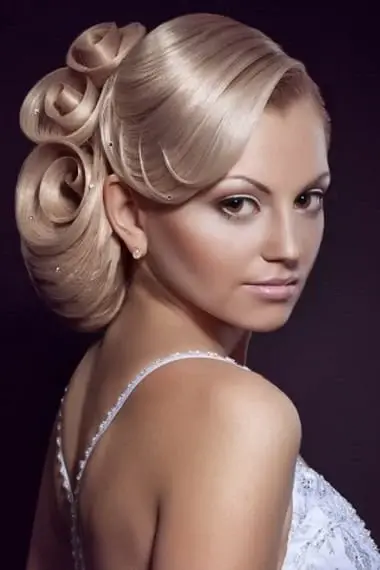
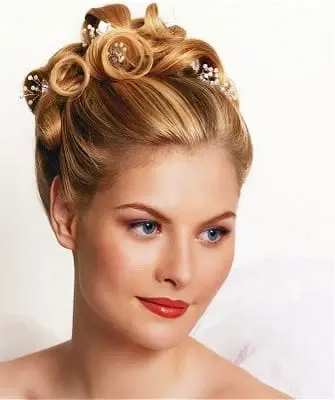
Boukli is hair whipped to half the thickness of the strand (blunted), combed out and twisted into tight rollers. Hair styled in curls looks very voluminous and lush. First of all, boucles are appropriate in festive styling, for example, this element is very often used in wedding hairstyles. Fresh flowers go well with hair curls.
The length of the strands, which are separated by horizontal parting during shearing, is checked in the vertical direction, and vice versa: the haircut in the vertical direction is checked with horizontals.
Hairstyle element roller (cylindrical bun)
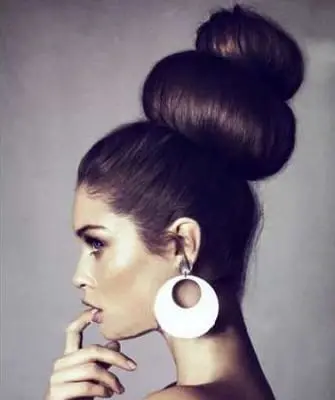
The roller hairstyle element is a cylindrical bun, that is, hair combed and twisted into a bun of a cylindrical shape. The roller is usually laid along the marginal hairline. This element of the hairstyle can only be done on perfectly straight, smooth hair, so you will definitely need a hair straightener to perform the roller. Hair is twisted into a roller, starting from the ends. The original hairstyle is obtained by dividing the hair into two parts and twisting both into rollers towards the center.
Wave hairstyle element and its types
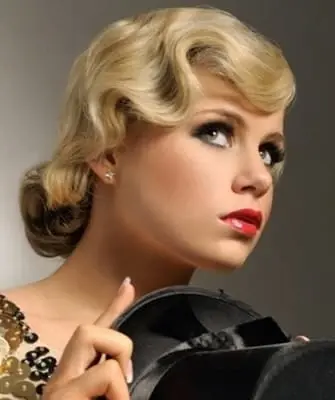
Pay attention to the photo of the wave hairstyle element – it is a smoothly curved hair, limited on both sides by two lines (crowns):
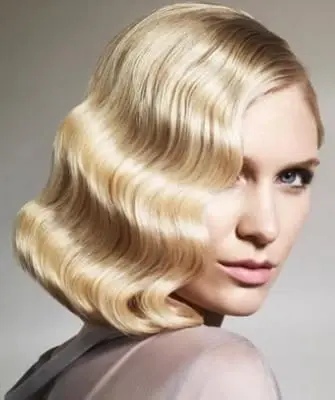
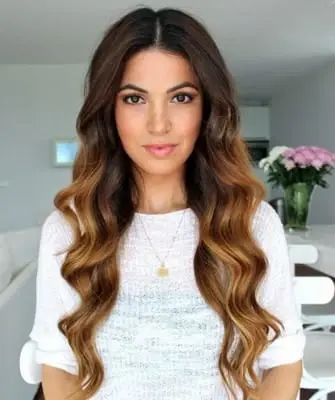
There are several types of waves: by location relative to the parting (intended or existing): straight, oblique and transverse; in direction: front (protruding) and reverse; in shape: narrow, wide, large, deep and flat.
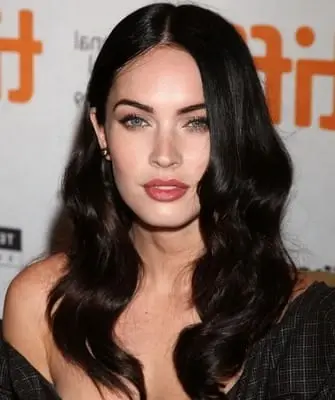
Direct waves are located parallel to the parting, oblique – at an acute angle to the parting, transverse – at an angle of 90 ° (perpendicular) to the parting.
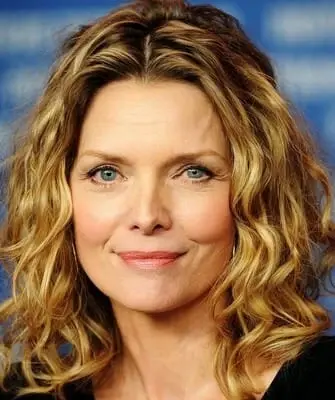
Narrow waves do not exceed a width of 2-3 cm, and large ones reach 5-6 cm. Deep waves are more durable.
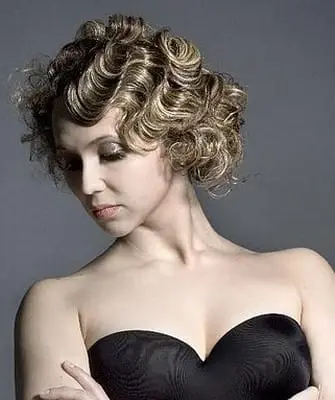
Facial waves with a protruding arc are directed towards the face. They frame the face and partially protrude beyond the marginal hairline. Reverse waves come from the face. These waves are auxiliary to the facial waves and complement them. In turn, the protruding and backward waves are subdivided according to their location into frontal, temporal and adjacent to the cheeks (facial).
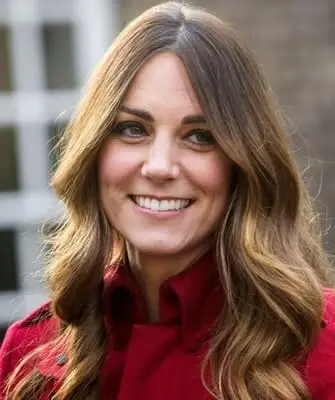
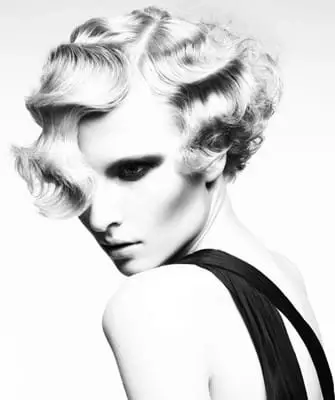
Please note that the division of waves into protruding and reverse ones is relative: if on one side of the hairline the wave is protruding, then on the other side it will be reversed, and vice versa.
The hairdresser must be able to correctly position the protruding waves. The frontal wave should cover the frontal notch, the temporal wave should lie on the temporal ledge, and the facial wave should extend to the cheek and cover the ear.
Crown of hair is an element of hairstyle
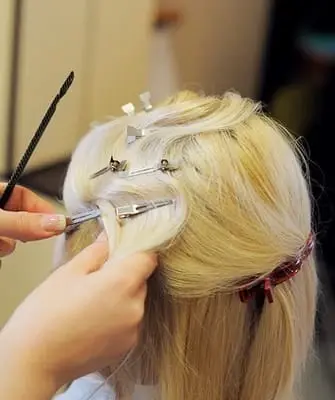
The crown of the hair is an element of the hairstyle, which is the line of the highest part of the wave. In the place where the hair changes direction to the opposite, a sharp bend appears. This is the crown. Crowns separate the waves from each other. They can vary in height and thickness: high, low, thin (sharp) and thick (blunt).
The blow -drying process should be done until the hair is completely dry, and finished with cold air so that the strands are better fixed.
The higher and sharper the crown, the longer the hairstyle will last.
The main element of the hairstyle is a curl
The curl hairstyle element is also one of the main types of styling. A curl is a strand of hair curled into a tube and laid in the form of a spiral.
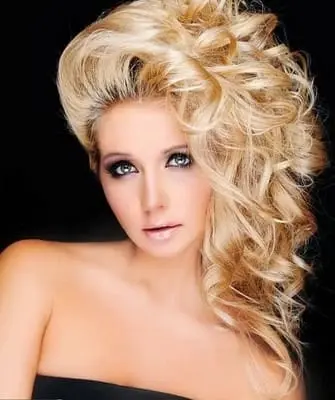
There are several types of curls: according to the method of wrapping: twisted up and twisted down; according to the position on the head: horizontal (straight), vertical, oblique, descending, etc.
Braided hair styling
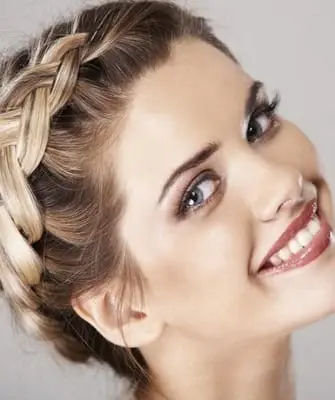
Weaving, or braids, is the interweaving of individual strands of hair. Braids are a very popular hairstyle element. There are many braiding hair styling techniques, some of which, in turn, are also divided into subspecies.
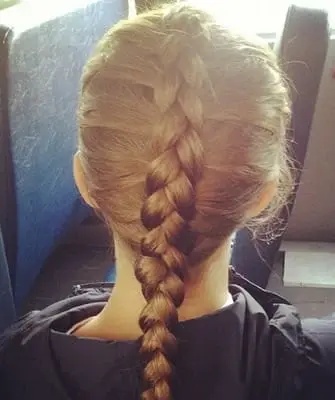
There are braids from 3 strands (classic braid), from 4 strands, from 5 strands (volumetric braid), from 6 strands, braids, plaits, French braid, Danish braid (German, or reverse French), fishtail braid, twist braid, braids with flat grains (openwork weaving), afro braids. It is permissible to combine different types and subspecies of braids, as well as use braids along with other elements of hairstyles.
Types of hair parting on the head (with photo)
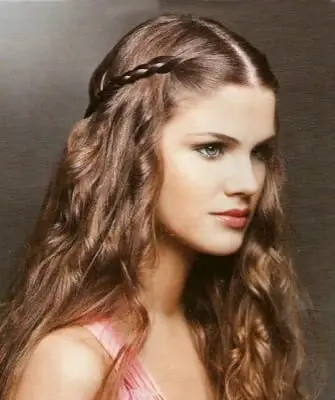
A parting is a line that divides hair into equal or unequal sections. All types of partings on the head give almost unlimited possibilities for modeling hairstyles. To change the parting, one minute and a few movements of the comb are enough. Each type of hair parting can be used in almost any hairstyle. The exception is those in which the hair is smoothly combed back. By changing the type of parting, you can turn a strict hairstyle into a flirty one, and vice versa.
In winter, it is better to wash your hair no earlier than 2 hours before going outside, and after styling, wait at least 5 minutes for the hairstyle to cool, otherwise the hat will certainly take on “hot" hair.
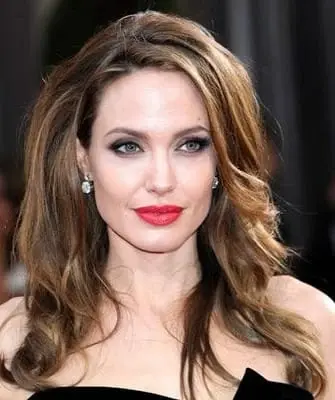
Unlike most other elements of hairstyles, parting can be natural. Long flowing hair itself falls into two parts on both sides of the head. Unfortunately, natural parting, as a rule, does not look very neat. It must be corrected with a comb with a "tail".
What are the types of partings
To the question of what kind of partings are, hairdressers, without hesitation, give a clear answer: straight, side, diagonal and zigzag. These four types of partings sometimes change the hairstyle beyond recognition.
Look at the types of hair partings on your head and choose the most optimal for your hairstyle:
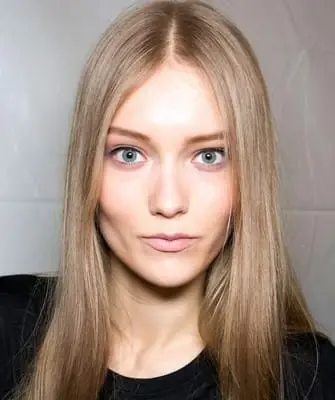
1 Parting – "classics of the genre." This is the simplest and most common type of requisition. A straight parting line is drawn from the middle of the forehead to the middle of the back of the head in the center of the head and divides the hair into two equal parts. It suits people with an oval face, and also allows you to visually narrow a square or wide face.
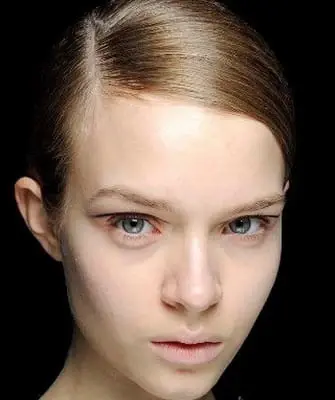
2 Side parting – a line that divides the hair into two unequal parts. It is located with a noticeable offset to the left or right side of the head. A side piece is a real salvation for people with sparse or insufficiently lush hair. With a side parting, most of the hair is combed to one side, and the hairstyle acquires additional volume.
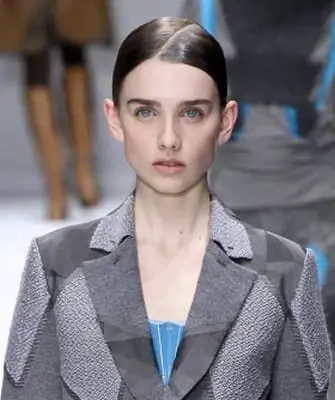
3 Diagonal parting is an oblique line that runs from the left corner of the forehead to the right side of the back of the head or from the right corner of the forehead to the left side of the back of the head. Like the side parting, the diagonal parting adds volume to the hair and visually lifts the hairstyle.
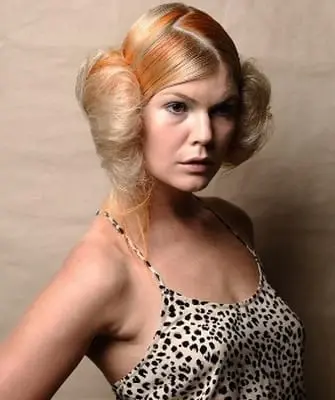
4 A zigzag parting runs down the center of the head. It is created by alternately throwing the lock to the left, then to the right. Hairstyles with zigzag partings are always stylish and extravagant.
How to make a shell out of hair
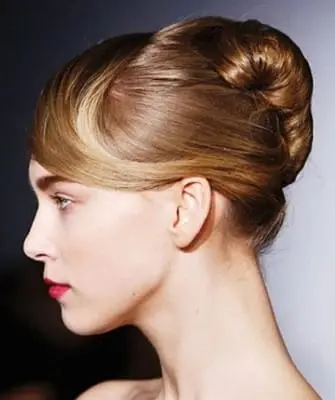
A shell is hair twisted in bundles and laid at the back of the head or slightly higher. To make a shell, the hair is combed back, twisted into a bundle and lifted up. Holding the tourniquet with one hand, comb the hair on the right side of the head to the tourniquet with the other. The tourniquet is covered with this hair, as if wrapping this element of the hairstyle in them. Loose hair is folded under the tail of the tourniquet and covered with a “fold” of hair. A large hairpin is inserted into the tourniquet from right to left, and then in the same way – a small hairpin. They must fasten the tourniquet over its entire surface. After that, the large hairpin is usually removed. The shell is successfully combined with curls. This element of the hairstyle visually lengthens the neck and creates a soft, feminine look.
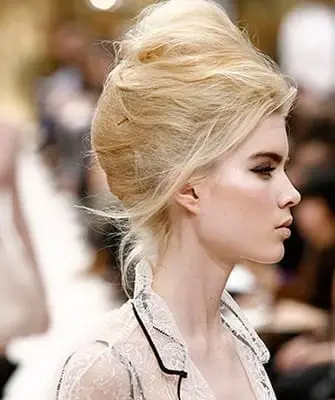
If long hair, styled with volume at the crown, “fell”, they can be given the same volume at the roots: lower your head, spray with varnish and dry in this position. And then flip your hair back and fix it with varnish.
Types (kinds) of bangs
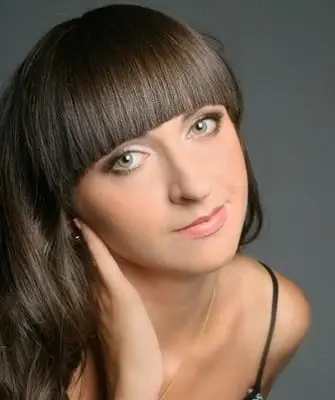
As you can see in the photo, all types of bangs are hair falling on the forehead. One or another type of bangs can add a “flavor” to even the most uncomplicated hairstyle or, conversely, ruin all the efforts of a hairdresser and stylist. Changing just one bang changes the perception of the hairstyle as a whole. Therefore, with the help of bangs, you can update the haircut or hide some imperfections.
Look at the photo: all types of bangs are separated from the rest of the hair with a parting and frame the forehead:
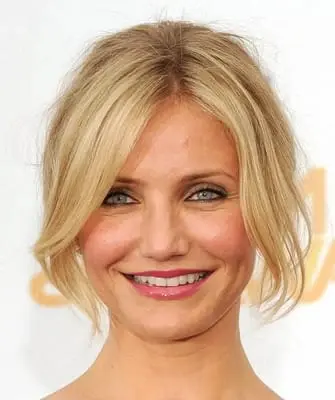
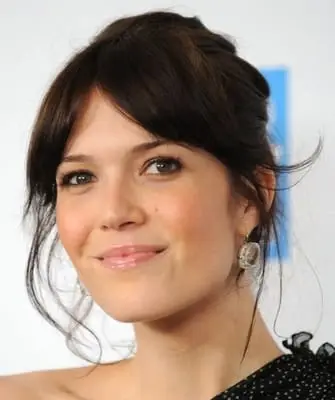
The bangs start at the top of the head and end at the temporal region.
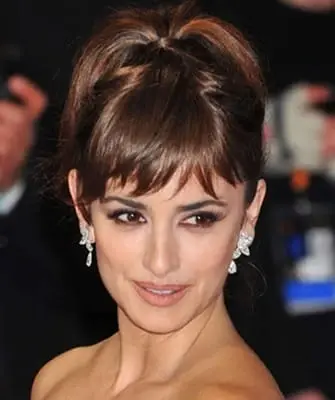
The typical variety of bangs is huge. In particular, they distinguish between long and short, simple and curly, straight and beveled, symmetrical and asymmetrical, single-tiered and multi-tiered, thick and thinned, upper and lower, raised and lowered, etc.
In general, all bangs can be divided into two large groups:
- bangs as an independent part of the hairstyle. Bangs are a completely independent element of the hairstyle. Hair length and haircut can change as you like. This does not affect the shape and length of the bangs;
- bangs as an integral part of the hairstyle. Bangs are one of the elements of a haircut that cannot be considered separately from the whole hairstyle as a whole.
What type of face is bangs (bangs for different types of faces)
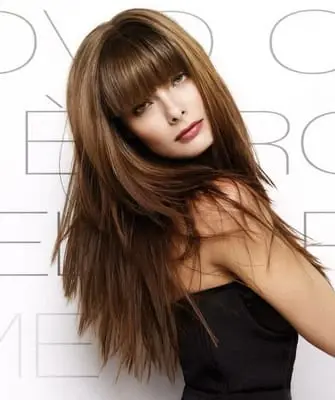
Bangs for different types of faces are chosen differently, everyone should approach this issue individually. When choosing bangs according to the type of face, do not forget to take into account the structure of your hair – if they are too curly, sometimes you will have to resort to ironing.
- people with an oval face can afford bangs of any shape and length, up to the shortest;
- people with a round face are torn oblique bangs;
- people with an elongated face should wear thick voluminous bangs up to the eyebrows;
- thinned bangs with uneven ends will help soften the sharp outlines of a square face;
- to visually lengthen the low forehead will help the cut-off bangs starting from the top of the head;
- a too high forehead will be masked by an even thick bang, descending just below the eyebrows.
Bang separation methods
There are three methods for parting bangs, each of which will make your hairstyle original.
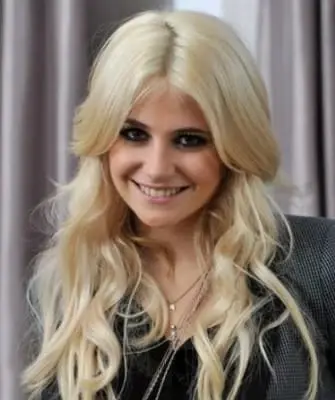
1 Parting. This is a classic version, in which a triangular bang is formed, passing through the corners of the forehead.
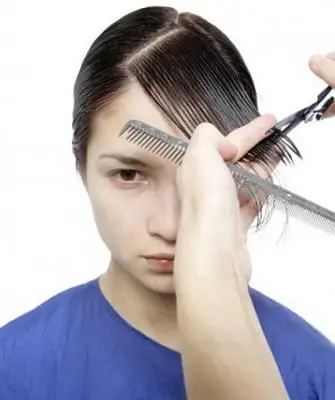
2 Diagonal parting. Allows you to create a stylish oblique bangs. This option is used to visually lengthen a round face or expand a narrow one.
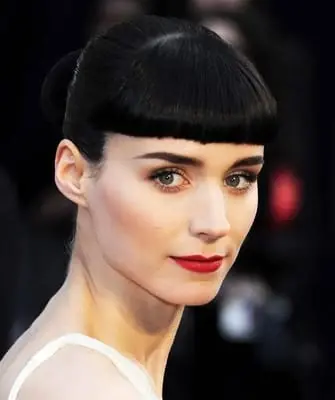
3 Curved or arcuate parting. In this case, the bangs start high on the crown. It is used to mask a convex, massive forehead, bald patches, high hairline.
Styling individual strands of hair, curls or curls allows you to change the look of the bangs.