

How to choose bedding: types of fabrics, density, size and other characteristics
Types of bed linen
The term "bed linen" combines textile sleep accessories: duvet covers, sheets, pillowcases. Products are sewn from various fabrics and different sizes. Depending on the cost and purpose, it is made of three types:
- elite,
- budget,
- baby.
Elite underwear
Elite bedding is the most expensive in this category of goods, but it is distinguished not only by a solid figure on the price tag. It looks luxurious thanks to:
- carefully selected fabrics;
- noble shades of colors;
- sophisticated design;
- original decor.
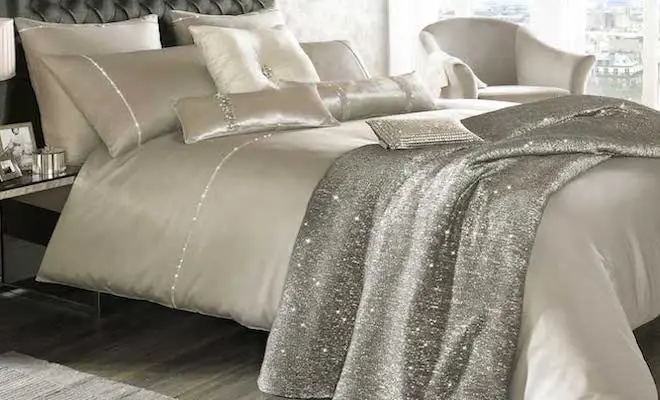
Lace, hand and machine embroidery are used to design elite lingerie. To create a luxurious set are used
- natural silk,
- best quality satin;
- cotton fabric made from long-staple varieties of raw materials (pima, mako);
- cotton jacquard;
- linen.
Budget underwear
Inexpensive sets of budget bed linen for daily use, which are preferred by most buyers, are in high demand. They are sewn from coarse calico, percale or poplin. It has no decorative trim. Of the functional characteristics, the main ones are practicality and wear resistance. Numerous washings will not spoil the brightness of its print.
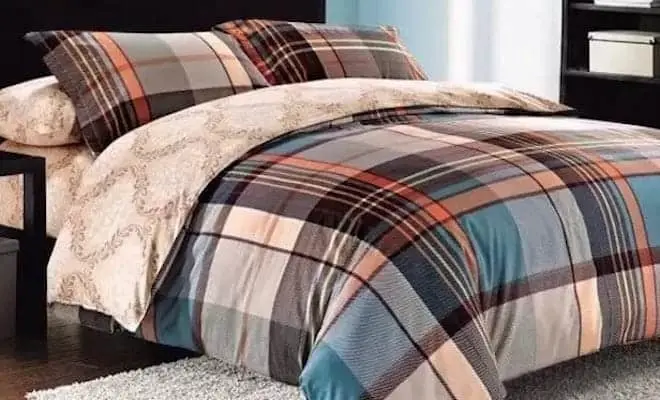
Kids clothes
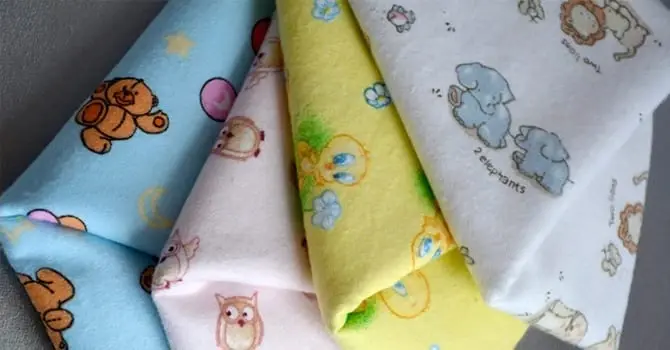
Bed linen intended for children is similar in its characteristics to budget linen. It should be practical, resistant to wear. A prerequisite is softness and hypoallergenicity. Children's bed linen is sewn from
- calico,
- percale,
- ranforsa,
- sitca,
- satin,
- polycotton.
The last two are recommended for children from seven years old. Satin has a higher density and will be rough for the little ones. Polycotton has polyester in its composition, which is not suitable for newborns and children from three to seven years old.
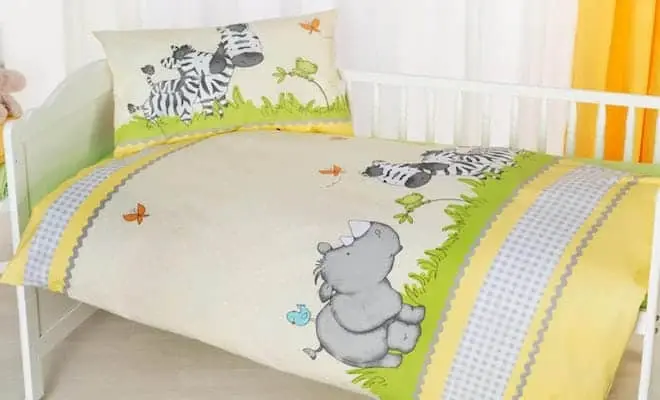
By the way, you can buy high-quality bedding from the manufacturer in bulk here.
Material
Let's start with the most important: what the sets are sewn from. After all, the material is the basis of quality and determines the appearance, price, wear resistance and softness.
When buying, pay attention to the composition of the fabric, and not just the name, since there are situations when frankly synthetic products are hidden behind “good" names. For example, satin can be made from 100% cotton, and then this is a wonderful choice for all families.But sometimes satin is made of synthetics, and it will bring nothing but disappointment.The situation is the same with other types of fabrics.
It is impossible to say unequivocally which material is better: too much here depends on subjective tactile sensations.
Cotton
Cotton deserves to be placed in a separate category, because the lion's share of all sets is sewn from it. Moreover, depending on the method of twisting, the thickness of the fiber and the method of production, products that are completely different in properties are obtained. We list the most common types of cotton textiles.
Coarse calico deservedly occupies a leading position among its brethren. This is due to a number of advantages:
- calico products are of high quality, serve for a long time and do not lose their attractiveness;
- unpretentious in care;
- pass air;
- are inexpensive.
The disadvantages include perhaps some roughness, which is explained by the structure and density of the calico.
Chintz will cost even less than coarse calico, and more pleasant to the touch. But it is short-lived and does not withstand more than 60 washes: the fabric becomes thinner and the color is lost.
Because of its tenderness, it is often used for sewing children's underwear.
There is a special variety – seersucker. This is a crinkled chintz. The texture of such models is heterogeneous: striped or plaid.
Poplin has an unusual structure – in a small scar and with a matte sheen. It has good consumer properties: it can withstand many washes, is durable, does not wrinkle, allows the skin to breathe and will not cost very much.
However, the structure makes the material stiff (albeit softer than calico), which may be uncomfortable for some people.
Satin is very smooth and delicate, it looks like silk, but on the reverse side it is rough, which means it will not slip during rest. Satin is also durable, does not fade, does not wrinkle, and provides ventilation.
Of the shortcomings, it should be noted a higher cost than the previous options.
Mahra (frote) has on one side a filament pile in the form of eyelets. Towels and terry bathrobes are sewn from a similar fabric.
On such linen it is convenient and warm to sleep. In addition, it retains all the advantages of cotton products: long service life and unpretentious care.
Such material requires careful handling, otherwise ugly puffs may remain on the surface. You also need to consider that it dries for a long time.
Flannel is characterized by soft hairiness. In other words, she has a small “fluff”. Because of this, it is very warm, tactilely pleasant and at the same time keeps its shape and does not wrinkle.
But over time, the pile strays into spools, which spoils the feel and appearance of the kit.
Percale is an expensive option, characterized by increased density. Because of this, percale is often used to frame feather pillows, as it does not allow any fluff to seep through.
The surface is soft, smooth, delicate and plus it has excellent performance features: durable, endures many washes.
natural materials
If you want something “such”, then you can buy for yourself more interesting options for natural fabrics.
Flax is wear-resistant, hypoallergenic, antibacterial and has good thermal conductivity (it maintains a stable body temperature in hot and cold weather).
However, flax is rough, therefore it is a commodity for an amateur. He also sits down from hot water and is difficult to iron.
Silk has long been synonymous with luxury, but having tried it in practice, many in the reviews admit that they are disappointed and put it off until better times. It's all about excessive smoothness, due to which the blanket slides over the body, and the sheet often gets knocked off. To avoid this, buy a sheet with an elastic band.
But on summer nights, silk will give additional coolness and will not provoke unwanted reactions. However, he is quite picky: he does not tolerate machine washing and water temperatures above 30 degrees Celsius.
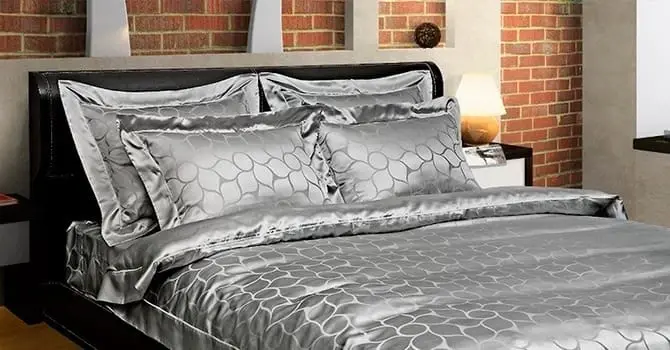
Viscose – it is produced artificially from cellulose. The technology used to produce raw materials determines what the final product will look like: silk, cotton, wool or linen.
This fabric absorbs moisture, light and soft, breathable. In addition, it is not electrified and drapes perfectly into beautiful folds.
There are improved types of viscose that have appeared relatively recently. This is for example:
- tencel – eucalyptus wood is used as a raw material;
- modal – similar in quality to cotton.
Synthetic and blended fabrics
Materials artificially made from synthetic raw materials include polyester and microfiber.
Polyester is very practical and durable, it is not hazardous to health. However, it does not breathe well, which is why it is uncomfortable to sleep on it in the heat.
In its pure form, it is practically not used. Much more often polyester is used in combination with natural fabrics. For example, 70% cotton and 30% polyester. This allows you to make the canvas more durable and retain all the advantages of natural fiber.
Microfiber is a man-made product. It is smooth and silky, but at the same time dense, does not change its size and brightness. In addition, it dries quickly, does not wrinkle, does not electrify, it does not form pellets or puffs. It passes air, absorbs moisture and does not provoke allergies. And on top of that, its price is quite low.
Everything would be fine, but such a kit will not last long – from 2 to 5 years. Also, it can not be dipped in hot water and dried on heaters.
Bamboo – the composition contains up to 60% bamboo fiber, the rest is cotton or silk. Such material allows the skin to “breathe”, does not contribute to the occurrence of unwanted reactions, is very comfortable and pleasant, and has antimicrobial properties.
It has no significant disadvantages, except for the cost.
Elite products
These products are made from expensive raw materials, and what distinguishes them is their stunning design. Such models will be a wonderful gift for a wedding or birthday.
Batiste is made from cotton, linen or synthetic material. It is very smooth, airy, pleasant to the body. Exquisite and unique products are obtained from it thanks to a special weave that forms beautiful patterns.
Unfortunately, due to the fact that the fabric is thin, it quickly becomes unusable, so these are kits for special occasions.
Jacquard is a method of weaving threads, which creates a heavy canvas with a relief pattern. Produced from natural or artificial raw materials. The textile does not wear out and does not become thinner over time, keeps its shape and retains heat.
But requires delicate handling: wash in cool water and iron inside out only.
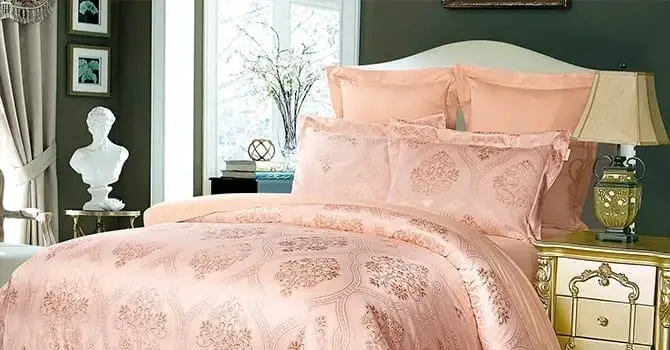
Egyptian cotton (mako-satin) grows only on the banks of the Nile River, and is harvested by hand, so you will have to pay a lot for it. But careful processing allows you to save the structure of the fiber, and there are fewer knots in the texture. It comes out silky, light, with an incredibly rich color. At the same time, it does not require time-consuming maintenance and lasts more than one year.
Japanese silk is different from Turkish and Chinese counterparts. It is hygroscopic, does not roll, maintains an optimal temperature during rest. What is not happy about it is the exorbitant price.
Tips for choosing underwear
The first thing that a buyer who decides to purchase a bedding set pays attention to is the color and size, and only after that determines the quality of the product. In order not to make a mistake with the choice and purchase really high-quality textiles, many factors must be taken into account.
Strength of bed linen
When choosing durable bedding, you should pay attention to the density of the fabric and the method of weaving the threads. The strength of the material largely depends on this.
The density of the tissue is characterized as linear and superficial. Linear density is the number of threads per centimeter squared, surface density is grams per square meter.
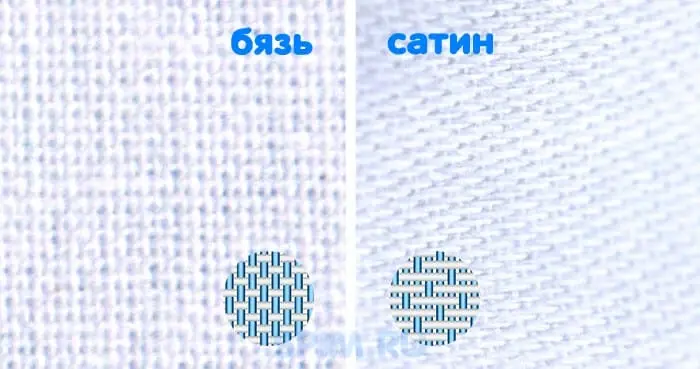
The density is affected not only by the thickness of the threads, but also by the way they are weaved. Bedding fabrics may have:
- plain weave – the threads alternate through one (cambric, calico, poplin, ranfors, percale);
- satin (satin) weave – the threads are intertwined through several and merge into oblique lines on the front side, creating a silky surface (satin);
- jacquard – a complex twill or satin weave with different alternation of threads, which forms a beautiful pattern (jacquard).
Material density
One of the main criteria when choosing bed linen is its resistance to wear, which depends on the density of the fabric. The main thing is to maintain the softness of accessories for sleep, providing a comfortable rest.
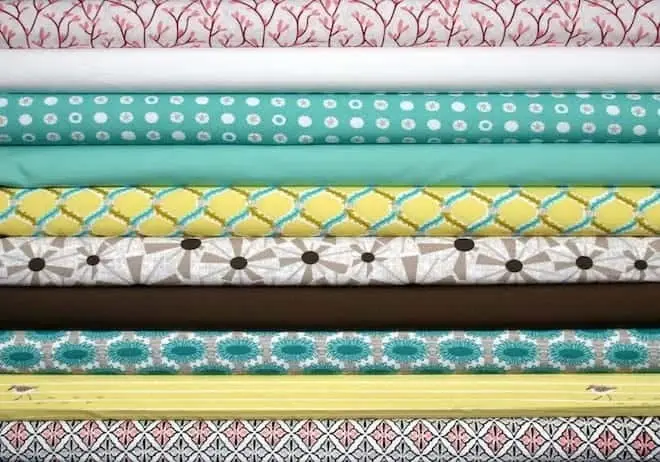
To choose reliable bedding that will last a long time, it is enough to study the density of the types of fabric used:
- for percale – from 100 to 160 g / m2;
- for coarse calico – from 100 to 145 g / m2;
- for satin – from 120 to 140 / m2;
- poplin has 110 g/m2.
According to GOST, the maximum values u200bu200bare taken, therefore the most dense, and therefore resistant to wear, is percale. Coarse calico is slightly inferior to it, but this fabric has a more affordable price.
Smell and paint
High-quality bed linen is practically odorless – let's say, perhaps, a light and pleasant aroma of new, as if freshly ironed textiles. A harsh “chemical” fragrance and a musty feeling indicate the use of low-quality fabric dye – it can not only be toxic, but is also quickly washed off, which makes the linen look faded after the first wash.
Checking the strength of the paint is simple: just rub the corner of the pillowcase or duvet cover with your fingers or a clean cotton pad – they should not leave any marks.
seams
To choose the right bed linen, you need to look at its wrong side. Good underwear should be stitched exclusively with a linen seam.
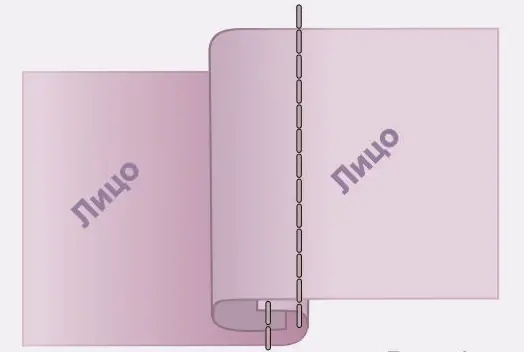
If it is sewn with a regular seam and has raw edges, you should not take it, it will spread along the seam after two or three washes.
It is worth paying attention to the threads with which the linen was sewn – they must be strong enough and strong, matched by color. Their ends must be hidden.
Package
Responsible manufacturers spare no time for high-quality packaging of bed linen. A dense polyethylene shell or a beautiful, securely closed box for gift sets, a bright and clear picture on the label, detailed information about the size, composition, material and care instructions, the availability of factory contact information – all this demonstrates that such bedding will be a good purchase.
Clasps
Do you think this is a minor detail? No matter how! Remember the duvet covers you used to hide in childhood, with a large hole in the middle, from where a motley woolen blanket peeked out. Did it annoy you too that it kept turning over when you slept? Fortunately, modern fasteners for bed linen are much more convenient.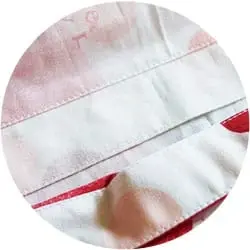
Valve or slot
The easiest and cheapest option. Cons: Pillow and duvet keep falling out.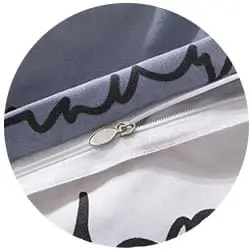
Lightning
The perfect solution for perfectionists – zip up a hidden zipper, and that's it! Nothing sticks out, a blanket with a pillow is always in place. Cons: the price of the kit is higher, and the zipper may break.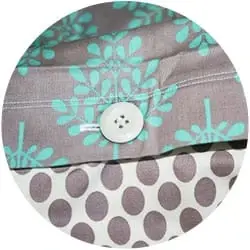
Buttons
They do their job well. And if they suddenly come off – sew on for a short time. Golden mean!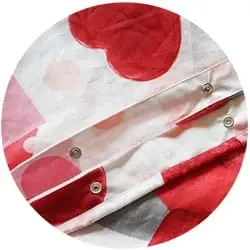
Buttons
Almost like buttons, only fastened faster. Sew-on buttons are more reliable than glue and those that are attached using a special press.
Bed linen sizes
Wrong-sized bedding – what could be worse? To prevent this from happening, before buying a new bedroom set, measure your bed, mattress, existing pillows and blankets (of course, if you are not going to change them at the same time).
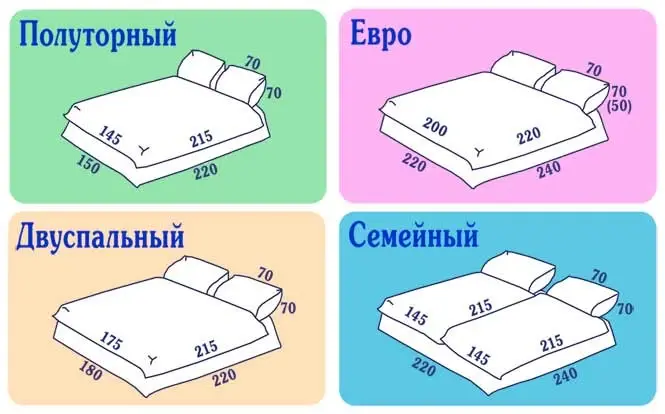
When choosing bedding, everything matters, even the height of the mattress. To figure out what size sheet is right for you, add the height of the mattress to its width.
When choosing a set, do not forget that the sizes of domestic and imported linen are slightly different.
For example, “our” underwear is made in 3 sizes:
- one and a half;
- double;
- euro size.
Foreign bed sets are:
- single ("1-bed" or "single");
- one and a half ("1, 5-bed" or "extra long single");
- double ("2-bed" or "full");
- enlarged, suitable for a triple bed ("king size").
Sizes and shapes of pillowcases also differ depending on the country of manufacture, so always keep this in mind when buying. And it is better to be guided by the dimensions in cm and mm.
In addition, it is worth remembering the following bed linen size standards:
- children's set – pillowcase 60×40 cm, sheet 100×150 cm, duvet cover 112×147 cm;
- one and a half – pillowcases 70×70, 50×70 or 60×60 cm, sheet 150×215 cm, duvet cover 145×210 cm;
- one and a half European – pillowcase 50×70, sheet 180×220 cm, duvet cover 160×220 cm;
- double (Ukrainian) – pillowcases 60×60 cm, 50×70 or 70×70, sheets 200×220 cm, duvet cover 175×210 cm;
- euro (king size) – pillowcases 70×70 or 50×70, sheets 220×240 cm, duvet cover 200×220 cm.
Table
Set SizeDuvet CoverDress SheetPillowcases
| One and a half
(half-sleeping) | from 143×210 cm
to 160×230 cm | from 145×200 cm | 50×70 cm
70×70 cm |
| Double room
(Russian standard) | from 175×210 cm
to 180×220 cm | from 175×210 cm | 50×70 cm
70×70 cm |
| Double room
(Euro standard) | from 200×220 cm
to 215×220 cm | from 200×215 cm | 50×70 cm
70×70 cm |
| King Size
(Euro Maxi) | from 220×240 cm
to 240×260 cm | from 220×240 cm | 50×70 cm
70×70 cm |
| Family
(two duvet covers) | from 143×210 cm
to 160×230 cm | from 175×210 cm
to 260×270 cm | 50×70 cm
70×70 cm |
Conclusion
Good linens are the perfect gift for a wedding or anniversary. As a present, more presentable models in beautiful packaging are chosen. Comfort and high quality are important for home use.
To summarize and highlight the favorites among the materials, the rating with the top three will look like this:
- Coarse calico. Excellent durable fabric, suitable for adult and children's sets. Unpretentious in care and adequately worth it.
- Satin. Durability and beautiful shine make it a favorite of many. A higher price tag slightly reduces popularity.
- Poplin. Strong, durable, pleasant to the touch.
If we talk about fashion, then in the photo of all the trendy bedrooms now you can see linen sheets. Solid pastel canvases look natural and expensive.
Make an informed choice and remember, you should not save on your sleep, because your health depends on its quality, choose the best bedding for yourself and your family.
Sources:
Show hidden content