

On the dangers of household chemicals: is household chemicals harmful to health, what substances are harmful
Details about the dangers of household chemicals to human health and natural cleaning products are described on this page.
Harm of household chemicals for human health
Household chemicals are an undoubted achievement of modern civilization. Hardly anyone can imagine doing housework without using it. However, the harm to health from household chemicals is sometimes underestimated. For example, almost all washing powders contain polyphosphates, which are dangerous not only for health, but also for the environment.
The number of detergents is growing every day, new washing powders, detergents for cleaning clothes, home textiles, dishes, washing various surfaces, etc. are being produced. All the components that they contain are biologically aggressive. Harmful household chemicals contribute to the development of diseases such as dermatitis, allergies, bronchial asthma. As a result, the modern home is full of substances that provoke the occurrence of diseases.
In addition, household chemicals can also be dangerous because their excessive use weakens, and sometimes completely destroys the beneficial microflora. That is why it is necessary to approach the issue of choosing and further using chemical detergents with special responsibility.
Harmful substances in household chemicals are the main source of allergens. It can cause asthmatic cough and skin irritation in anyone, not just allergic people. The cause of coughing is most often powdered agents and aerosols, particles of which remain in the air in large quantities after their use. Those people who have experienced an allergic reaction after using household chemicals approach the choice of products with extreme caution. Many reduce the use of such products in everyday life to a minimum, replacing them with the most suitable natural substances.
Do you still have doubts about whether household chemicals are harmful and is it so dangerous to use them?
What substances in household chemicals are harmful
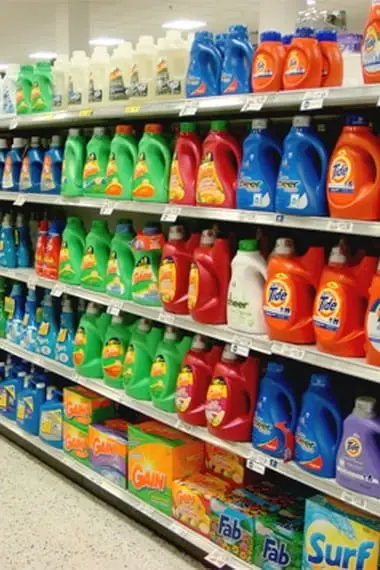 If you carefully read the composition, then in modern chemical detergents you can find the following by no means useful components.
What substances are harmful and have a negative impact on health? These are surface-active substances (surfactants), chlorine, phenol, formaldehyde, acetone, chemical bleaches, fragrances.
Ammonium is the main ingredient in cleaning products for mirrors, windows, ceramic tiles, and sanitary ware. When it interacts with chlorine, toxic chlorine gas is released.
Anionic surfactants, which are often used in the manufacture of detergents and washing powders, cause immune disorders, allergies, damage to the brain, liver, kidneys and lungs. When using detergents, these substances enter the human body, and even repeated rinsing in hot water does not completely free the dishes from these components deposited on it.
Petroleum distillates, which are part of polishes for metal surfaces, can have a negative effect on vision and the nervous system.
Nitrobenzene is a heavy and dangerous agent for health. It is often found in floor and furniture polishes.
Phenols and cresols are caustic bactericidal substances that cause diarrhea, dizziness, unconsciousness, and impaired kidney and liver function.
Formaldehyde is a powerful carcinogen that irritates the eyes, throat, skin, respiratory tract, and lungs.
Phosphates are banned in many countries. These substances, getting into water bodies, contribute to the rapid formation of blue-green algae. In addition to environmental pollution, they have a negative impact on the human body, activating the development of cancer cells. The use of drinking water contaminated with phosphates leads to the appearance of a tumor of the gastrointestinal tract, a decrease in immunity and life expectancy.
Chlorine is a rather dangerous substance that causes diseases of the cardiovascular system and contributes to atherosclerosis, anemia, hypertension, and allergic reactions. It negatively affects the skin and hair, increases the risk of cancer.
You can always replace products containing these toxic substances with alternative ones – a plunger, which can cope with a clogged bathroom no worse than strong chemicals, or baking soda, which can not only remove dirt and grease from dishes, but also cope with stains on textiles, soften hard water, etc.
Natural cleaning products for the home and how to avoid allergies
The most common natural cleaning products are:
- borax, which has excellent cleaning properties and prevents the formation of mold;
- lemon juice removes rust, grease stains on clothes and dishes, and is also used to clean windows;
- vinegar is a natural household cleaner, it removes stains and scale, disinfects, and effectively cleans tiles;
- essential oils and essences – these are natural substitutes for air fresheners;
- water, which can be used to rinse bedding instead of chemical conditioners.
In order to avoid the occurrence of allergic reactions during cleaning, it is important to follow the basic rules. Avoid using chemical cleaners. If, nevertheless, they are present in a small amount, then you should ventilate the home as often as possible, preventing chemical vapors from lingering in the air. To avoid allergies, it is necessary to give preference to wet cleaning and washing vacuum cleaners. The use of humidifiers is recommended. It is important to thoroughly clean your hands after using any detergent, rinsing your hands repeatedly even after using soap. Do not forget to thoroughly wash and wipe the dishes so that there are no residues of dishwashing detergent on them. It is recommended to always additionally rinse textiles by hand.