
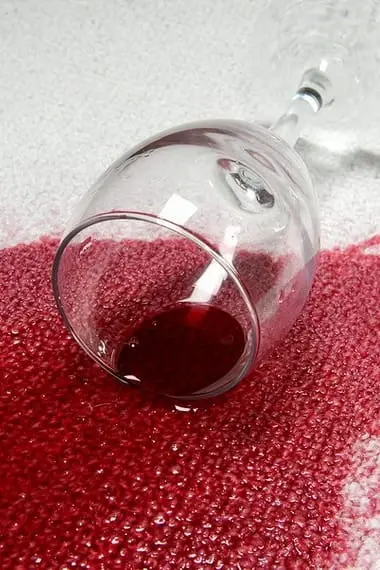
Removing stains from fabric at home: how to remove stains with peroxide, ammonia and vinegar
Many types of contaminants can be easily cleaned without the use of aggressive chemicals. There are many ways to remove stains with the help of products that are always at hand – soda, citric acid, wine vinegar and alcohol-containing mixtures. How to remove stains without damaging the fabric, read on this page.
Removal of grease and other stains from white and colored fabrics
Various stains may appear on home textiles. They can sometimes be difficult to remove with ordinary detergent, but they can be dealt with using natural but effective products. Before removing stains from fabric, you need to find out their origin.
When removing contaminants, one should take into account not only the nature of the substance, but also the composition of the tissue. After the procedure, the fabric should retain its texture, color, etc.
Stains are greasy (from food, cosmetics, wax, etc.), of organic origin (from wine, fruits and berries, herbs, tea, coffee, etc.), from rust.
Depending on the origin of the substance contaminating the fabric, stains can be divided into water-soluble and soluble by organic solvents (alcohol, gasoline). It is easy to deal with a stain if its origin is known. Spots on home textiles are not always detected immediately. You can determine their nature by their appearance. Greasy spots do not have clear contours, from which the tissue becomes darker. Old greasy spots become lighter and less visible even from the wrong side. Stains of oil paint, resin and varnish are difficult to remove, but stains of wax, vegetable oils and animal fat are easy to remove.
Colored spots from non-fat drinks, fruits and berries usually have clear dark contours. Food stains can be high in grease.
Oxidized stains are considered the most difficult to remove. Under the influence of light and oxygen, stains from wine, fruits and berries, tea and coffee can oxidize, and their surface becomes practically insoluble.
When removing stains from white and colored fabrics, it is recommended to clean the textile immediately after it has been stained. Dried and old stains will be much more difficult to remove. You can remove stains from clothes not only with a cotton pad, but also using a soft brush. To remove the stain from the fabric, it should not be rubbed, it is better to lightly beat on it with a brush with a solvent. Dense and expensive fabrics, such as curtains, are recommended to be beaten with a brush from the wrong side. To remove stains from white linen and cotton textiles, bleaching is allowed.
How and with what you can remove grease stains from fabric
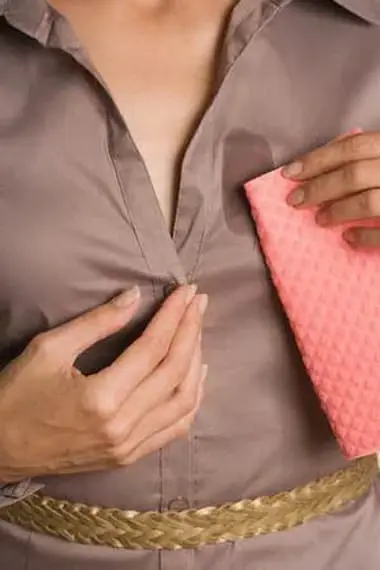 When removing greasy stains, you can use organic solvents, such as turpentine. Fresh greasy stains are easily removed without any solvents.
To do this, you need to put blotting paper under the fabric with a stain and on it, and then iron it with a hot iron.
Find out what removes grease stains without damaging the fabric.
Recipe number 1.
You will need: 10 ml of ammonia.
Cooking method. Before removing a greasy stain, add ammonia to 200 ml of water, mix.
Application. Moisten a cotton pad with the resulting liquid and rub the stain. Then iron the fabric with a hot iron through a white cotton cloth.
This solution is suitable for removing greasy stains from light fabrics.
Recipe number 2.
You will need: 15 ml of ammonia, 12 tsp. table salt.
Cooking method. Before removing greasy stains from the fabric, add ammonia and table salt to 50 ml of water, mix.
Application. To remove greasy stains, apply the resulting solution to the contaminated area, rub, then rinse with clean water. This solution is also suitable for removing chocolate stains.
Recipe number 3.
You will need: 10 g of chalk, 12 tsp. table salt.
Cooking method. Grind the chalk, mix it with table salt.
Application. Sprinkle the oily stain with the resulting mixture and leave for 2-3 hours. Then clean this area with a soft brush.
What else removes greasy stains
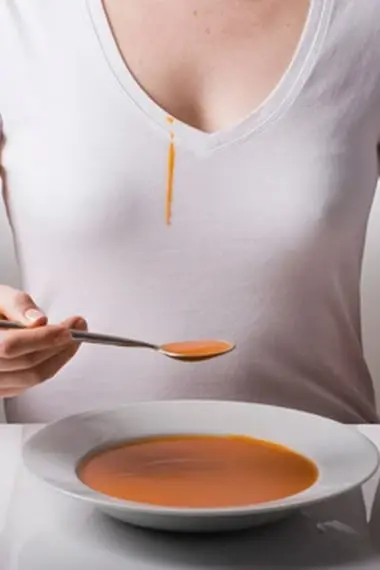 How else can you remove the stain so as not to disturb the texture of the fabric?
Recipe number 4.
You will need: 1 tbsp. l. potato starch.
Application. To remove grease stains from synthetic fabrics, sprinkle potato starch on the stained area, and then rub with a damp towel. If necessary, repeat the procedure several times.
Recipe number 5.
You will need: 1 tbsp. l. turpentine, 10 ml of ammonia.
Cooking method. Mix turpentine and ammonia.
Application. To remove engine oil stains, moisten a cotton pad with the resulting product and rub the stain. Then rinse with water.
Recipe number 6.
You will need: 10 ml of alcohol, 12 tsp. citric acid, 1 tsp. table salt.
Cooking method. In 200 ml of water, add alcohol, citric acid and table salt, mix.
Application. To remove greasy stains, apply the resulting solution to the contaminated area, rub, then rinse with clean water.
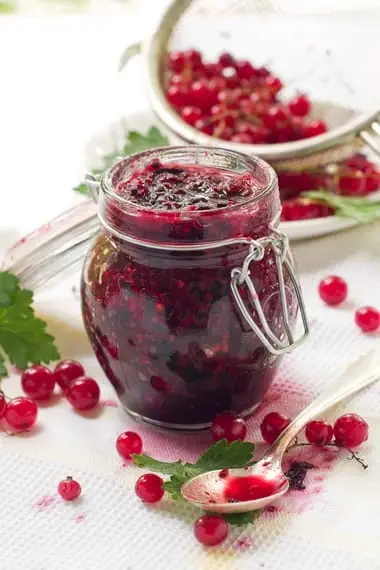
How and how to remove stains from berries on clothes?
You will need: 50 ml of milk, 1 tsp. citric acid.
Cooking method. Mix milk and citric acid.
Application. To remove fresh stains from berries, moisten a cotton pad with the resulting solution, wipe the contaminated area, then rinse in clean water.
Recipe number 8.
You will need: 5 tbsp. l. glycerin, 1 egg yolk.
Cooking method. Before removing berry stains, mix glycerin and egg yolk.
Application. To remove fresh stains from lingonberries and cherries from colored fabrics, apply the resulting mixture to the stain and leave for several hours, then rinse with warm water.
Recipe number 9.
You will need: 1 tbsp. l. lemon juice, 1 tbsp. l. table vinegar.
Cooking method. Mix lemon juice and table vinegar.
Application. To remove fresh stains from strawberries and raspberries, moisten a cotton pad with the resulting solution, wipe the contaminated area, then rinse in clean water.
Recipe number 10.
You will need: 100 ml of milk.
Cooking method. Warm up milk.
Application. Before removing berry stains on clothes made of cotton and linen, it is necessary to soak them in hot milk.
Note to the owner. Hot water can be used to remove fresh stains from wine, berries or fruit. You should stretch the stained cloth over a glass or jar and pour boiling water over it until the stain is washed off. In case of severe contamination, a fresh colored stain can be sprinkled with table salt, and later the fabric can be rinsed with water and washed with soap and water.
How to remove stains from iodine and coffee on fabric
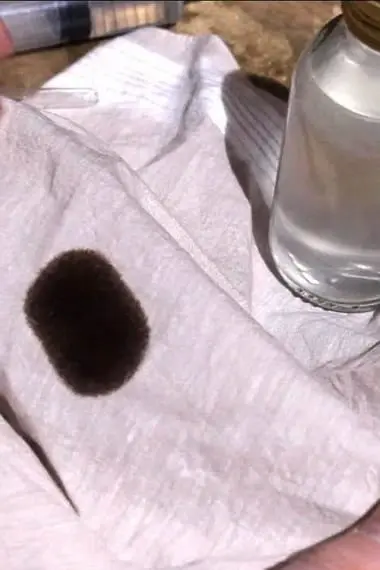 Below are recipes for removing iodine stains on fabrics and coffee stains.
Recipe number 11.
You will need: 10 ml of hydrogen peroxide, 5 ml of ammonia.
Cooking method. Before removing the stain from iodine, add hydrogen peroxide and ammonia to 50 ml of water, mix.
Application. To remove stains with peroxide and ammonia, moisten a cotton pad with the resulting solution, wipe the contaminated area, then rinse in clean water.
Recipe number 12.
You will need: 1 tbsp. l. glycerin, 5 ml of ammonia.
Cooking method. In 50 ml of water, add ammonia and glycerin, mix.
Application. To remove coffee stains, moisten a cotton pad with the resulting solution, wipe the contaminated area, then rinse in clean water.
How to remove ink stains from ballpoint and gel pens
This section describes how to remove stains from pens with different inks.
Recipe number 13.
You will need: 5 tbsp. l. glycerin, 2 tbsp. l. table salt.
Cooking method. Add glycerin to 50 ml of water, mix. In 500 ml of warm water, add table salt, mix.
Application. To remove ink stains, soak the fabric for 2-3 hours in a solution of glycerin, and then rinse in a warm solution of table salt.
Recipe number 14.
You will need: 2 tbsp. l. table vinegar.
Cooking method. Add table vinegar to 50 ml of water, mix.
Application. To remove ink stains, apply the resulting solution to contaminated areas, and then wipe with a damp cloth and iron with an iron.
Recipe number 15.
You will need: 20 ml of ethyl alcohol, 20 ml of hydrogen peroxide.
Cooking method. Before removing the ink stain from a ballpoint pen, add hydrogen peroxide to 50 ml of water, mix.
Application. To remove traces of ballpoint pen ink from the surface of the fabric, wipe the contaminated areas with ethyl alcohol, and then with a peroxide solution. Then the textiles should be rinsed in clean water.
Recipe number 16.
You will need: 4 tbsp. l. table vinegar.
Cooking method. Heat table vinegar.
Application. To remove stains from gel pens, it is necessary to moisten a cotton pad in heated table vinegar, wipe the contaminated areas. Then wash the fabric in the usual way.
How to remove hot iron stains from fabric
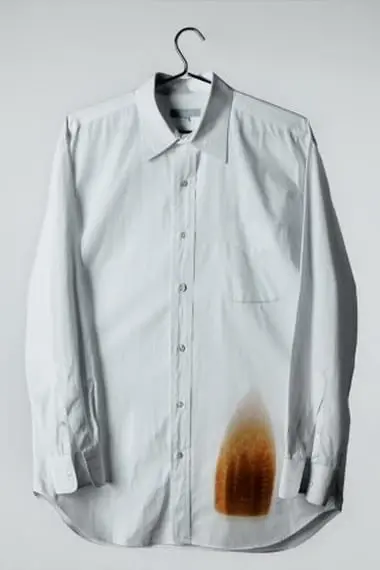
You will need: 500 ml of milk, 20 ml of hydrogen peroxide.
Cooking method. Before you remove the stain from the iron, you need to mix milk and hydrogen peroxide.
Application. To remove burn marks from a hot iron on various fabrics, it is necessary to soak the fabric in the resulting solution, then rinse in clean water.
Recipe number 18.
You will need: 2 tbsp. l. onion juice.
Application. To remove hot iron stains from white fabrics, moisten problem areas with onion juice, leave for several hours, and then wash in clean water.
How to remove rust stains from fabric
Recipe number 19.
You will need: lemon juice and table vinegar.
Cooking method. Before removing rust stains from the fabric, mix lemon juice and table vinegar.
Application. To remove rust stains from various fabrics, it is necessary to moisten a white cotton rag in the resulting solution and rub the stain with it, then rinse in cold clean water.
Recipe number 20.
You will need: 10 ml of ethyl alcohol, 10 ml of ammonia, 1 tbsp. Boers.
Cooking method. Before removing rust stains, add borax, ammonia and ethyl alcohol to 50 ml of water, mix thoroughly.
Application. To remove rust stains and dark stains of unknown origin, spread textiles on an ironing board, place a piece of cloth under it, moisten a soft brush with the resulting solution and rub the stain. Then blot it with a dry paper towel and rinse with clean cold water. Then sprinkle with talcum powder.
How to remove milk stains from fabric
 How to get a milk stain out with lemon juice and borax?
Recipe number 21.
You will need: 2 tbsp. l. lemon juice, 1 tsp. turpentine.
Cooking method. Mix lemon juice and turpentine.
Application. To remove various milk stains from thin fabrics, apply the resulting mixture to the contaminated surface and rub lightly. Then rinse in clean water.
Recipe number 22.
You will need: 1 tsp. Boers.
Cooking method. Add borax to 50 ml of water, mix.
Application. To remove fresh stains from ice cream and milk, moisten the contaminated area with the resulting solution, then rinse thoroughly with clean water.
Removing fabric stains with vinegar
Recipe number 23.
You will need: 1 tbsp. l. wine vinegar.
Cooking method. Add wine vinegar to 200 ml of water.
Application. To remove stains with vinegar from cotton fabrics, it is necessary to moisten the contaminated area with the resulting solution, then rinse thoroughly with clean water.
Recipe number 24.
You will need: 2 tbsp. l. acetic acid.
Cooking method. Add acetic acid to 50 ml of water, mix.
Application. To remove stains from silk fabrics, it is necessary to moisten a cotton pad with the resulting solution, wipe the contaminated area, then rinse in clean water. Old stains require re-treatment.
Recipe number 25.
You will need: 10 g of laundry soap, 1 tbsp. l. wine vinegar.
Cooking method. Cut laundry soap with a knife or grater. Add crushed laundry soap and wine vinegar to 200 ml of water, mix thoroughly.
Application. To remove stains from linen textiles, it is necessary to moisten a cotton pad with the resulting solution, wipe the contaminated area, then rinse in clean water.
Removing stains with baking soda, hydrogen peroxide and lemon juice
Recipe number 26.
You will need: 20 ml of vodka, 2 tbsp. l. lemon juice, 1 tbsp. l. baking soda.
Cooking method. When removing stains with soda, mix it with 200 ml of water, add vodka and lemon juice, mix thoroughly.
Application. To remove stains from cotton and linen products, apply the resulting solution to the contaminated surface, leave for 15 minutes. Then wash the fabric in the usual way.
Recipe number 27.
You will need: 1 tsp. hydrogen peroxide.
Cooking method. Add hydrogen peroxide to 100 ml of water, mix.
Application. To remove stains with hydrogen peroxide from various fabrics, it is necessary to moisten a cotton pad with the resulting solution, wipe the contaminated area, then rinse in clean water.
Recipe number 28.
You will need: 4 tbsp. l. lemon juice.
Application. To remove various stains, it is necessary to moisten a cotton pad in lemon juice, wipe the contaminated places. Then rinse textiles in clean water.
Removing stains with ordinary and ammonia
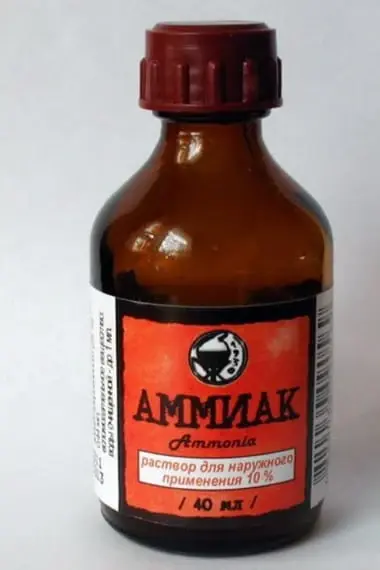
You will need: 1 tbsp. l. alcohol.
Cooking method. Add alcohol to 200 ml of water.
Application. To remove various stains from silk fabrics with ordinary alcohol, it is necessary to moisten the contaminated area with the resulting solution, then rinse thoroughly with clean water.
Recipe number 30.
You will need: 20 ml of ammonia, 5 ml of ethyl alcohol, 1 tsp. glycerin.
Cooking method. Add glycerin, ammonia and ethyl alcohol to 30 ml of water, mix thoroughly.
Application. To remove stains with ammonia from light fabrics, it is necessary to moisten a cotton pad with the resulting product, rub the stain with it. Then rinse the fabric in warm clean water.
Recipe number 31.
You will need: 20 ml of ammonia, 2 tbsp. l. turpentine, 1 tbsp. l. baking soda.
Cooking method. In 200 ml of water, add ammonia, baking soda and turpentine, mix thoroughly.
Application. To remove various stains, apply the resulting solution to the contaminated surface, leave for 15 minutes, then wash the product in the usual way.
Recipe number 32.
You will need: 10 ml of ammonia, 30 ml of cologne.
Cooking method. Add ammonia and cologne to 3 liters of water.
Application. To remove fresh stains from greenery, it is necessary to wash the contaminated area in the resulting solution, then rinse in clean water.