
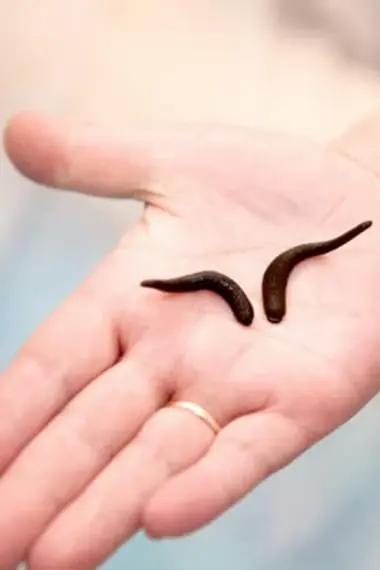
What are the benefits of medical leeches for the health of the human body: the composition of saliva and how it works
What are the health benefits of leeches, you can learn from the proposed material. For the first time in historical literature, references to the benefits of leeches can be provided to human health are found in the description of the life of Hippocrates. In the writings of this ancient scientist, there is a direct indication of the benefits of a medical leech, which consists in the effective prevention of hemiplegia and strokes. At present, the effect of leeches on the human body has been studied quite well, in particular, the chemical composition of their saliva and how it works are almost deciphered. Let's try to figure out what benefits and harm medical leeches can have on a person later in the article – all known scientific facts are presented there.
How medicinal leeches work: what are the benefits
Today, almost any commercial clinic has a hirudotherapist on staff – his work is invaluable when complications arise after surgery, problems with difficult-to-heal wounds, prolonged treatment takes place without a pronounced effect, or, moreover, there are no special results of treatment. The soft entry of leech enzymes and energy into homeostasis is used in medicine for a wide variety of diseases.
How leeches work: they act through the bloodstream and lymph, cleaning them and increasing their speed, causing the effect of dilating microvessels at the site of skin perforation, while in distant areas the vessels constrict, providing pumping of “stagnant blood". The benefits of leeches for the body lies in the fact that with soft, plastic movements they set the desired rhythm of blood circulation to large vessels through small vessels.
The next factor in the benefits of a medicinal leech lies in its unique effect – the activation of neurohumoral mechanisms occurs. Irritation from a leech bite and its muscle contractions, which occurs not only in the skin, but also in the receptors of subcutaneous fatty tissue, muscles, ligaments, and also in places where nerve endings and blood vessels pass, first produces a local reaction. Next, the flow of impulses is transmitted to the segments of the spinal cord, and then they reach the central nervous system, causing a response. It involves complex neuro-hormonal connections, which are aimed at multiplying the strength of a person in the fight against the disease.
The benefit of leeches for a person is that already within the first minutes, vasospasm is removed, which eliminates the risk of formidable complications in a variety of surgical interventions, for example, in eye surgeries, when the vessels are spasmodic, due to the pain syndrome, drugs cannot reach the desired zone, and blood circulation is sharply inhibited. Also, the effect of leeches on the body is important for sudden jumps in blood pressure, increased intracranial pressure, severe headaches and migraines. Mechanical unloading of blood flow, lowering blood viscosity, increasing blood flow speed is an even more significant effect of leeches, since it removes the risk of developing a heart attack, stroke, and if they have already happened, paralysis and other complications. Moreover, in the event of complications, if there is no rupture of the vessel, but only its blockage (thrombosis),
The composition of the saliva secreted by a leech when bitten
Leech saliva contains more than a hundred unique biologically active components that cannot be selected in any other way – such substances are not found either in herbs (herbal medicine) or in beekeeping products (apitherapy), although both of these areas perfectly complement hirudotherapy, enhancing the complex effect on the body and bringing closer recovery of the patient.
Of the substances in the composition of leech saliva, hirudin, destabelase complex, hyaluronidase, eglins, antibacterial, analgesic, enzymatic, hormone-like and other substances should be especially noted. The resolving effect of hyaluronidase, which is important in the treatment of diseases accompanied by cicatricial and adhesive processes. When bitten, a leech releases a sufficient amount of saliva filled with unique chemical compounds.
What are the substances contained in the saliva of leeches used for?
To understand why leeches are used and the substances contained in their saliva, you need to familiarize yourself with the main chemical components.
Eglins are able to reduce inflammation and tissue damage even in autoimmune diseases. Destabilase, which is contained in the saliva of a leech, is a strong protein-lipid complex. It is attached due to the lipid component of destabilase to the damaged area of the vascular wall and the parietal thrombus, however, it prevents further thrombosis due to the blockade of thrombin, blood plasma kallikrein, platelet aggregation and adhesion – it removes damage to the vessel without increasing the level of blood clots. Collagenase was first isolated in 1987. It causes hydrolysis of type I collagen fibers and is similar to human collagenase. Elastase and cathepsin G belong to the group of serine proteases. The biological value of these inhibitors lies in their ability to block the activity of leukocyte proteases released during inflammation.
For the first time in the world, it was found that during hirudotherapy, a medical leech generates acoustic impulses in the range from 25 to 250 kHz, and the number of such impulses in the process of bloodsucking can reach 500-550. Such impulses are generated in the form of packets, and their impact has a pronounced effect on almost all human organs and systems in the form of "polymorphic resonance".
In April 2003, as a result of the discovery of the detoxifying effect of hirudotherapy by A. I. Krashenyuk, it was found that leeches die in some patients after hirudotherapy. The study of this phenomenon made it possible to establish that the cause of death of medical leeches is associated with toxins circulating in the patient's blood or located in his tissues. In these experiments, it was shown that the behavior of a medical leech after bloodsucking can serve as an indicator of blood toxicity.
How do the substances secreted by a medicinal leech when bitten
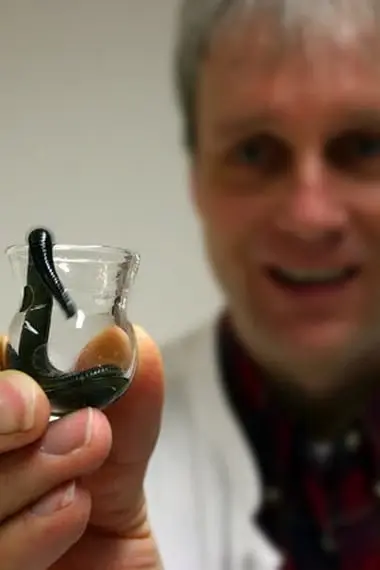 New data on the composition of the components of leech saliva were obtained and described (I. M. Sinitsyn, scientific adviser V. F. Volkova, I. M. Sechenov MMA). As part of the secretion of saliva, substances were found that are secreted by a leech when bitten, blocking all the main mechanisms for activating the blood coagulation system (primary and secondary).
Among the substances released by the medical leech, the following should be attributed: viburnum – an inhibitor of adhesion and platelet aggregation, as well as activation of the von Willebrand factor. First described by R. Munro et al. in 1991 and has a molecular weight of 65 kDa; apyrase, an inhibitor of platelet aggregation initiated by ADP, was first isolated in 1987 by M. Rigbi et al. Most active at pH 7.5. Apyrase causes the hydrolysis of adenosine nucleotides (ATP and ADP) at approximately the same initial rate. Antagonist of PAF (platelet activating factor) – prevents adhesion and activation of platelets, migration of platelets and neutrophils to the lesion, as well as the reduction of smooth muscle cells. PAF is a potent mediator of inflammation and, released at the site of injury, initiates an inflammatory response.
Girudin– the substance secreted by leeches is another useful enzyme, a kind of specific inhibitor of the thrombin enzyme. It was isolated from the extract of leeches in 1884 by Highcraft. This substance is remarkable in that it slows down blood clotting. Hirudin is a unique inhibitor of the thrombin enzyme, with which it forms a strong complex, thereby blocking all known reactions in which thrombin acts as an activator: fibrinogen activation and its transformation into an insoluble fibrin clot, regulation of coagulation factors V, VIII, XIII; regulation of the components of the complement system, changes in the functional state of blood cells (monocytes, neutrophils), including platelet aggregation. Due to the large number of contacts between thrombin and hirudin, the resulting complex acquires exceptional strength. The affinity of these substances is so high that hirudin inhibits not only free thrombin, but also the enzyme associated with the fibrin clot. Due to the ability to counteract blood clotting, dissolve blood clots, reduce inflammation and lower cholesterol levels, medicinal leeches have long been successfully used in the treatment of hypertension, atherosclerosis, angina pectoris, coronary heart disease, post-infarction and post-stroke complications. This composition shows how leeches act in various pathologies. angina pectoris, coronary heart disease, post-infarction and post-stroke complications. This composition shows how leeches act in various pathologies. angina pectoris, coronary heart disease, post-infarction and post-stroke complications. This composition shows how leeches act in various pathologies.
Hirustasin belongs to the same family of antistasin serine protease inhibitors. Isolated in 1994 from medicinal leech extracts. It inhibits tissue (but not plasma) kallikrein, trypsin, chymotrypsin, and neutrophil cathepsin G. The ability of hirustasin to block tissue kallikrein is a very important property that provides a wide range of biological activities, including maintaining normal blood pressure. After being discovered in saliva, leeches were created in a recombinant (genetically engineered) form.
Tryptase is the main component of the secretory cytoplasmic granules of mast cells and leads to the destruction of extracellular matrix proteins. The important role of tryptase in allergic and inflammatory reactions is known. As with many of the compounds already described, a recombinant LDTI has been created, since it is impossible to obtain the necessary substances directly from the leech itself on an industrial scale, but its importance is undeniable in solving many problems in medicine.
What leeches help and treat: effect and practical benefits
The main effects of the action of a medical leech on the human body:increased solar activity and other factors – does not allow the mechanism of mutagenesis to start, prevents the formation of mutagens). And this is not all the diseases that leeches help with under various conditions of external influence.
Continuing to consider the questions of what leeches are treated for, of course, it is worth noting their rejuvenating effect. The practical use of leeches is that mechanical unloading of blood flow, cleansing and thinning of blood, replenishment of blood composition with nutrients and active substances, starting the normal operation of all mechanisms of the body leads to the effect of persistent rejuvenation – the skin of the face brightens, a blush appears on the cheeks, wrinkles are smoothed out, eyes begin to shine, cheerfulness and a positive attitude towards life characterize a person who has completed a course of hirudotherapy.
Why put leeches for treatment
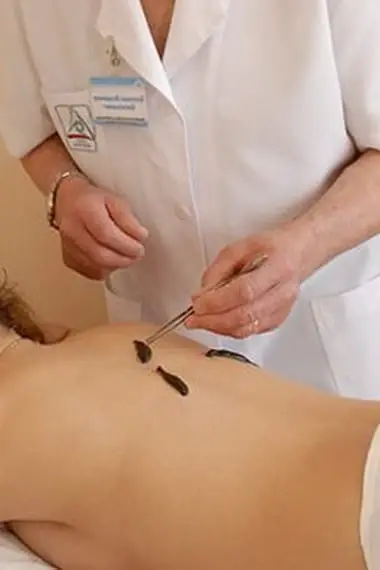 When studying the question of why leeches are used for various diseases, it is worth knowing that recent studies have shown that if you remove blood from the intestines of a leech after a session, it will not clot even during long-term storage, it will not rot or deteriorate. When scientists placed the most dangerous infections and bacteria inside the leech, it turned out that the causative agents of anthrax can live in it for no more than 14-17 days, tuberculosis – 28 days, typhoid fever – up to 30 days maximum, Staphylococcus aureus – 3-10 days.
“The secret of leech saliva contains substances that immediately have an antibacterial, antifungal and antiviral effect. Researchers around the world conducted special experiments. The leech drank infected blood, and after a while they took an analysis of this blood already from the leech itself – the blood turned out to be sterile.
Leech reworked everything! The use of leeches for the treatment of genitourinary diseases is necessary to improve local blood supply. Infections, viruses or fungi in the human body behave like terrorists who have captured a building. It is clear that they are afraid of a retaliatory attack by immunity and the first thing they do is block all approaches for a possible assault – they barricade themselves. For example, in the case of infertility, the infection enters the genitourinary tract and releases special enzymes that prevent blood flow to the affected area. For example, there are obstruction of the fallopian tubes and adhesive processes. As a result, the medicine can no longer reach the affected area.
Why are leeches useful for human health: what are they used for
An interesting fact is currently being studied: it has been found that leeches are useful for humans due to their effect on serotonin metabolism. This is a very important discovery, since it is believed that it is the lack of serotonin that leads to a number of somatic and mental disorders, causing not only alcohol and drug addiction, but also various psychopathologies. For a person living under stress, the normalization of serotonin is of great importance.
After setting leeches, the oxygen content in tissues increases by more than 15%, the rate of transport of water, ions, oxygen and other nutrients increases, due to which the process of repairing damaged tissue is sharply accelerated.
The high therapeutic effect of using a leech for health is achieved by the sum of several factors: reflex, mechanical and biological. Reflex action – the leech itself bites through the skin only at biologically active points (acupuncture points, determining them by increased pulsation or temperature). The mechanical action of what leeches are useful for is expressed in the unloading of regional blood flow by leeches. Biological action – is provided due to the presence in the saliva of a leech of a whole range of biologically active substances, which have no analogues in nature.
The medical leech is of great scientific interest and value for medicine and pharmacy, it is included in the state register of medicines and assigned to the pharmacological group "anticoagulants" (according to the pharmacopoeial article FS 42-702-97). What they are used for is difficult to list in one article.
Many secreted substances of leech saliva are synthesized and obtained by genetic engineering methods today, since they are recognized as absolutely necessary in many cases for restoring health. However, only in the leech itself they have the maximum effect, since they work in a synergistic natural form, to restore the breadth of impact, which is not yet possible synthetically. There is no and cannot be an analogue of a leech in the form of a tablet, since most of the work to restore human health is taken over by living enzymes and enzymes contained in its saliva.