

What clothes does a newborn need for the first time, gauze and gel diapers, how to care for a baby
A newborn baby in the house is not only an all-consuming joy, but also a colossal responsibility. The well-being of the baby and his mood will largely depend on how seriously you take the recommendations of neonatologists for performing hygiene procedures. Of course, experienced mothers and grandmothers know firsthand how to properly care for a newborn, but in families where the baby is the firstborn, parents often get lost.
Each family prepares for the moment when a new family member is solemnly brought into the house. What can be advised? It is very useful to make cosmetic repairs in the room where the child will live. If this is not possible, then general cleaning is simply necessary. It is not bad to bring and put a crib in advance, and not necessarily a new one, a well-washed bed, inherited, will perfectly fulfill its functions. Place the furniture in the room so that there is a convenient approach to the crib, so that it is in a bright place, but not in a draft! Take care of where you will change and swaddle your baby for the first months. Special changing tables, although convenient, do not always have enough space in the room for them, so a desk or part of the dining table can serve as a changing table. Clear out a few shelves in your linen closet for clothes and diapers. For walks on the balcony, you can use a large, specially insulated wicker basket, in which the child is not heavy and comfortable to carry.
On this page you will learn what clothes a newborn needs for the first time, and how to take care of the baby.
Care items and clothes for a newborn baby for the first months
For proper care of a newborn baby, you need: cotton swabs and cotton swabs, gauze wipes, baby cream, powder, baby oil. Also necessary items for newborn care are pipettes (for the eyes and for the nose), a gas tube, an enema can, a rubber heating pad, and a thermometer. But bottles with nipples should not be purchased – instead, it is better to immediately tune in to exclusive breastfeeding.
Linen and clothes for a newborn for the first months: thin undershirts or blouses – 10 pieces, warm undershirts or blouses – 6 pieces, caps-caps thin and warm – 5-6 pieces, thin chintz diapers – 10-15 pieces, warm flannel diapers – 5-10 pieces, diapers, flannelette or pique blanket – 1-2, wadded or downy blanket – 1, duvet covers – 3-4 pieces, oilcloth. If you do not plan to swaddle your baby often and are going to use disposable diapers, then you will need much less diapers. By 2-3 months you will need: blouses with fasteners – 6-8 pieces, thin and warm sliders – 10-15, knitted suits – 1-2.
The first clothes for newborns should not have coarse seams, knots, or buttons. In our time, underwear knitted and some cotton vests have soft, “sealed" seams on both sides – in this case, they do not need to be turned inside out, but if the seams are rough, then the vest should be worn with the seams out.
Care items for a newborn baby and clothes, even if they are new, it is important to thoroughly wash (wash) and, if possible, disinfect.
Which diapers are better for a newborn: reusable or disposable?
There are two fundamentally different types of diapers for newborns – gauze (reusable); disposable diapers with a gel-forming material in a cellulose layer. Gauze diapers are well and long known, more than one generation of people has grown up in them. They are soft, comfortable, made of organic cotton fabric, do not cause allergies, diaper rash. They, in fact, have one drawback: they get wet very quickly and require frequent replacement. This shortcoming pushed the person to look for other options. This is how modern disposable diapers appeared. They help keep baby's skin dry and reduce the frequency of irritation. In addition, the bed and clothes remain dry and clean, which, of course, is also important. Disposable diapers consist of three layers:the bottom layer is a material that does not let liquid out, the inner layer is cellulose containing a gel-forming material, and the top layer is polypropylene, which protects the baby's skin from contact with moisture absorbed by the inner layer.
Which diapers for newborns are better – gauze or gel? Almost all the discussion about the use of disposable diapers is due to the fact that polyethylene used to be the bottom layer. Under it, the temperature rose by 0.5-1 ° C, but this only mattered for boys over the age of 6 months, since their testicles do not tolerate overheating. The genitals of boys are designed so that the development and maturation of the testicles requires an "invigorating" temperature (one degree less than body temperature), which is impossible with the constant wearing of diapers. Modern materials used in disposable diapers for newborns do not allow such a rise in temperature. The first months of life (up to six months), the child can almost always be in diapers, but in the future it is desirable that he do without them for several hours a day. Modern disposable diapers, if you do not be greedy and do not wait for them to overflow, have an almost minimal “greenhouse effect”. Therefore, you can and should use them, it is convenient when walking and going to the doctor. Newborns can stain up to 15 diapers a day. When the child is 4-6 months old, they should be changed before or immediately after feeding, before going to bed and immediately after waking up, and before going for a walk.
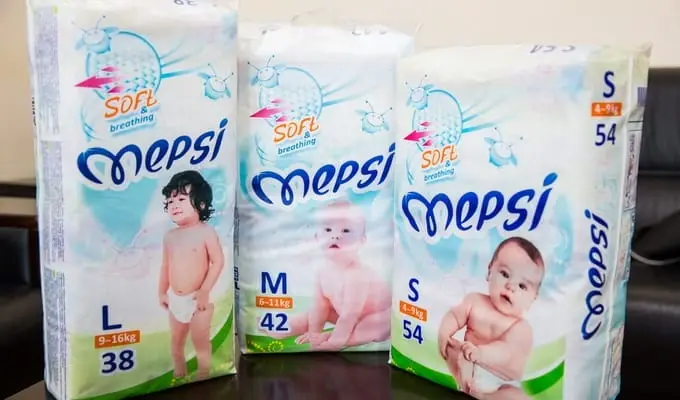
Diaper packaging usually indicates the approximate weight of the child for whom they are intended. Even the best diapers for newborns are very important to store them in a dry and cool place. High humidity adversely affects the quality of the moisture-absorbing material. Therefore, you should not keep them in the bathroom or in the kitchen, as temperature and humidity changes are most significant in these rooms. A rather serious drawback of disposable diapers is their psychological effect on a baby over 1 year old. If the child is constantly in such diapers, he is always warm and comfortable, so he does not have any incentive and desire to get used to the potty. In these children, the development of neatness skills is often delayed. Therefore, the best option is a combination of reusable (gauze) diapers for newborns, when the child is awake at home, and disposable diapers during sleep and for a walk. At the same time, two problems are solved at once: the genitals do not overheat, and the child remains dry on the street.
The following are recommendations from neonatologists on how to care for a newborn in the first month.
How to properly care for a newborn baby in the first month?
The basis of proper newborn care is keeping the room in which the child is located and the care items clean. The room is maintained at a temperature of 20-22 ° C, humidity 40-60%, wet cleaning is carried out daily. The child is swaddled with hands for the first 2-3 days, then the hands are left free. Tight swaddling is not applied.
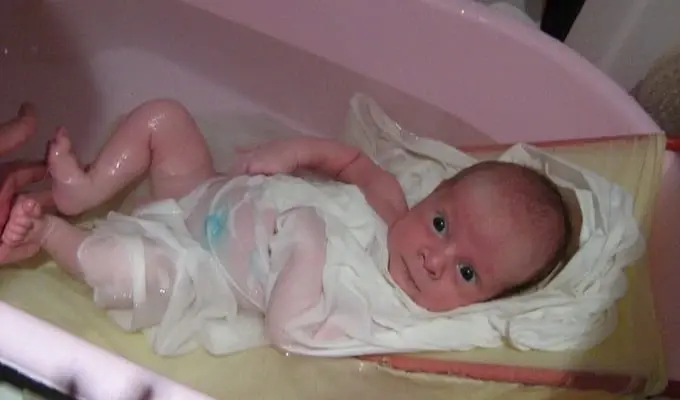
Bathe a newborn child daily after epithelialization of the umbilical wound. To care for a newborn baby as pediatricians advise, the water temperature in the bath should be 37.6 ° C, the duration of bathing is 5 minutes. For bathing, you can use unboiled tap water, both hot and cold. Bathe the child with the use of detergents should be no more than 2-3 times a week. At the end of bathing, the child is poured with water, the temperature of which is 1-2 ° C lower than the temperature of the water in the bath. It is necessary to wash the child regularly, after a bowel movement – it is necessary. The skin is dried with a soft cotton diaper with blotting movements.
When carrying out the morning toilet, the child is unfolded on the changing table completely and the skin is carefully examined, especially the folds. The face and hands of the child are washed with boiled water, the eyes are washed with sterile cotton wool soaked in boiled water from the outer corner to the inner (a separate swab is used for each eye).

In the process of caring for a newborn, we must not forget about the daily examination of the oral cavity for the timely detection of thrush. The auricles and external auditory canals are cleaned with a dry sterile flagellum or cotton swabs. The toilet of the nose is made with a cotton flagellum dipped in oil or sticks with gentle, helical movements. Skin folds are treated with a cotton swab dipped in oil. The genitals are treated with oil, in boys the head of the penis is opened as far as possible and it is also treated with oil.
In the summer, newborns can be taken out for a walk almost immediately after birth, first for 20-30 minutes, quickly increasing its duration to 6-8 hours a day. In winter, it is recommended to take out children for the first time at the age of 2-3 weeks, given the air temperature outside. The duration of walks is 1.5-2 hours 2 times a day at an air temperature not lower than -10 ° C. Up to 1.5-2 months, the child sleeps outside in the winter in the arms of an adult. The face should be open even in winter.