
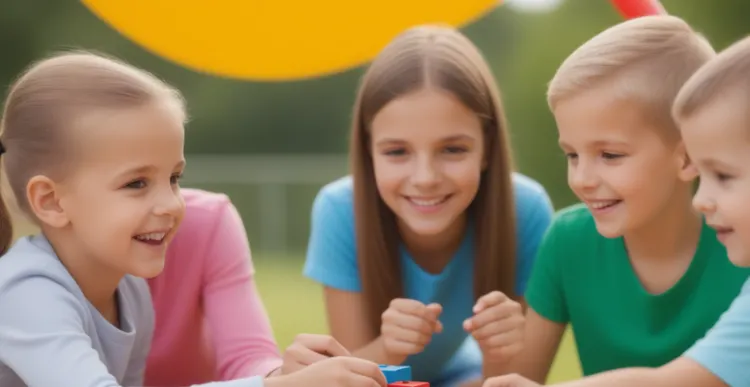
🌟 Children and friends: how games help children communicate and make friends
In the modern world, where childhood is inextricably linked with the development of interaction skills, parents try to provide their children with everything necessary for full socialization. That's why educational games for socialization and communication are an ideal tool for parents who want to help expand their child's social circle and develop their communication skills.
🤝 Why friendship is important for children
Socialization plays a key role in child development. Communication with peers not only enriches the child’s emotional world, but also contributes to the formation of such important qualities as empathy, the ability to listen and express one’s thoughts.
- Developing Emotional Intelligence: Friendship teaches children to understand and share the feelings of others, which is the basis for developing emotional intelligence. Through play and interaction, children learn to recognize and express their own emotions, and to empathize and support others.
- Strengthening self-esteem: When a child makes friends, his self-esteem improves. Friends support each other, celebrate successes and help cope with failures, which builds self- confidence.
- Developing Communication Skills: Communicating with friends requires children to use and develop a variety of communication skills, including body language, voice intonation, and conversational skills. These skills will prove invaluable in adulthood.
Games are not just entertainment; they play an important role in the socialization of children. Through playful moments, children learn to interact with each other, develop creative thinking and team skills.
- Games for different ages: The choice of games for children should be appropriate to their age and level of development. Younger children may benefit from simple games that develop motor skills and perception, while older children may benefit from more complex games aimed at developing strategic thinking and teamwork.
- Pretend Play: Pretend play allows children to experiment with different social roles and scenarios, which promotes a deep understanding of social norms and behavior.
- Team Games: Team games and sports teach children to work together toward a common goal while developing leadership skills and the ability to compromise.
🗣 Development of language skills through communication
Language is the primary tool of communication, and its development is inextricably linked to social interactions. Regular communication with friends helps children improve their vocabulary and grammar skills.
- Language Development Games: Language development games help children learn new words and expressions and improve their storytelling and narration skills.
- Socializing with Foreigners: In a multicultural society, children often have the opportunity to interact with peers from other countries, which helps them learn new languages and understand cultural differences.
- Conversation games and debates: Conducting debates and conversation games stimulates critical thinking and the ability to defend one's point of view with arguments.
School is one of the main arenas for a child's socialization. Here friendships are formed, the foundations of communication skills and social skills are laid.
- Study Groups and Projects: Collaborative project work and study groups promote mutual understanding and cooperation among students. In the process of joint activities, children learn to negotiate, distribute tasks and find solutions together.
- School Events: School events, such as sports competitions, concerts and holidays, provide informal socializing and help strengthen friendships.
- Influence of Teachers: Teachers play an important role in the socialization of children. They not only convey knowledge, but also develop social skills, teach respect and mutual understanding.
📚 Books and literature as a way of understanding friendship
Books can be a powerful tool for teaching children the value of friendship and the importance of communication skills.
- Books about friendship: There are many children's books where the main theme is friendship and relationships. Through stories about characters, their problems and friendships, children learn empathy and social interaction.
- Discussion of reading: Parents can discuss books they have read with their children, ask questions about the behavior of characters and their relationships, thereby developing the child's analytical and communication skills.
- Libraries and Book Clubs: Libraries and book clubs provide opportunities for children to meet and discuss books with others, which is an excellent practice for improving speech and broadening their horizons.
In the era of digital technology, the socialization of children increasingly takes place in the virtual space. This opens up new opportunities for communication, but also poses new challenges for parents.
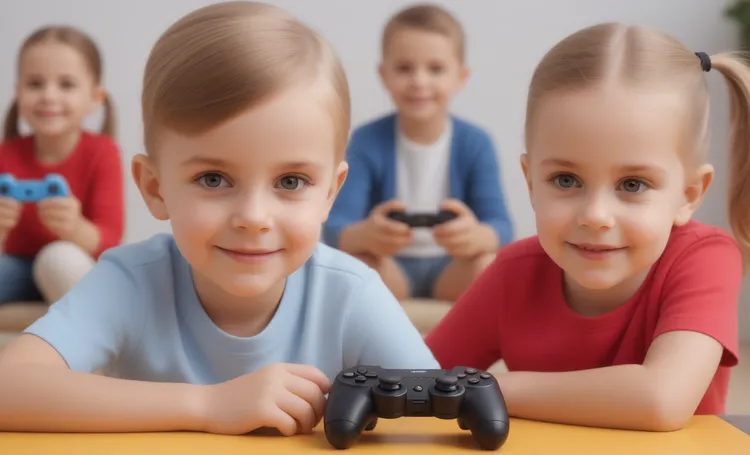
- Social networks and platforms: Social networks and communication platforms give children the opportunity to keep in touch with friends and acquaintances from different parts of the world. However, it is important to control the time a child spends on the Internet and teach him safe online behavior.
- Educational Apps: There are many educational apps that help children learn and communicate at the same time. Using such applications can help develop language skills and broaden your horizons.
- Video Games and Virtual Communication: Video games that involve teamwork and communication allow children to develop strategic thinking and communication skills in a fun way. However, it is important to ensure that games do not become a substitute for real contact.
Games are an integral element of childhood and play a significant role in socialization. Through play, children learn to interact with others, understand social roles and norms of behavior.
- Pretend Play: Pretend play allows children to experiment with different social roles, teaching them empathy and the ability to put themselves in another person's shoes. This helps in the formation of communication skills and social adaptation.
- Team sports games: Team sports games teach children to work as a team, share success and support each other in difficult moments. Such games are important for developing leadership skills and the ability to cooperate.
- Board and educational games: Board games not only provide entertainment, but also stimulate cognitive development. Educational games help expand children's knowledge of the world, as well as improve their speech and problem-solving abilities.
🌐 Globalization and multicultural education
Globalization means that children are exposed to different cultures from an early age. Multicultural education helps children better understand the diversity of the world and learn to respect and accept differences.
- Travel and Exchanges: Travel and participation in exchange programs allow children to experience other cultures firsthand, teaching them flexibility and adaptation to new conditions.
- Language learning: Learning foreign languages not only provides access to new knowledge and cultures, but is also an important means for intercultural communication.

- Multimedia Resources: Movies, music and games from different countries can be an accessible way to introduce children to the world's cultural diversity and develop their interest and respect for other cultures.