
Hair coloring at home: instructions
1 Paint testing
The first thing you should do before changing your hair color is dye testing. The test is carried out on a small strand near the neck.
Apply to hair as directed. The time must be indicated on the box. This way you can understand what color your final hairstyle will be.
How to lighten hair at home?
And you don't have to worry that a catastrophe will happen as a result, and instead of blond you will be dyed blue. In addition, it will help to identify the paint-allergen.
The main rules of self-coloring
Before you start staining, you need to test the paint for a shade and see if you are allergic to the composition. To do this, apply a little dye to the strand near the neck and wait. By doing the “reconnaissance", you will get rid of doubts about the correct choice of color and make sure that the paint is safe for you.
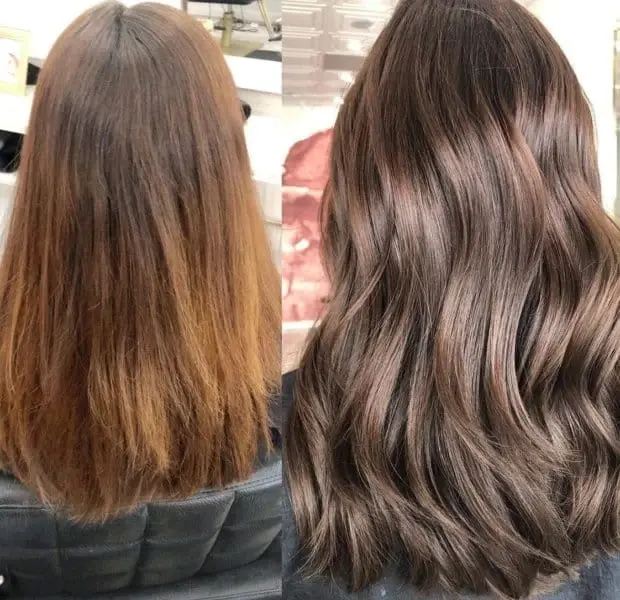
A common mistake girls make when coloring themselves is that they trust the picture printed on the package. In fact, there is no guarantee that the shade will be the same as that of the model. Usually the color is one or two shades lighter. This happens because the oxidizing agent used in home paints is more intense than what is used in beauty salons. If you want to achieve exactly the same color as on the package, try holding the dye on your hair for a couple of minutes less than the time stated in the instructions.
For dark hair
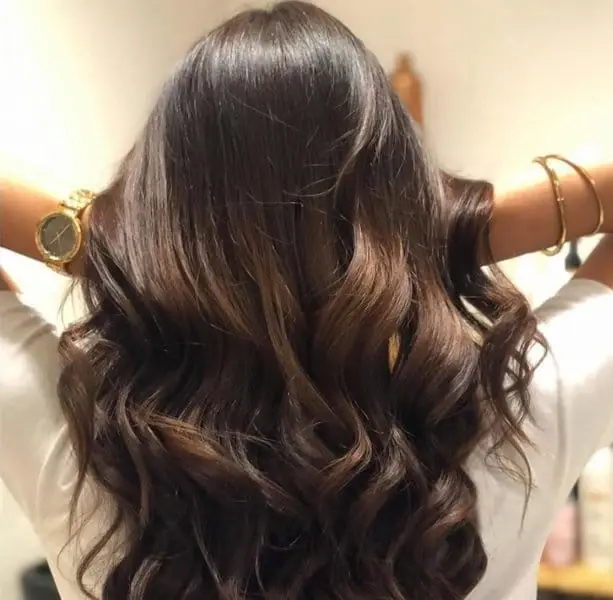
If you have dark hair and you want to make permanent coloring, you should choose a dye that is a shade darker than the color that you want to end up with. Those who want to do toning will need a paint tone lighter. This is again due to the intensity of the oxidizing agent in the composition of home paints.
See also: cascading haircuts for short hair photo
For fair hair
For blond hair, the rule is the same: for permanent coloring, choose a dye that is a tone darker than the color you want to get as a result. For temporary toning, a shade one tone lighter than the original hair color is suitable.
Types of dyes
There are several types of dyes and they are all different. It is important to know the difference between them in order to choose the most suitable remedy.
permanent paint
Permanent dye is designed for permanent coloring. This is the most commonly used type of dye. Most likely, permanent staining is exactly what you want.
Permanent dye is activated when mixed with an oxidizing agent. The developer lifts the cuticle scales and penetrates the cortex. Further, with the help of colored molecules, it changes the color of the hair.
Permanent dye is best for covering gray hair and natural hair.
Semi-permanent paint
This dye is washed off within 6 weeks.
Semi-permanent dye uses colored molecules that stick to the outside of the hair. Depending on the porosity of the hair, some molecules may even penetrate, in which case the color will last longer.
The dye does not change the structure of the hair and minimizes damage. Such paint can be used more often and as needed.
This dye will not lighten the hair… at all. If you want a bright shade or have dark hair, you will need to pre-lighten.
It is important to note that the more often you use semi-permanent staining, the more difficult it will be to remove the color.
..last but not least, most bright, punk and pastel colors are only available in semi-permanent.
Necessary tools and preparations
Properly selected tools and materials will be a good help in the work and help to get the desired result. It is important that all painting tools are non-metal, as they can chemically react with the dye and change its shade.
To prepare the solution, take a plastic, glass or porcelain container. The same recommendation applies to other hair coloring devices at home.
Brush
Determines the quality and speed of application of the solution. All brushes are divided into classic and those equipped with a comb. The latter are convenient if you use semi-permanent formulations or tint long hair. However, they are recommended for use by professionals. For home conditions it is better to choose the classics.
The optimal brush width for uniform staining is 4-5 centimeters. Narrower specimens are suitable for toning individual strands, wider specimens are suitable for hair of considerable length. The brush can be replaced with a sponge or curling applicator, especially when it comes to tonics and semi-permanent preparations.
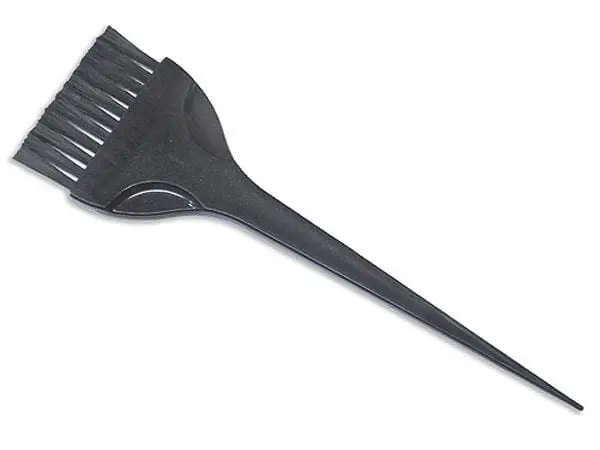
By the way. It is convenient to paint long curls with hard brushes, if you do not need to tint the roots. In other cases, it is better to choose soft bristles.
Oxide for hair coloring
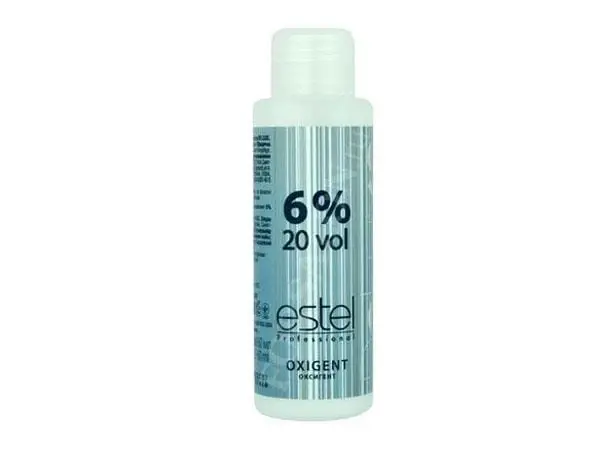
The purpose of the oxidizing agent (developer, activator) is to fix the result of painting. It is used only in combination with permanent or semi-permanent formulations. It is important to choose the right concentration of oxide, otherwise you can burn your hair.
This indicator is indicated as a percentage, which stands for the amount of hydrogen peroxide per 1 liter of the product (3% oxygen – 3% peroxide per liter, and so on).
Information on how to properly dye your hair at home will be incomplete if you do not know about developer concentration options:
- 1.2–2.5% – suitable for gentle painting and toning;
- 3% – for darkening by 1 tone or coloring in color;
- 6% – to mask gray hair and lighten by 1-2 tones;
- 9% – if you need to become lighter by 3 tones;
- 12% – used with lightening paints, makes it possible to immediately whiten hair by 3-4 tones.
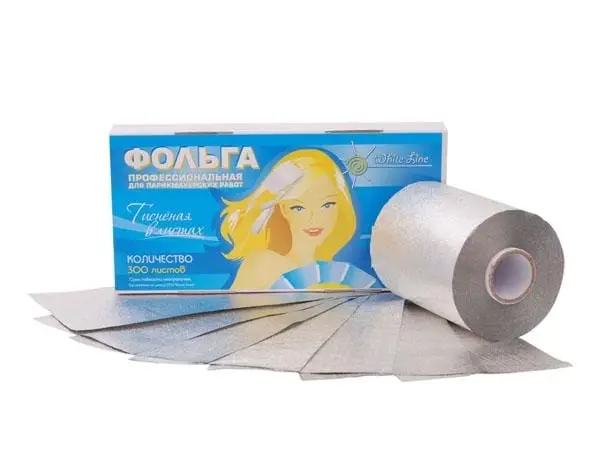
Foil
Just like thermal paper, when dyeing hair at home or in the salon, it serves to separate the strands. Foil is used for closed and hidden dyeing methods, when it is necessary that tinted curls do not come into contact with the rest of the hair mass. The advantage over paper is high plasticity.
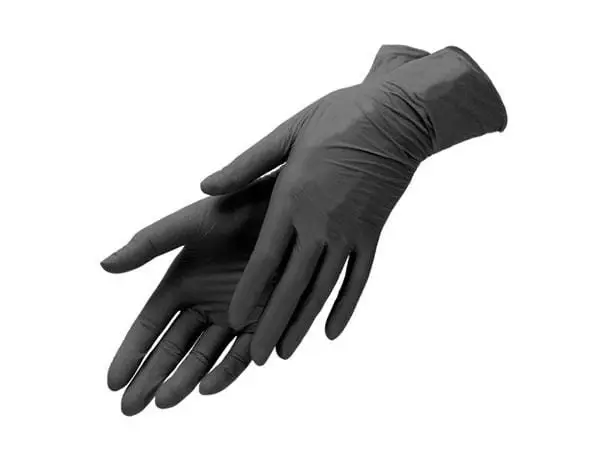
Gloves
Protect your hands from chemicals. They usually come with paint. You can replace them with more durable rubber gloves.
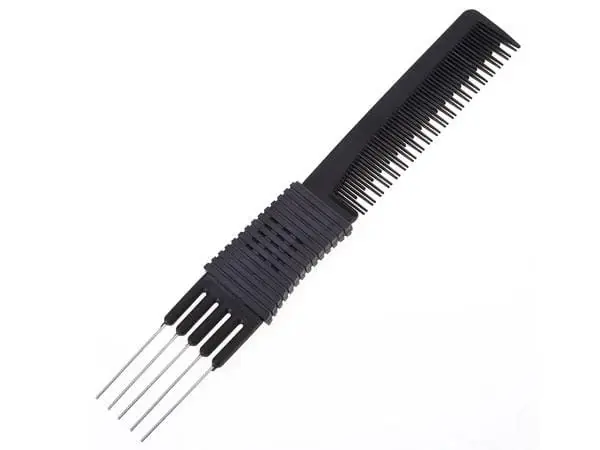
Comb
You will need a wide-toothed comb to shape the strands. It can be with a tail, so that it is convenient to separate partings when distributing the composition.
There are also special brushes for coloring (striper or with hooks) that help to effectively highlight or lighten curls at home. A comb with rare teeth will come in handy at the final stage of hair coloring at home.
See also: which comb is better to choose for highlighting hair, the technology of using the tool.
How to dye short, medium or long hair for yourself
If you have short hair, then one pack of dye is enough. If the hair is medium or long, then two or three packs of dye will be needed. It depends on the density and length of the hair. If you dye your hair often, you should have a separate container for mixing the paint. It must be non-metallic, and it is better to store it separately from the rest of the dishes.
Painting process:
-
carefully comb your hair with a regular comb – this will help remove the remnants of varnish or other products that you use from them, in addition, it will be more convenient for you to apply paint to combed hair;
-
if it’s more convenient for you to work, then divide the hair into separate zones with clips;
-
dilute the paint according to the instructions and mix it thoroughly until smooth;
-
apply paint to the hair, starting from the back of the head – it is believed that this part lends itself worse to coloring;
-
process the crown and temporal parts, as well as bangs, if you have one;
-
now gently comb your hair with a wide-toothed comb to evenly distribute the dye through your hair;
-
stand the time set according to the instructions for this paint;
-
rinse the paint thoroughly with warm water – in some cases it is recommended to do this without shampoo, so read the instructions carefully;
-
apply the balm, massage it evenly through the hair;
-
Lightly massage the scalp and hair, rinse with warm water.
Usually, dyeing is done on dirty hair, so do not wash your hair for at least three days before the procedure. But there are exceptions, so check with your hairdresser or, again, refer to the instructions for using the paint. If possible, then do not use a hair dryer after painting. Let your hair dry naturally. Or at least do not dry your hair and scalp with a hair dryer.
How to dye your hair with henna or basma
Henna is a paint made from the dried leaves of Lavsonia non-thorny. It is used for body painting and hair coloring. The last henna gives rich copper color and healthy shine.
Basma is made from indigo leaves. With its help, hair is dyed in dark tones: from light chestnut to black.
The procedure for staining with henna and basma is generally the same as with chemical paints, but there are several important nuances.
- The amount of powder depends on the length and thickness of the hair: usually one pack for shoulder-length hair and two for shoulder-length hair.
- Natural paint is poured with hot, but not boiling water. The powder must be thoroughly mixed so that there are no lumps. It is better to do this with a wooden or silicone spatula, always in a non-metallic dish.
- The consistency of diluted henna should be like thick sour cream. Basma is even thicker. When diluting it, it is important not to overdo it with water, and so that the basma does not flow, you can add glycerin or some kind of hair oil to it.
- In order for the paint to give off color better, a thermal effect is needed. After applying, put on a plastic cap and cover your head with a towel.
- Henna and basma can be kept on the hair for several hours. The longer, the richer the shade.
- Natural paint is applied and washed off harder than chemical. Stock up on patience. Rinse off henna and basma without shampoo and balm. It is also recommended not to wash your hair for a couple of days after dyeing.
Henna and basma can be combined with other natural ingredients: for example, cocoa, chamomile infusion, beetroot juice. This allows you to play with shades. Also, henna and basma can be mixed with each other. The color will depend on the ratio of dyes..
Dangers of hair coloring at home
You've already heard that hair coloring can be harmful, and here's why:
- Unpredictable result. It is highly likely that the result of dyeing will be far from the color dried on the box or in the catalog.
- It may be necessary to choose a special formula for your hair (dye + oxidizer) to obtain the desired result.
- Paints may contain parabens and metal salts that cause an allergic reaction.
- Unpredictable result.
What not to do when painting:
- although most manufacturers shout that their paint does not harm the hair and is almost useful, be sure to use color-treated hair care products anyway;
- use only glass or plastic tools for mixing and applying coloring compositions;
- before staining, be sure to do a sensitivity test to avoid an allergic reaction;
if you use bright and persistent paints of red, red shades, colors such as eggplant and the like, then apply some oil to the skin at the border of the hairbecause some paints eat into the skin, and then it is difficult to wash them off; - do not store paint near food;
- do not store paint residues;
- prepare the coloring composition immediately before use;
- if you haven’t dyed your hair before, then for the first time it’s better to trust a professional – by watching the master’s sequence of actions, you will understand how you can then dye your hair at home on your own;
- if the paint gets on the skin or mucous membranes, rinse them with plenty of water, and if the paint accidentally gets into the eyes, you should immediately consult a doctor;
- with most paints (especially brightening ones), you may feel some burning on the skin, but if it becomes very strong or you feel additional itching on the skin or begin to swell, wash off the paint immediately and drink an antiallergic drug.
Colored hair care
Immediately after coloring, the appearance of the hair noticeably improves, it is well combed and styled, becomes obedient, smooth and shiny. But after a week, all these effects disappear: the curls fade, it is difficult to comb, they are very confused – all this is the result of the chemical action of the paint components. As a result, the strands lose their structure and moisture, degrease and dry out.
Therefore, dyed hair needs special care to restore and strengthen curls. Caring for dyed hair at home involves the following rules:
- Use high-quality special products for dyed hair – shampoos and balms that neutralize alkali, which, after dyeing, remained not only on the hair, but also on the scalp.
- Don't put too much stress on your hair. Try to do without curling irons, straighteners and hot hair dryers, and if they are rarely used, use thermal styling products.
- Be sure to comb during the day and before going to bed, and do it right: start combing long strands from the ends, it is not recommended to comb wet dyed curls, wait until they dry.
- Try to wash your hair less often – no more than twice a week, so that the color lasts longer. And when washing, use slightly warm, but not hot, boiled or distilled water.
- Refrain from using special shampoos for oily hair and medicated dandruff shampoos in the first month after dyeing your hair.
- Two to three weeks after the pigmentation procedure, do not visit the pool, which contains chlorinated water, and also protect your hair from ultraviolet sunlight.
- To restore and maintain the vitality of curls, they need nourishment, so start taking multivitamin complexes, and also use vitamin balms.
Care for dyed hair at home should be based on three basic principles: systematic, constancy and complexity. Then your hairstyle will delight you with health and beauty.
Summing up, we can say that dyeing hair at home is not a very complicated procedure if you prepare all the necessary items in advance and follow our tips and instructions for dyeing and caring for dyed hair.