
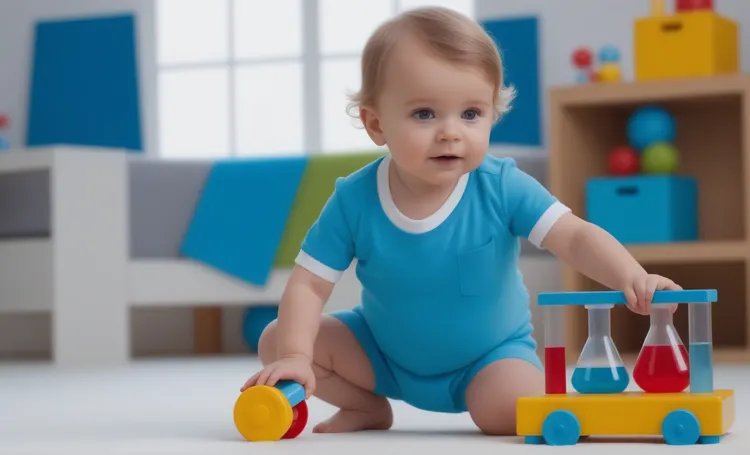
Open the door to the world of science: a child’s first steps
In a world where every day brings something new, it is important to instill in children an interest in discovery from an early age. The science toys and kits here can be the first step to understanding complex concepts in an accessible and fun way.
🧬 Why do children need science?
Science not only helps children understand the world around them, but also develops critical thinking, curiosity, and creative problem solving.
- Breaking new ground: By learning scientific principles, children learn to analyze, compare and draw conclusions, which helps develop their intelligence.
- Developing Problem -Solving Skills: Science experiments teach children trial and error, which is important for making independent decisions in the future.
- Imagination and Creativity: Science is closely related to creativity because creating new theories and hypotheses requires the ability to think outside the box.
🌌 First experiments: simple and fun
Doing experiments at home is a great way for children to learn about scientific phenomena.
- Easy experiments at home: You can start with simple experiments, such as making a volcano with baking soda and vinegar or growing crystals with salt.
- Science Kits: There are special educational kits that allow children to safely experiment and learn about physics, chemistry and biology.
- Observing Nature: Simply observing changes in weather, plants and animals can be a great start to learning about scientific patterns.

📚 Books and resources for young scientists
Modern resources make science accessible and interesting for children of all ages.
- Interactive books: With the help of interactive books, augmented reality, children can see how various scientific principles and phenomena work .
- Educational Platforms: Online platforms and apps offer a variety of science-themed games and activities that capture a child's attention and promote learning.
- Science Shows and Videos: Documentary and entertaining science shows can be an excellent addition to the educational process, making it entertaining and memorable.
🧑🔬 Inspiring stories of famous scientists
Stories about the lives and achievements of great scientists can motivate children to continue their research and study.
- Success stories: Biographies of people like Albert Einstein or Marie Curie show how a passion for science can lead to great discoveries.
- Modern Scientists: Modern scientists like Stephen Hawking continue to inspire young people with their research and discoveries.
- The Role of a Model: By introducing children to the role of a model in the scientific community, parents and teachers can help them find role models and motivation to learn.
🤖 Technology and robotics for children
Involvement in robotics and programming opens up children to a world of technology and innovation.
- Coding through play: With gaming platforms like Scratch, kids can learn the basics of programming by creating their own games and animations.
- Robot building kits: Robot building kits, such as Lego Mindstorms, give children a hands-on introduction to the basics of mechanics and electronics.
- Artificial Intelligence Basics: Toys and apps designed to teach the basics of AI help children understand how machines can learn and perform tasks.
🧪 Safety during experiments
Teaching children safety rules during experiments is a key element of science education.
- Laboratory Safety Basics: Explaining simple safety rules, such as using safety glasses and gloves, helps prevent injuries.
- Parental Guidance: Adult participation in experiments ensures safety and enhances the educational value of the activities.
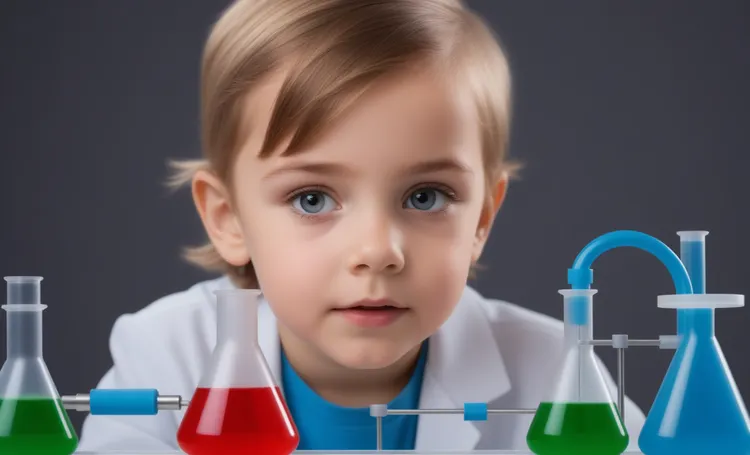
- Understanding Chemical Reactions: Knowing which substances can be mixed and which cannot be mixed is important for safe and fun experiments.
🌍 Ecology and environment
Understanding the importance of preserving the environment is part of modern science education.
- Learning through Observation: Regular walks in nature and observing changes in the ecosystem instills a love and respect for nature.
- Environmental projects: Participation in school and community environmental projects teaches children responsibility for the environment.
- Virtual excursions: Using virtual reality, children can travel to different parts of the planet and learn about nature conservation without leaving home.
📈 Statistics and mathematics: game approach
Mathematics is the basis of many scientific disciplines, and it is important to involve children in learning it using playful methods.
- Math Games: Games and apps for mobile devices make learning math fun and interactive.
- Understanding through Visualization: Graphs, diagrams, and interactive models help children better understand abstract math concepts.
- Developing Logical Thinking: Problems and puzzles develop children's logical thinking and analytical skills needed in science.
📚 Literature tour and history of science
Introducing the history of science through literature helps children understand how scientific knowledge developed.
- Reading biographies of scientists: Books about the lives and discoveries of great scientists inspire children and show real examples of scientific achievements.
- Non-Fiction : Accessibly written science books cover complex topics in a way that children can understand.
- Historical Experiments: Re-creating famous experiments from the past allows children to better understand how key scientific discoveries were made.
🎓Development of critical thinking
Critical thinking is an important skill that is developed through science and experimentation.
- Analysis and synthesis of information: The ability to analyze information and draw conclusions based on experiments helps children become more aware.
- Evaluating Sources: Learning to distinguish reliable sources from dubious information is a key skill in an era of information abundance.
- Distinguish between facts and theories: Understanding the difference between scientific facts and theories allows children to engage more deeply with science.
🔬 Scientific clubs and communities
Participation in science clubs and communities contributes to the socialization of children and the exchange of knowledge.
- School Science Clubs: School clubs and clubs provide a platform for children to exchange ideas and undertake joint projects.
- Online communities: Online platforms and forums allow children from all over the world to communicate, exchange experiences and participate in joint research.
- Science competitions and olympiads: Participation in science competitions motivates children to study subjects in depth and develop competitive skills.
Results and conclusions
Exposure to science from an early age lays the foundation for the development of analytical thinking, a critical approach to information, and the ability to work in a team. A variety of methods and approaches, from experiments to reading popular science literature, make the learning process interesting and accessible to children of different ages. Participation in scientific projects and communities not only increases interest in science, but also promotes socialization and the development of communication skills. Thus, introducing children to the world of scientific discovery is an important step towards their full development and preparation for future challenges.