

Ischemic heart disease and its alternative treatment
Recently, forms of coronary heart disease are leading and can be diagnosed in relatively young people. Ischemic heart disease (CHD) is rapidly “getting younger" and nowadays myocardial infarction is not the prerogative of the elderly. It can develop in a person between the ages of 30 and 25.
Coronary ischemic heart disease is a very insidious disease, since the vessels narrow slowly, without giving pronounced manifestations of the disease for a long time. But at the same time, against the background of the disease, the human heart loses its functional contractility, since it is forced to work all the time in conditions of a pronounced deficiency of oxygen, glucose and other nutrients. Constant hypoxia creates the prerequisites for the occurrence of foci of delimited necrosis in the heart muscle. This gives rise to the development of an attack of unstable angina and myocardial infarction. Signs of coronary heart disease represent a risk of death at a young age. Therefore, it is important to know all possible treatments. This article talks about the folk treatment of coronary heart disease, and the most effective recipes can be found right here.
Modern classification of coronary artery disease according to WHO
Ischemic heart disease with angina pectoris is a disease in which the amount of blood flow through the coronary arteries that feed the heart does not provide its need for oxygen, resulting in pain attacks.
The classification of coronary artery disease establishes that coronary insufficiency is most often based on atherosclerosis of the coronary arteries, their spasm, and thrombosis.
The modern classification of IHD gives the right to assert that all forms of angina pectoris, myocardial infarction, cardiosclerosis, and cardiac arrhythmias can be included in the pathology complex.
The WHO classification of IHD suggests that heart failure is a complex of disorders caused mainly by a decrease in the contractility of the heart muscle. It occurs when the heart is overloaded and overworked (due to arterial hypertension, heart defects, etc.), its blood supply is disturbed (myocardial infarction), myocarditis, toxic effects (for example, with Graves' disease), etc.
Angina pectoris, or angina pectoris, is the most common clinical form of coronary heart disease (CHD), that is, a violation of its blood supply. It develops when the need of the heart for blood exceeds the capacity of its supply to the coronary arteries; usually occurs due to atherosclerosis of the coronary arteries (the arteries that supply blood to the heart muscle).
The main manifestation of angina pectoris as a heart disease is attacks of constricting or pressing pain behind the sternum or in the region of the heart (“the toad is choking”). The pain occurs suddenly, lasts from several minutes to half an hour, can be given to the left arm, shoulder, shoulder blade, neck, lower jaw, and even teeth. Sometimes the pain is accompanied by a feeling of fear, which causes patients to freeze in a motionless position. And the patient does not know what helps with angina, because in everyone the first attack develops suddenly.
A hallmark of angina pectoris is the rapid (after one to two minutes) effect from the use of nitroglycerin. In cases where the attack lasts more than half an hour and is not relieved by this drug, there is a real threat of developing a myocardial infarction. It is urgent to call a doctor!
Causes of coronary heart disease
There are very specific causes of coronary heart disease and angina attacks, the so-called risk factors (there are more than 30 of them): increased blood cholesterol, high blood pressure, smoking, overweight, diabetes, sedentary lifestyle, neuropsychic overstrain, etc. The combination of several risk factors is especially dangerous, since the probability of the disease increases several times.
It is necessary to exclude the causes of coronary heart disease from a young age in order to actively prevent coronary insufficiency and maintain health.
The main clinical forms of coronary heart disease
myocardial infarction– heart disease, manifested in an acute form. A heart attack, as a clinical form of coronary heart disease, is caused by the development of a focus of necrosis (necrosis) in the heart muscle. It occurs as a result of a sudden violation of arterial blood flow due to an embolism (blocking the blood flow with an obstructing mass) or the presence of a blood clot in it. It is one of the forms of coronary heart disease. Most often, in the practice of a cardiologist, myocardial infarction is diagnosed against the background of the main form of coronary heart disease and is considered as its consequence or complication. Accordingly, in the presence of ischemic myocardial disease, the heart cannot cope with its functional loads. First of all, pain relief is required. Then thrombolytic therapy and recovery during the rehabilitation period are carried out.
Most often (97-98% of cases) the cause of myocardial infarction is atherosclerosis of the coronary arteries, which supply blood to the heart muscle. In these arteries, due to their sharp narrowing due to atherosclerotic plaques, blood flow is disturbed, the heart muscle receives an insufficient amount of blood, ischemia (local anemia) develops in it, which, in the absence of appropriate therapy, ends in a heart attack.
Symptoms of coronary heart disease
Shortness of breath in heart disease (dyspnea) is a violation of the frequency and depth of breathing, accompanied by a feeling of lack of air.
With heart disease, shortness of breath appears during exercise, and then at rest, especially in a horizontal position, forcing patients to sleep half-sitting – than in bed or sitting on a chair (orthopnea).
Attacks of severe shortness of breath (usually nocturnal) as symptoms of coronary heart disease:
- Manifestation of cardiac asthma; shortness of breath in these cases – inspiratory (difficulty inhaling).
- Expiratory shortness of breath (difficulty exhaling) occurs when the lumen of the small bronchi and bronchioles narrows (for example, with bronchial asthma) or with a loss of elasticity of the lung tissue (for example, with chronic emphysema).
- Cerebral shortness of breath occurs with direct irritation of the respiratory center (tumors, hemorrhages, etc.).
Edema in heart disease often becomes a diagnostic sign of the development of myocardial insufficiency. This is a bad prognostic sign. Emergency decompensation of heart failure is required to avoid death in the patient.
A cough with heart disease speaks of the cardiopulmonary form of insufficiency, it appears as a result of the expansion of the right sections of the myocardium. Stagnation in the area of the pulmonary vein also appears with thrombosis. Therefore, if a cough occurs, you should immediately consult a doctor.
Arrhythmia – heart disease with rhythm disturbance and tachycardia
The heart is the central organ of the circulatory system, providing with its rhythmic contractions the continuous movement (circulation) of blood in the body. Arrhythmia is a heart disease with various deviations from the normal heart rhythm (rhythm disturbance, heart failure, sharp chaotic heartbeat).
Heart diseases with rhythm disorders (arrhythmias) occupy a leading place in cardiac pathology, arising from a variety of functional and organic lesions of the myocardium and valvular apparatus of the heart.
They can be primary (with a violation in the pacemaker area), physiological (with high physical exertion) or secondary. As a secondary arrhythmia, tachycardia in any heart disease is an important diagnostic sign indicating coronary insufficiency.
Treatment of coronary heart disease folk remedies
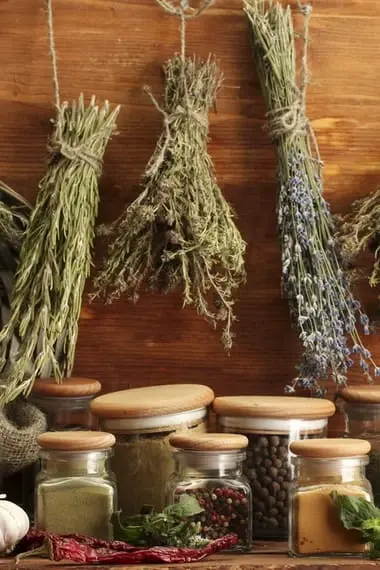 Alternative treatment of coronary heart disease always begins with the normalization of the regime and diet. The next step is gradually increasing in intensity physical activity. We also suggest learning about the treatment of coronary heart disease with folk remedies, which are offered for review further on the page.
Tincture of walnut partitions.
Crush partitions of walnuts and fill them to the top with a glass bottle, pour vodka and infuse for 14 days in a dark, cool place.
It is taken orally to treat symptoms of coronary heart disease with folk remedies 1 time per day, 30-40 drops, with 0.5 cups of water.
Tincture of flowers and leaves of hawthorn.
10 g of plant flowers with leaves are infused for 10 days in 100 ml of vodka or 70% alcohol, filtered and stored in a dark container. Take 20-30 drops with water 3 times a day 30 minutes before meals. The duration of the course is 20-30 days.
Hawthorn tincture lowers the excitability of the central nervous system, tones the heart muscle, enhances coronary cerebral circulation, eliminates arrhythmia and tachycardia, lowers blood pressure, shortness of breath.
A folk remedy is used for heart disease, with a functional disorder of cardiac activity, with heart weakness, angioneurosis, insomnia in heart patients, with hyperthyroidism with tachycardia, initial forms of hypertension, atherosclerosis.
Hawthorn extract.
Prepared from fruits in the same way as tincture, but with a ratio of components 1:1. The extract is a clear dark brown liquid with a pleasant odor and a sweetish taste. It is used similarly to the tincture of hawthorn flowers and leaves. Accepted in the treatment of heart disease with folk remedies, 20-30 drops 3-4 times a day before meals.
Eleutherococcus root tincture.
150-200 g of dried crushed Eleutherococcus roots are infused in 1 liter of 40% alcohol (vodka) for 2 weeks with frequent shaking.
Accepted in the treatment of coronary heart disease by folk methods, 1/2 teaspoon 2-3 times a day.
The use of the drug improves the general condition, reduces cholesterol in atherosclerosis with a primary lesion of the aorta and coronary vessels. Creates a favorable background for various diseases of the cardiovascular system, rheumatic heart disease. It increases the mental performance of a person, reduces fatigue during physical exertion, improves hearing and vision.
Methods of treating IHD with folk remedies at home
 Alternative methods of treating IHD, described below, can only be used under the supervision of a physician.
Folk recipe for valerian tincture for the heart
Valerian as a medicinal plant was known in ancient times. Its industrial collection for hospitals began under Peter I. In the 18th century, valerian was already considered one of the most important medicines.
Valerian in the treatment of IHD with folk remedies at home has a calming effect on the excited nervous system, promotes digestion, is useful for heart palpitations, spasms, neuroses of the cardiovascular system, accompanied by pain and spasms of the coronary vessels.
To prepare a tincture according to a folk recipe for treating the heart, take 5 parts of 70% alcohol or vodka for 1 part of rhizomes and roots of valerian, insist for 7 days in a dark place. Filter and take 15-20 drops 5-4 times a day in a small amount of boiled water. Store the tincture in a dark place.
Tincture of hawthorn flowers.
50 g of hawthorn flowers are poured into 0.5 liters of vodka and infused in a dark place for 21 days. The finished tincture is filtered and taken orally 25 drops 3 times a day before meals for angina pectoris.
Tincture of flowers or fruits of hawthorn.
In a closed vessel for 1 week, insist 1 tablespoon of hawthorn flowers or fruits in 1 glass of vodka. Filter. Taken as an adjuvant for the treatment of coronary artery disease at home, 20-25 drops in a small amount of boiled water 3-4 times a day before meals in the stage of scarring of a heart attack.
Blood-red hawthorn is very useful for patients with angina pectoris.
Tincture of hawthorn and valerian.
15 drops of alcoholic tincture of hawthorn fruit are mixed with 15 drops of alcoholic tincture of valerian rhizomes (pharmaceutical preparations) and taken for angina pectoris 30 drops with water 3-4 times a day before meals.
Celandine herb tincture.
With shortness of breath, take 20 drops 2 times a day, a tincture prepared from 10-15 g of celandine grass and 100 ml of alcohol or 1 glass of vodka.
Tincture of warty birch (white, hanging).
Buds, birch leaves and birch sap have long been used in folk medicine, they have a beneficial effect on the body's metabolism and contribute to the elimination of various harmful substances.
Water infusion, decoction and alcohol tincture of the kidneys are used for atherosclerosis. Clinical studies have shown that infusion and tincture of the leaves or kidneys give good results in the treatment of edema of cardiovascular origin.
To prepare a tincture for the treatment of IHD with folk remedies, 15 g of birch buds are poured into 500 ml of vodka and infused in a dark place for 10-12 days. Take 15-20 drops 2-3 times a day. Before use, dilute the tincture in a small amount of water.
Alternative treatment of IHD includes a course of various herbal tinctures and bee products. For the treatment of cardiac arrhythmias with folk remedies, you can use mountain arnica, May lilies of the valley, calendula and many other herbs.
Traditional medicine for heart disease
 With the right approach, traditional medicine for heart disease allows you to fully restore the functionality of the myocardium and the cardiovascular system.
Tincture of mountain arnica.
In German folk medicine, after a heart attack, water infusion and alcohol tincture of mountain arnica are used, which dilates the coronary vessels, improves the nutrition of the heart muscle, speeds up the heart rate, and lowers blood cholesterol levels.
Tincture of flowers and herbs of May lily of the valley.
May lily of the valley is a popular folk remedy for various heart diseases and is widely used in folk medicine in various countries.
Alcohol tincture of flowers and herbs greatly affects the activity of the heart. It slows down the rhythm of heart contractions, improves the filling of the pulse, reduces congestion, shortness of breath, cyanosis, and also has a diuretic, sedative and analgesic effect.
To prepare the tincture, fresh lily of the valley flowers are placed in a dark glass bottle, pour 1.5 cups of vodka. After 2 weeks, filter and take 2-3 times a day, 10-15 drops in a small amount of boiled water.
You can use pharmacy lily of the valley-valerian drops. They are taken 2-3 times a day, 15-20 drops with water.
Tincture of calendula.
Calendula officinalis (marigold) as a medicinal plant was known in ancient Greece. Its action is multifaceted. Water infusion and alcohol infusion of flower baskets calm the nervous system, lower blood pressure, increase heart activity, slow down the rhythm of heart contractions, and have an analgesic effect.
Tincture of magnolia grandiflora leaves.
For 1 part of crushed magnolia leaves, take 1 part of medical alcohol and infuse for 7 days (in a closed vessel, in a dark place). Strain and store in a dark place.
Take with angina pectoris 20 drops with water 3 times a day. The course of treatment is 3-4 weeks.
This tincture not only reduces pain in the heart area, but also normalizes heartbeat and high blood pressure, improves overall well-being.
Another folk remedy for heart arrhythmia
Finally, we offer another folk remedy for heart arrhythmias based on royal jelly. After a heart attack, with angina pectoris and other heart diseases, anemia, hypotension and diseases that deplete the body, an alcohol mixture of royal jelly is used: 1 part of royal jelly is mixed with 20 parts of 40% alcohol (vodka) and taken 10-15 drops in 1 a tablespoon of warm boiled water 3-5 times a day before meals.