

How to clean and wash your hands properly: folk remedies and recipes for cleaning
Hand washing should be effective and not harm the health of the skin. I wash my hands correctly only if a suitable cosmetic product is selected that does not dry the skin. Hands should be washed only with warm water, because hot water dries the skin, and too cold can cause it to coarsen. After that, they should be wiped dry and lubricated with a moisturizing or nourishing hand cream.
While washing your hands with soap, do light exercises that will help relieve fatigue and increase blood circulation in the skin.
Thanks to this, the cream applied after the procedure will be absorbed better:
- 1 – lather your hands, squeeze one into a fist and put it in a palm folded like a boat, actively rotate your fist until a feeling of warmth appears, then change hands;
- 2 – straighten your palms and fold them together, squeezing vigorously until slight fatigue appears;
- 3 – put your palms together and actively move them back and forth, rubbing against each other;
- 4 – fold your hands into the lock and rub your palms together well, without disengaging your fingers, then rinse the soap with cold water, dry thoroughly and lubricate with a nourishing cream.
Before cleaning vegetables or working with the ground, it is advisable to lubricate your hands with a nourishing or protective cream, and also lightly scratch a bar of soap with your nails.
How to choose cosmetic products for cleaning hands
The industry produces a variety of cosmetic products for cleaning hands from contamination. How to choose these products, and how is hand cleaning done? Let's consider these questions further. For daily cleansing of the skin of the hands, it is optimal to use soap. The principle of making any soap is based on a chemical reaction between fats and alkali, during which the former break down into glycerol and fatty acids in the composition of sodium salts. When they are cleaned, a soap base is obtained.
Depending on the components that are added to the soap base, there are several types of soap.
Antibacterial soap as a hand wash
Antibacterial soap as a means for washing hands, came into use relatively recently, but is already perceived as a panacea. The composition of such soap includes active antibacterial ingredients, such as triclosan. However, along with harmful ones, this component also destroys beneficial microorganisms, disrupting the protective microflora of the skin of the hands. Therefore, antibacterial soap should only be used in case of heavy soiling and a high likelihood of infection.
After contact of the skin of the hands with soap, be sure to apply a layer of nourishing or moisturizing cream, but do not rush to distribute it over the entire surface of the palms, allowing it to warm up between the fingers.
Cleansing hands with solid toilet soap
This form of release of toilet soap for the majority is the most familiar. Modern solid soap has very high consumer qualities due to dyes, perfume compositions and even moisturizing or nourishing creams that are part of it. Cleaning hands with solid toilet soap is cost-effective, quick, and has a risk of developing allergic reactions.
If the use of toilet soap is accompanied by dryness and tightness of the skin, as well as delamination of the nails, you should choose a cleanser with a lower alkali content. Soap with a neutral pH (about 5.5) is the best solution. In the absence of serious contamination of the skin of the hands, such soap may well replace alkaline soap.
If the skin on the hands is prone to sweating and inflammation, you should pay attention to soap containing oak bark extract or coniferous plants.
How to clean the skin of the hands with gel and liquid soap?
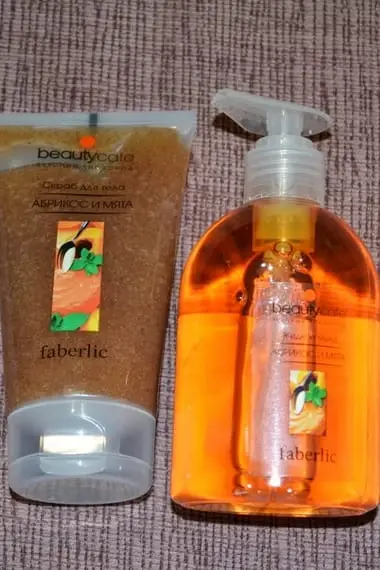 Recently, many new tools have appeared in everyday life, how to clean the skin of the hands with gel or liquid soap – read on. Such soap may be solid or liquid; and in both cases, the main one is the cleansing gel. Liquid gel soap is available in bottles with a dispenser; solid, as a rule, has a decorative appearance. Gel soap is pleasant to the touch, creates a plentiful foam, more delicate than solid toilet soap.
Liquid soap, packaged in plastic or glass bottles with a dispenser, is now gaining more and more popularity. Liquid soap dissolves more easily in water and gives a thicker foam, but in general, its composition and properties are not much different from solid toilet soap. It may also include natural oils, vitamins, herbal and mineral components, etc.
Even after thorough washing, carefully dry your hands, because on the surface of wet palms a favorable environment is created for the reproduction of pathogenic bacteria. Disposable towels and napkins are best suited for this purpose.
How to clean hands with scrub soap?
Before you clean your hands with scrub soap, you should read the brief recommendations of dermatologists. The composition of this soap includes special abrasive components: sea salt, ground coffee, crushed nutshells, etc. It is recommended to use it once a week for deep cleansing and exfoliation of the skin of the hands.
Perfumed and decorative handmade soap. As a rule, this is a gift version of soap, usually it has an original design and / or gives the skin a lasting aroma. Its cleansing properties may be inferior to conventional solid or liquid toilet soap.
Now it is quite popular to make toilet soap at home. Such a product will not only become an original decoration of the bathroom, but can also be used for its intended purpose.
There are several different ways of making soap at home:
- from scratch – the most difficult and dangerous, since the soap base is obtained independently by carrying out the appropriate chemical reaction;
- based on baby soap or soap blank – simpler methods in which various moisturizing and softening components, aromatic substances, and decorative elements are added to the soap base.
Various herbs can be used as caring additives: calendula, chamomile, string, essential oils, as well as honey, ground coffee, etc.
Soap, even pH neutral and enriched with various moisturizing additives, should not be kept on the hands for more than 30 seconds, otherwise it may irritate the skin.
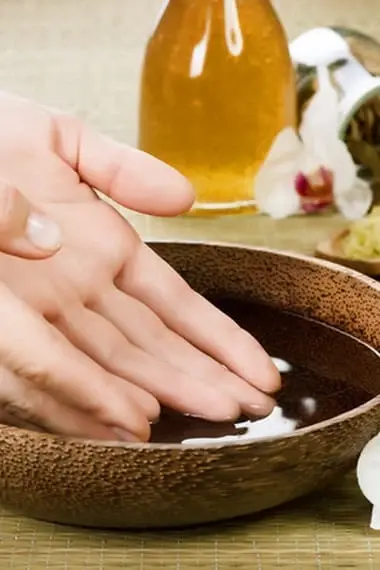
Cleansing baths for hands. If washing your hands with soap and water is not enough to clean your hands, cleansing baths will be useful.
When making baths, hands should be immersed in water approximately to the middle of the forearm.
On a note. In no case should you use household soaps for hand skin care, even if they resemble toilet soap in appearance and smell.
Folk recipes and hand cleansers
 Hand cleansers can be prepared at home from improvised ingredients. For this, folk recipes for hands are supposed to help solve even the most difficult tasks.
Peeling. 1-2 times a week, a deeper cleansing of the skin of the hands should be carried out using the peeling procedure. It allows you to remove a layer of dead cells from its surface, which helps to heal the skin of the hands and improve its appearance.
For peeling, you can use scrub soap, special creamy scrubs for hands or face. You can also prepare this tool yourself from improvised components.
Curd scrub with lemon zest. Mix 1 teaspoon of powdered dry lemon zest with 2 tablespoons of cottage cheese and 1 tablespoon of milk or cream. Add a few drops of lemon juice. Rub the resulting composition into the skin of the hands with light massaging movements, hold for 2 minutes, then rinse with warm water without using soap. Dry your hands with a towel, apply a rich nourishing cream.
Cleansing the skin of the hands from stubborn dirt. To remove paint marks, ink stains, and other stubborn stains from the skin of your hands, you can use the following recipes.
Lemon juice against strong pollution. Wipe the skin of the hands with a slice of lemon and after 5 minutes wash your hands with soap, wipe dry, apply a nourishing cream.
The most stubborn stains can be removed with a mixture of lemon juice and table salt.
Orange or lemon peel for tar stains. Wipe the resin stains on the hands with the outer side of a fresh lemon or orange peel, after 1-2 minutes wash your hands with soap, wipe dry and grease with a nourishing cream.
If you're out in nature, don't be afraid to get your hands dirty for health benefits. For example, pick up a handful of small pebbles and try to "sift" them through your fingers. Do the exercise several times, so you will massage the whole body.
You can reduce the susceptibility of the skin of the hands to contamination by lubricating them with a special protective ointment or silicone cream. Also for this purpose, you can use a mixture of 2 g of food gelatin, 1/4 cup of warm water, 15 g of starch, 20 g of talc and 2 g of boric acid. Apply the composition to the skin of the hands before working with earth, paint, etc. After the manipulations, wash your hands thoroughly with soap and water.
Tomatoes against ink stains. Wipe the ink stains on the hands with a slice of a ripe tomato, after 1-2 minutes wash your hands with soap, wipe dry and grease with a nourishing cream.
An alternative to massage with pebbles can be the impact on the biologically active points of the palm with a massage ball. It can be clenched in a fist, rolled between the palms, pressed on it with fingertips.