
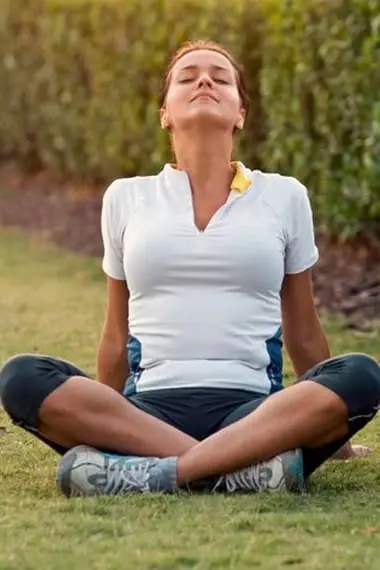
Breathing exercises and gymnastics for weight loss of the abdomen, strengthening the cardiovascular and respiratory systems, pregnant women
He receives it from the external environment with the help of the process of breathing, for which there is a whole respiratory system in the body. Accordingly, their life and health depend on how and what people breathe, and the level of oxygen in the blood determines the intensity of all metabolic processes. At all times and in different countries, from Tibetan monks and Indian yogis to Greek philosophers, breathing exercises have been an important part of health-improving gymnastics. Complexes of breathing exercises formed the basis of numerous methods for general recovery, for weight loss, for the prevention and control of bronchopulmonary and cardiovascular diseases. The well-known aerobics is based on the combination of breathing exercises and active movements to fast music.
Since the purpose of such exercises is to saturate the tissues of the body with oxygen, then, when starting them, it is necessary to ventilate the room, and even better, to conduct an exercise in the open air. Clothing for classes should not be tight, and the exercises themselves should not be performed on a full stomach, i.e. the optimal time for them will be before meals or not earlier than 1-2 hours after it. Before starting individual breathing exercises, you need to do a short warm-up, for example, walk around the room for 5 minutes. For beginners, classes should last no more than 15 minutes, over time, the duration of the lesson can be increased to 30 minutes.
Breathing exercises: exercises for general recovery
In order for breathing exercises to benefit, it is necessary to understand what is the difference between ordinary shallow breathing and deep diaphragmatic breathing. Shallow breathing occurs due to muscle contraction between the ribs, expansion and contraction of the chest. With deep breathing, a special muscle, the diaphragm, is involved, attached to the lower ribs at the border of the chest cavity and abdominal cavity. With the help of the diaphragm, the lungs process a larger volume of air than with the surface, which is well felt at the time of increased physical activity, when the diaphragm is actively working. In ordinary life, her work is partially blocked by tight, uncomfortable clothing, a sitting position with a stooped back and a compressed chest. Well, from the point of view of psychology, the deeper and slower a person's breathing, the more relaxed and calm he is, and frequent and intermittent breathing indicates significant nervous tension. Not without reason, in moments of strong emotions, people around you are often advised to sit down, take a deep breath, drink some water. Taking a sip of water, a person begins to be distracted from the problem and restore normal breathing, and with it peace of mind.
To relax and recuperate at work and at home, regardless of the situation, you need to sit on a chair, straighten your back, straighten your shoulders. After that, you need to take a deep and slow breath, feeling the work of the diaphragm, hold your breath for a short moment (2-3 seconds) and exhale slowly, trying to push out as much air as possible. The best effect can be achieved if you close your eyes and imagine a pleasant place (summer garden, beach with rolling waves).
You can saturate the body with oxygen and activate the work of internal organs in the morning with the help of the following exercise: slowly and smoothly you need to inhale the air deeply, trying to keep the shoulders in place and the lower sections of the lungs work. Then the same smooth exhalation follows with a gradual increase in the time for inhalation and exhalation and alternation of nasal and oral breathing several times.
Relaxing before sleep, which is extremely important for health, and forgetting about life's problems, deep breathing in a pose lying on your back and stretching your arms at your sides will also help. Close your eyes and inhale slowly through your nose, filling the lower sections of your lungs. At the same time, the hands rise above the head, and when the thumbs touch each other, you need to hold your breath for a short time (5 seconds) and slowly exhale the air, returning your hands to their place. It is necessary to perform this breathing exercise until a feeling of drowsiness appears. By doing such simple, but very effective breathing exercises regularly, you can not only activate the work of the lungs, but also strengthen and improve your body.
Breathing exercises for weight loss
Metabolic disorders are one of the main causes of overweight. Often overweight people try to normalize their weight with proper nutrition, not wanting or not being able to devote time even to physical activity, and even more so to proper breathing. At the same time, oxygen and carbon dioxide play an important role in metabolism, when the concentration of these gases in the blood and tissues determines the processes of oxidation and synthesis of various chemicals. To make the metabolism more intense and normalize gas exchange, contributing to the loss of extra pounds, you can perform special breathing exercises for weight loss. In addition, the correct operation of the diaphragm improves intestinal peristalsis with its pressure and improves the digestion of food.
Breathing exercises for weight loss
Among the most popular breathing exercises for slimming the abdomen and other problematic parts of the body, the Jianfei complex and the Bodyflex technique, created by the American housewife Greer Childers, are widely used.
The eloquent name of Jianfei breathing exercises, invented in China, means fat loss. Only 3 exercises included in it are aimed at getting rid of unnecessary weight in a short time and maintaining harmony. Exercises "Frog" and "Lotus" are used for relaxation, relieving fatigue and restorative action. With the help of such a breathing exercise for the abdomen, like "Wave", the feeling of hunger should be dulled, which allows losing weight to reduce the number of calories consumed. To perform it, you need to lie on your back, trying to make your legs form a right angle at the knees, and your feet should be flat on the floor. One palm at this time is on the stomach, the other should be placed on the chest. On a slow inhalation, the chest expands, while the stomach is drawn in, while exhalation, on the contrary, goes deep into the abdomen, which at this time increases slightly. The up and down movements of the chest and abdomen are like waves, hence the name of the exercise. After completing about 40 such movements, you need to stop and listen to the sensations. If the feeling of hunger has not decreased or severe dizziness has appeared, you should not continue to conduct classes on this complex.
Much more types of breathing exercises (about 12) include Bodyflex. In this set of exercises for weight loss, quick breaths and active exhalations alternate with breath holdings. Mrs. Childers herself explains that she took breathing exercises from yoga as the basis of her methodology, changed them a little and abandoned the meditative part. After a quick breath, you need to take a diaphragmatic deep exhalation, pulling in the stomach, then take a certain position (for each exercise it is different) and hold your breath for 8-10 seconds. Those who are just starting classes on this system need to hold their breath for no more than 5 seconds. The essence of the technique is that while holding the breath and taking a certain posture, the body must distribute oxygen to quickly burn fat in the right place.
Of course, it is difficult to expect that with the help of breathing exercises alone, you can easily get rid of excess weight. Moreover, a complete refusal of food to perform Jianfei exercises or frequent breath holdings on the Bodyflex system can harm the body. On the other hand, if proper nutrition and measured physical activity are correctly combined with breathing exercises for weight loss, the result will soon manifest itself not only in a leaner body, but also in improving overall well-being.
Exercises for the respiratory system
Respiratory gymnastics is a very effective method of getting rid of acute or chronic bronchitis, it can also be successfully used for such diseases of the respiratory tract as pneumonia and tuberculosis. Such gymnastics consists of several stages.
At the preparatory stage, diaphragmatic inhalations and exhalations are made 15 times through the nose, then the same number of inhalations and exhalations must be done through the mouth. You need to repeat the exercise three times. When a fit of coughing occurs, you should lower your head, with your hands folded on your stomach, press on it, coughing down, so that sputum comes out easier.
The main stage of gymnastics for bronchitis includes the following breathing exercises:
From a standing position, you need to stretch your arms up, inhaling deeply through the nose, and then exhale with the sound “U" while lowering your hands. You need to repeat 5 times.
Steps are taken in one place with raising the arms to the sides and simultaneously inhaling, followed by an intense exhalation with the sound “U” and lowering the arms. You need to repeat 5-6 times.
From the position “sitting on the floor with legs bent at an angle and arms extended to the sides”, take a deep breath with your mouth. Lowering your hands, exhale slowly, pronouncing the sound "F" with your mouth closed.
At the last stage of this gymnastics, slow tilts to the sides are performed, alternating inhalations and exhalations. The exercise is repeated 6 times.
Another exercise in concentrated breathing will help the flow of air into the lower sections of the lungs and increase the work of the diaphragm. While lying on your back, you need to put your index finger a little below the navel, then take slow breaths through your nose, trying to fill your lungs to the end, feeling the movement under your finger. This is followed by a slow exhalation to the rest. This breathing exercise can both calm and invigorate, depending on the goal. There is nothing complicated in such exercises for the respiratory system, but performed regularly for several weeks, they will help to achieve significant results in improving the respiratory system and restoring their normal functioning.
You need to know that during attacks of bronchial asthma or obstructive bronchitis, the main task of breathing exercises is not only to promote sputum discharge, but also to prevent the occurrence of bronchospasm. In an acute and severe asthma attack, of course, one should not delay taking the medication prescribed by the doctor, but during the period of remission, when the disease subsides, breathing exercises for asthma will help improve the functioning of the corresponding muscles, strengthen the bronchial drainage process and relieve difficult breathing. One of the most well-known methods for restoring breathing is the Buteyko method. Its essence is that asthmatics should not perform deep breathing, on the contrary, the main principles of this method are superficial, but at the same time slow and full breathing, breathing through the nose and relaxing the diaphragm. For example, to improve the functioning of the upper sections of the lungs, you need to inhale for 5 seconds, and exhale for the next 5 seconds with complete relaxation of the chest. After that, pause for 5 seconds, being in a relaxed state, perform the exercise 10 times. Despite the controversy regarding this technique, and the fact that the treatment process takes a long time (several weeks or even months) and requires daily work, its effectiveness has been confirmed clinically. On the other hand, an unskilled approach to treating asthma according to the Buteyko method can be completely ineffective. concerning this technique, and the fact that the treatment process takes a long time (several weeks or even months) and requires daily work, its effectiveness has been clinically confirmed. On the other hand, an unskilled approach to treating asthma according to the Buteyko method can be completely ineffective. concerning this technique, and the fact that the treatment process takes a long time (several weeks or even months) and requires daily work, its effectiveness has been clinically confirmed. On the other hand, an unskilled approach to treating asthma according to the Buteyko method may turn out to be completely ineffective.
Breathing exercises for pregnant women
During pregnancy, the uterus, along with the fetus, constantly grows and, over time, begins to put pressure on the diaphragm and organs located in the abdominal cavity, often causing heartburn and other discomfort. In the last months of pregnancy, the uterus is located so high that it seriously impedes the movement of the diaphragm and reduces the active volume of the lungs. The woman's body may lack oxygen, the heart begins to contract faster in order to saturate more blood with air, shortness of breath, shortness of breath may appear. And this despite the fact that oxygen at this time is extremely important for both the mother’s body and the baby who has grown up in the womb. Breathing exercises for pregnant women and regular walks in the fresh air will help unload the cardiovascular system and normalize the mental state of the expectant mother.
In various courses, in special literature on pregnancy, as well as in numerous videos, much attention is paid to breathing exercises that enable a woman to relax and calm down during childbirth, as well as stop oxygen starvation in a baby. Exercises for slow, measured breathing are designed to train the initial stage of contractions. At each contraction, a deep exhalation is taken, followed by a slow inhalation. As the contractions increase, such breathing gives way to frequent shallow breathing. Training exercises are aimed at alternating 30-40 seconds of deep restorative breathing (between contractions) with such shallow breathing (throughout the entire fight). For the period of the attempts themselves, exercises are provided that combine deep breathing, superficial quick breaths and exhalations,
Now there is a lot of talk about whether special training in breathing during childbirth is necessary, because in this natural process, all stages have been worked out over many centuries by nature itself. If a woman is calm, concentrated and listens carefully to the doctor and midwife, following all their recommendations, then, perhaps, preliminary breathing exercises will not have a significant impact on the course of labor. However, quite often a woman in labor comes into a state of real panic at the very first contractions, interfering with the course of the birth process with her behavior and cries. Although intensifying contractions and attempts are a really difficult stage of childbirth, it must be remembered that physiologically the cry occurs on the exhale, and the breath is shortened at this time. Accordingly, oxygen enters the lungs and blood in an insufficient amount for the mother and the child being born, which is fraught with the development of acute fetal hypoxia. In addition, loud screams quickly weaken the mother's body, leaving no strength for the right attempts at the right time. Behind your own scream, it is difficult to make out what the doctor and midwife are saying, and this is extremely important for the normal course of childbirth.
Of course, performing breathing exercises during pregnancy may not have a drastic effect on the biological process of childbirth, but such gymnastics will prepare the expectant mother psychologically to try to relax and not be nervous once again during childbirth, but, on the contrary, focus on the most important tasks, without being distracted by screaming and ineffective attempts "in the face." By counting her inhalations and exhalations, a woman in labor will be able to perceive less emotionally everything that happens, including pain. And perhaps it is the breathing exercises at the most crucial moment that will help a woman overcome her fear and concentrate on the birth of a new life.
Breathing exercises to improve circulation
The number of cardiovascular diseases such as various types of arrhythmia, accompanied by angina attacks, is increasing every year. Over time, they can cause a heart attack. Breathing exercises can also come to the rescue here, because the correct operation of the diaphragm is important not only for the breathing process. In moments of contraction and subsequent relaxation, the diaphragm moves venous blood from the liver and spleen to the heart, which is why it can sometimes even be called the “second heart”. Respiratory gymnastics is very important in cases where there is a rapid pulse, and physical activity is limited, because even deep breathing enhances the activity of not only the respiratory muscles, but also the heart and blood vessels. Many experts, among other breathing exercises to improve blood circulation, consider A. N. Strelnikova's gymnastics to be very effective. The creator of gymnastics was a singer who lost her voice, to restore which this system of breathing exercises was invented. Quite successfully, it can be used to enrich the heart with oxygen in diseases such as coronary disease, angina pectoris, and various arrhythmias. With angina pectoris, such breathing exercises can help prevent attacks and improve overall well-being. During the “Palms” exercise, 4 nasal inhalations are made noisily and intensively, and exhalations, on the contrary, almost imperceptible and passive, are made through the mouth. After each approach, you need to pause for 3-4 seconds, repeat first 25 times to get a hundred breaths. All attention should be directed to the implementation of breaths, while the face is completely relaxed, no facial movements can be made. You can compare the breaths using this technique with active and noisy sniffing of air (a bit like clapping hands, hence the name). Shoulders should not be raised during the exercise. If during the exercise you feel slightly dizzy, there is nothing to worry about, but if dizziness is noticeable, then you need to pause for a while. This exercise can also be performed in a sitting position.
In case of a sudden attack of angina pectoris, the “Pump” exercise can help, but before you perform it, you must definitely take the prescribed medicine, call an ambulance, and only after that proceed with it. Sitting on the edge of a chair with the palms on the knees, the head and back should be slightly tilted forward and a sharp noisy breath should be taken through the nose. A light exhalation through the mouth is done with a straightened but relaxed back. After 2 sharp breaths, a short rest for 5 seconds follows, repeating first for about 15 minutes. If the attack is not too strong, instead of 2 breaths in a row, you can perform 4-6 breaths followed by a rest for 5 seconds, but still you can’t do more than 8 breaths in a row. If the attack caught on a walk, you need to stop immediately, without succumbing to panic, relax as much as possible and try to establish even breathing.
Since the exercises of Strelnikov's gymnastics combine a short and sharp inhalation through the nose with a completely passive exhalation, this helps to increase the supply of oxygen to the tissues of the body and increase its absorption.