

School crisis 6-7 years old: psychological characteristics, features of the course, how to overcome the critical period
The symptoms of a crisis of six or seven years are manifested so clearly that they are noticeable not only to parents, but also to those around them, even those who are ignorant of the intricacies of age psychology.
Only starting from the age of 6-7 years, the game motivation is gradually replaced by another one – cognitive or educational. Educational activity here should be understood in the broadest sense. Learning is gaining knowledge, developing one's abilities, acquiring practical skills, learning mastery; in general, to do meaningful work. Whatever the child learns, he must feel the importance and necessity of his studies. Only in this case he makes efforts, actively acquires useful skills and develops his intellect. Unfortunately, against the background of the crisis of six or seven years, it is very difficult for a child to cope with this task.
How to overcome the crisis of 6-7 years without spoiling your nerves and without breaking the child's psyche?
Causes and main symptoms of the crisis of six to seven years
So, cognitive needs come into force only at 6-7 years. At the same age, there is also a restructuring and “reshaping" of relations with other people. Now the grown-up children need not just defenders and "guardians", allowing them to calmly and trustingly learn and explore the world, but helpers who will lead them further – and such helpers who are able to give what children lack: new knowledge.
The main reason for the crisis of six or seven years is that earlier the child recognized this world “from the outside” – looked at it and was amazed, touched, felt, stirred, and now he has to recognize it also “from the inside” – in order to comprehend the connecting threads and secret patterns. All this is necessary to find balance and harmony with the world.
Even with a successful age start, little first graders experience serious stress. A change in the basic behavioral motives inevitably leads to an age crisis. In addition to psychological transformation, serious changes take place in the body: the child sharply gains in height and weight, the work of the cardiovascular, nervous, respiratory and other systems changes. Therefore, mood swings, fatigue, irritability are not manifestations of a malicious character, but signals of overstrain and rapid growth. This crisis among psychologists and educators is called the “crisis of 6-7 years”.
One of the main symptoms of the crisis of 6-7 years are antics and mannerisms. If before tenderness caused children's spontaneity and sincerity, now the buffoonery and monkeying of the child cause rather bewilderment. There are several reasons. One of them is that the child wants to be an adult, but the child does not yet know how to be this adult, therefore he uses what is convenient and familiar to him – the game of an adult. Unsurprisingly, this turns out to be somewhat ridiculous.
Another reason for the antics is the beginning of the process of differentiation of the inner and outer sides of the child's personality. He has an inner concept and a feeling of two sides of the personality: "what I am" and "what I would like to be." In this regard, during the crisis of 6-7 years, the child inevitably has conflicts of motives and interests, which in turn gives new, complex impulses to behavior. Now the student needs to choose, prioritize, correlate his needs with the world around him. The child's self-esteem changes. If earlier he often perceived himself as “good”, now he correlates his feeling with the opinions of others and is inclined to a more objective self-assessment.
The Essence of the Crisis of Six or Seven Years: Characteristics and Features of the Child's Behavior
The essence of the crisis of six or seven years lies in the fact that at this age the child's behavior is more exposed to the internal conflict "I want – I need to." Thus, an intellectual moment is wedged between desire and its direct manifestation, and the child may look insincere. This is how arbitrariness is born: the ability to set goals and carry out one's intentions, taking into account the rules of morality and social norms, is one of the most important factors in school readiness.
The beginning of school studies is a natural way out of the crisis of 6-7 years, as it provides the child with a natural platform for the manifestation of his adulthood. As for relationships with adults, during a crisis they undergo a serious restructuring that can bring both children and parents to a more adult level of communication, but if the parents behave incorrectly, it can lead to aggression, anxiety and stress.
Speaking about the characteristics and features of the crisis of 6-7 years, it is worth noting that the turning point always begins in the same way – the child's behavior changes, and not for the better. Just yesterday, your baby hugged you at a meeting and was asking for help with might and main, and today he suddenly snorts defiantly and turns away. It's funny that in this case the child protests more not against something fundamentally important, but against everyday requirements. This is because he tastes and tastes all the attributes of adult life. The most important and basic for him is a serious social activity outside the home, in other words, school. The child objectively observes the growth of his abilities and the expansion of opportunities. Inevitably, a desire is born to encroach on the parental loaf: the privilege of giving out instructions and instructions.
The main characteristic and features of the crisis of six or seven years is the appearance in the child of stubbornness, disobedience, whims and many other "cute" manifestations. It is very pleasant to recognize the behavior of your child, included in the classification of typical manifestations of the age crisis. This relieves parental anxiety and allows you to feel unity with the entire parental community.
Age psychology crisis 6-7 years old: stubbornness and disobedience
The school crisis of 6-7 years is full of unpleasant surprises.
First on the list is stubbornness. Frankly speaking, the cause of stubbornness can be not only a crisis, but it is always accompanied by stubbornness. During the next “tug of war”, for example, in a dispute about brushing or not brushing teeth, the child is not so much interested in the result of the dispute as in the process, the opportunity to show his will.
There is no good cure for stubbornness. Talk about your feelings: how hard it is for you and how you feel the stupidity of your position, that you have to argue and show parental pressure in such trifles.
Also in developmental psychology, such a symptom of the crisis of 6-7 years is distinguished as the constant desire of the student to argue. An argument or expression of displeasure with a child arises in response to a request or a reminder of household chores. It is interesting that in the debate your child uses logical arguments and arguments that are quite weighty for this situation: “And you also don't always clean up after yourself”, “Why does dad watch TV for a long time, but I can’t?”. The little man declares the equality of his rights with other members of the human community.
Another feature of the crisis of 6-7 years is disobedience. In contrast to stubbornness and argument, disobedience may be preceded by agreement, but subsequent fulfillment will not follow. One of the serious attributes of adulthood is responsibility for one's actions and acceptance of their consequences. This is not the sweetest candy of maturity, the gifts of childhood in the form of carelessness are much more pleasant. For any person, the opportunity to receive more rights, but at the same time fewer responsibilities, is a great temptation, to say nothing of a child.
On the way to overcoming the crisis of 6-7 years, explanatory conversations on the topic of responsibility will help. Needless to say, by talking like a great perfect sage, you may not win the child over to your side. Agree with him that it is tempting and very easy not to do it, and you also have similar ideas. But in these situations, you have to include responsibility.
How the crisis of 6-7 years manifests itself and how parents should behave
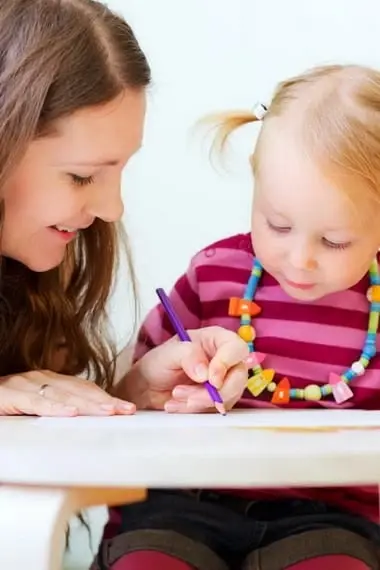 Giving a description of the crisis of 6-7 years, psychologists necessarily note the cunning of the child. As a rule, this is not a malicious concealment of the truth, but rather a comic and situational craftiness like practical jokes. In doing so, the child is experimenting with the relationships and possibilities of his personality. For example, she can say that her grandmother called, but this actually didn’t happen, or she can fumble her teeth with a wet brush, but say that she brushed it.
How should parents behave in such a manifestation of the crisis of 6-7 years? Whenever possible, try to make fun of minor tricks and add a healthy dose of control, as accepting the consequences of your actions is the formation of responsibility and adulthood. At the same time, do not become a punishing all-seeing body, but rather a benevolent traffic controller who will tactfully remind you of the need to switch only to the green color. To prevent the trick from leading to the concealment of important information, introduce a rule not to scold the child in case of recognition.
Also, one of the features of the course of the crisis of 6-7 years is constant pauses before taking any action. This behavior is easily characterized by the angry call of adults: “Don’t you hear me at all? As I warm up with the deaf! A pause is a kind of stubbornness in a mild form. There's nothing you can do – a crisis.
Psychologist's advice:
- Repeat your request again or apply in full contact mode: eye to eye. But it is necessary with a subsequent check whether the child understood everything and whether he is ready to fulfill the request. This advice on how to behave as a parent in such a manifestation of the crisis of 6-7 years does not mean that this will be followed by a benevolent implementation of instructions on the part of the child, but still allows you to bring the conflict out of a stalemate.
Note! If the child decides to show his rebellious nature only in pauses, you should reconsider YOUR behavior: most likely, you are being too harsh with the child.
As studies in the field of psychology show, children during the crisis of six or seven years with pronounced negative behavior are better prepared for school than their peers with minor manifestations of the crisis.
The Crisis of Six or Seven Years: The Psychology of Child Behavior
Another psychological characteristic of the crisis of 6-7 years is a sharp reaction to criticism. This is especially true of parental remarks about the imperfection of school notebooks or prepared homework. Children's reactions are very valuable in that they point out to parents the inaccuracy of the emphasis of their characteristics. What is important is not so much the result as a whole, but the efforts expended and the victories that were nevertheless achieved. After all, out of ten written letters, three really succeeded! It is to them that the child is happy, and he invites his parents to share his own triumph, but instead receives "valuable instructions" about shortcomings.
During the manifestations of the crisis of 6-7 years, the child should be on the alert! If a student, especially a shy one, decides on a conflict, this is your finest hour. By taking the right attitude at these moments, you can help him gain experience of strength and spontaneity. Your task is not to suppress the conflict, but to express understanding and prevent rudeness from both sides. I will clarify: at such moments you need to choose not the position of connivance and not the position of a formidable parent. You need to support in the child the need to defend his "I", but not allow rudeness, suggest how you can show anger and defend yourself without offending another.
Psychologist's advice:
Knowing how the crisis of 6-7 years manifests itself, praise the work of the child, find positive aspects in it. Corrections and dissatisfaction on your part should be as small as possible.
Sometimes parents characterize the behavior of their children 6-7 years old with the appearance of whims that did not exist before. This behavior is far from typical for everyone and may be associated with individual high anxiety or overload.
Psychologist's advice:
- Considering the psychological characteristics of the crisis of 6-7 years, pay close attention to the child's regimen, the amount of unconditional love and the presence of praise success in the child's life. Make sure your child follows the daily routine. Remember that during this difficult period, the flow of parental unconditional love should not dry up no matter what. In addition, be sure to praise your first grader. Praise for real victories, just in advance and for the future, because the child needs a sense of success in a new, important school activity for him.
The transformation of self-esteem during a crisis leads to increased attention to one's appearance and clothing. The child wants to look like an adult schoolboy, and not some kind of peanut in short pants. For my daughter, an incredible event was the purchase of a T-shirt in a store, which, by mistake or inattention, was positioned by a supermarket sticker as women's, not children's. The story of the amazing purchase of an adult T-shirt was told "encore" for a whole week to all relatives and friends.
Recommendations of psychologists for overcoming the crisis of 6-7 years:
- Respect the choice of children. Freedom of choice helps the child to meet his need and its realization. This is incredibly important for the formation of a strong, free personality. Pay attention to how often we, adults, choose for a child. On the one hand, this is difficult to avoid, because we are responsible for his health and life. But it is all the more important and useful for parents to think about in what area it is still possible to give the little man independence. Let him take part in choosing a gift for a friend, in buying his own clothes, food for dinner. There is no need for fear here.
First, it is worth involving the child in the choice in those cases where it is really possible. Most likely, he will not be able to buy high-quality meat, but he can choose cookies for tea. Secondly, by giving him the status of an adult in such matters, you will be able to give adult arguments when buying. For example, when buying shoes together, you can notice: “You know, these are very beautiful shoes, but they have a very bad sole, look – the glue is visible, not stitched…” In this way, you will help the child not only feel their importance when choosing, but also tell everyday selection justification secrets.
How to survive the crisis of 6-7 years: effective advice from psychologists
 In addition to unpleasant manifestations in behavioral psychology, the crisis of 6-7 years in a child presents parents with pleasant surprises in the form of independence. The child, as an equal member of the family, asks to entrust him with responsible tasks: cook an omelette, go to the store, take the receipt.
Psychologist's advice on overcoming a child crisis 6-7 years old:
- Be sure to take the opportunity to give your child more responsibility and freedom. If you miss this moment or constantly deny independence, you risk growing either a quitter or an anxious and indecisive person. It is adult assignments that will help to find constructive and acceptable ways of showing adulthood. An acceptable schedule for completing lessons can also be included in the adult to-do list.
- Invite the child to determine for himself what time he will do his homework – naturally, common sense and taking into account sleep patterns should be present in his decision. This is where you can help him. This approach will be much more effective than constant requests to sit down for lessons.
- Gradually relieve yourself of responsibility for the implementation of children's affairs (collect a briefcase, prepare a uniform for physical education…).
These are very effective tips not only for overcoming the crisis of 6-7 years, but also for the formation and strengthening of independence. However, such recommendations turn out to be very difficult for most parents, since it is difficult for them to draw a line between their responsibility and the responsibility of the child. Many of us really want to be “good parents”, which means we must have a “good child” who does not forget to change shoes, textbooks, pencils. I want to double-check, help, suggest, remind. This is understandable, natural, but at the same time it is detrimental to independence! Therefore, given the main characteristics of the crisis of six or seven years, try to dose control, otherwise the child will never meet the consequences of his actions. If he is hedged in everything, there will be no consequences, no responsibility,
Psychologist's advice:
- Let your child discover the consequences of their mistakes. At the same time, show maximum respect, avoid ridicule and gloating, otherwise the child will stop turning to you for help and protection. If possible, calmly explain to him the connection between actions and consequences.
- To survive the crisis of 6-7 years as painlessly as possible, get rid of the commanding tone. Be sure to say "please" and "thank you" when asking your child for a favor. It is strange that the advocates of politeness themselves, the parents, forget about the need for such simple “magic words” in the first place. You are inviting the child into the adult world, with his duties and responsibilities, so take the trouble to respect his work. You will have the right to expect the same from him.
Children, to the pleasure of adults, are beginning to spend more and more time not just playing, but doing some kind of activity: designing, modeling, drawing… Self-study is another pleasant gift of the crisis. Make sure that the child always has some interesting, developing and creative activities at hand – at home, in his room.
A pronounced crisis of 6-7 years in children is a promise of easy school adaptation. Help your child to master a new venture at first, and also organize his day so that he has free time for this. Speaking of classes, it is home pastime that is meant, and not additional circles. I repeat: excessive saturation of a first grader's free time with extracurricular activities can lead to overwork, and free time at home, on the contrary, forms resistance to school stress.
And remember: no matter how uncomfortable and disgusting the behavior of the child may seem, you need to behave with him during the crisis of 6-7 years with restraint: this is how the student learns to defend his interests and desires, which will be very useful to him in communicating with peers.
In the midst of a crisis period, it is the school that is the natural solution to the situation when you want to show your maturity, try out new opportunities and get food for the cognitive need. Therefore, it is extremely important to give the child to the first grade on time, not during the heyday of play activity, but when he is 6-7 years old. And all sorts of arguments like: “His friend is going to school”, “Why should he sit at home”, “Is mine worse” – are ridiculous and harmful to the child.