
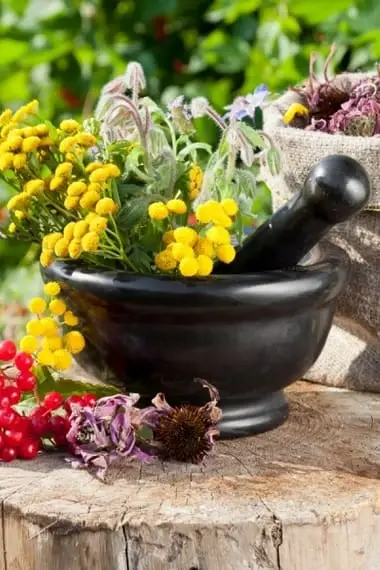
Herbal medicine: the basic principles of herbal medicine as an element of a healthy lifestyle, the basics of herbal medicine for beginners
When treating with plants, adherents of herbal medicine are strongly advised to strictly follow the recipe and observe the proportions: when replacing some components with others or dropping some of them, as well as ignoring the ratios of the components of medicines, the effect can be exactly the opposite.
Phytotherapy – treatment with medicinal herbs
The healing power of herbs was admired by the famous doctors of antiquity – Hippocrates, Avicenna, Galen and many of their nameless followers, who were the first to perpetuate the healing properties of plants in their writings. Centuries have passed. For such a long period of time, doctors and healers have mastered many plants: some turned out to be effective, others were in no hurry to reveal their healing qualities.
Nevertheless, to date, adherents of herbal medicine for herbal treatment have a lot of plants in their arsenal that have proven their effectiveness in healing a wide variety of diseases.
The study of the properties of medicinal herbs for herbal medicine, their effects on the human body is ongoing. This brings positive results: a long-known plant suddenly discovers some new properties, and then the range of its therapeutic action expands. True, sometimes side effects or contraindications are detected. But, as they say, he who is warned is protected.
Therefore, phytotherapy as an element of a healthy lifestyle remains one of the most popular areas in medicine in our technological age.
In order to master the basics of herbal medicine as an effective way of healing with herbal preparations, you need to learn the basics of herbal medicine.
Usually the use of medicinal plants in herbal medicine requires quite long courses. Between them, it is recommended to take a break for 1-2 weeks so that there is no addiction, after which treatment can be continued.
How to start treatment with plants (phytotherapy)?
It is necessary to start phytotherapy with a visit to the clinic. Only after a thorough and comprehensive examination by the attending physician, who will establish an accurate diagnosis and give the necessary recommendations, can this alternative method of medicine be used.
The basic principle of herbal medicine, like all other branches of medicine – do no harm!
Immediately before taking herbs and fees, you should also consult a phytotherapeutist, since plants also have contraindications.
Phytotherapy for beginners is, first of all, a thorough study of the properties of medicinal plants. Be sure to prepare yourself by reading about the properties of the herbs you are interested in. Learn more about medicinal plants, collect all available information about them, their pharmacological effects, the total effect of herbal remedies on certain processes in the body.
One of the principles of herbal medicine says that it is imperative to follow the dosage indicated in the recipe. The absence of 1-2 components somewhat not only reduces the therapeutic effect, but can also cause side effects. Therefore, try to follow the ingredients of the recipe. During the period of exacerbation of the disease, it is possible to take increased doses compared to the period of remission or a prophylactic course.
In some collections, it is useful to include herbal ingredients that help regulate bowel function, that is, they have a fixing or laxative effect.
When treating with herbs, you need to organize a competent work and rest regimen, engage in physiotherapy exercises (outside the exacerbation phase), give up alcohol and smoking.
The ratio of weight and volume of medicinal herbs for herbal medicine
Usually, in recipes for healing products recommended for home preparation, crushed herbal ingredients are given in weight or measured in volume parts. Sometimes one has to be translated into the other.
The weight and volume of medicinal herbs for herbal medicine is in the following ratio:
- 1 teaspoon contains 5 g of crushed vegetable raw materials;
- 1 dessert spoon – 10 g;
- 1 tablespoon without top – 15 g;
- 1 heaping tablespoon – 20 g;
- 1 glass of water – 200 ml;
- 1 glass of vegetable oil – 200 ml.
Dosage forms can be prepared in different ways:
- use one plant component (grass of the same species);
- apply fees – grind plants of several species separately, weigh or measure in the desired ratio and mix.
The effectiveness and healing properties of plants depend on the biologically active substances contained in them.
When deciding to prepare a medicine at home, do not forget that most biologically active substances are easily destroyed, so it is very important to follow the rules that will prevent the plants from losing their healing properties.