

Lavender essential oil: benefits, composition, properties, pharmacological action, use of various types of lavender oil in aromatherapy
The most commonly used essential oils are lavender hybrid, narrow-leaved and broad-leaved. The leaves and stems of these particular crops contain the maximum amount of linalol and linalyl acetate. Thanks to these components, when inhaling lavender aroma, nervous tension is reduced and muscles relax, sleep improves and mood improves.
Lavender hybrid in aromatherapy
The composition of the essential oil of lavender hybrid includes such biochemical components as:
- Terpene esters: linalyl acetate.
- Monoterpenides: linalool.
The benefits of hybrid lavender essential oil are that it:
- Promotes healthy and restorative sleep, fights night awakenings.
- Very effective against muscle contractures and spasms.
- Has a wound healing effect, soothes itching; you can try it as a treatment for any skin disease (unless you have another, more suitable essential oil on hand).
- Fights hot flashes.
- It is a good pain reliever (for headaches or migraines).
It is thanks to these properties that lavender hybrid is widely used in aromatherapy.
Uses of lavender angustifolia essential oil
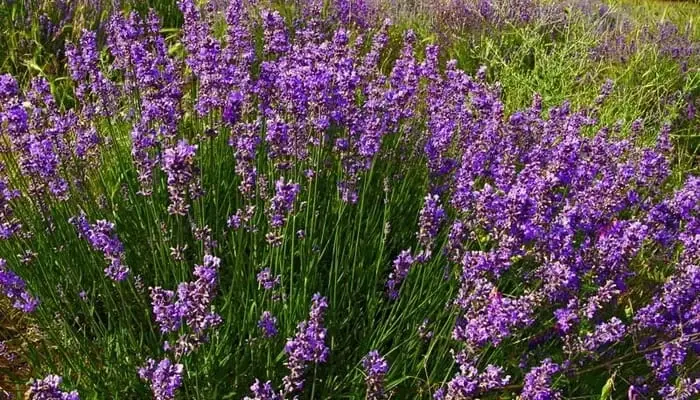
Lavender narrow-leaved or real lavender (Lavandula officinalis ou angustifolia ou vera) is also incredibly useful.
This lavender oil contains:
- Monoterpenides: linalol.
- Esters: linalyl acetate.
Due to the high beneficial properties of angustifolia lavender essential oil, its use is widespread in:
- Disorders of the nervous system (insomnia, migraine, dizziness, etc.).
- Skin diseases (wounds, ulcers, burns, irritations, etc.).
- Muscle pains (cramps, contractures, etc.).
- Cardiovascular diseases (palpitations, hypertension, arrhythmias, etc.).
- Circulatory disorders (edema, phlebitis, vasculitis, etc.).
This plant appears before us in all its glory in endless lavender fields, painted from horizon to horizon in all shades of purple. Lavender is the soul of Provence, its sun and charm! Singing the lavender of French Provence is a waste of time: everyone knows that this is a classic of the genre. In the south of France, love for lavender is primarily due to its universal culinary use: it is added to food and drinks. It is part of all kinds of creme brulee, syrups, biscuits. Real obsession.
The aroma of angustifolia lavender predetermined its use in cosmetic purposes: it has always been used in beauty products. And today, perfumers still deservedly consider it the "blue gold" of Provence. Now lavender has become a real treasure for tourism development. Lavender roads along the flowering fields in the south of France attract many tourists – this is not only a mesmerizing sight, but also a great pleasure for all the senses. The harmless appearance of the fragrant lavender should not mislead you – it can adequately fight with some of the most dangerous enemies of man. A 5% solution of essential oil is enough to destroy Ebert's bacilli (the causative agent of typhoid fever), staphylococci, Leffler's bacilli (the causative agent of diphtheria). Lavender was used to disinfect and aromatize thermae by the ancient Greeks and Romans. This is reflected in the very name of the plant: it goes back to the Latin lavare – “wash", “wash”. There were more than enough reasons for this – after all, it cleanses everything: body and soul!
Narrow-leaved lavender is an evergreen shrub with a height of 20 to 70 cm. It grows in small thinned groups on the hills and low rocks of the Mediterranean basin. Lavender, as you already know, loves air, space, light and warmth. It can be found on dry rocky areas bathed in the warm rays of the Mediterranean sun. Tourists discover it at an altitude of 1000 and even 1300 meters above sea level, on the sunny slopes of the Alpine mountains. It is lavender, grown on mountain peaks surrounded by clouds, that is considered the most valuable raw material.
Its gray-green lanceolate, pubescent leaves are collected in purple flower-bearing branches. Lavender blooms in July and August; its flowers form spike-shaped spiky inflorescences. Lavender fruits – 4 dry nuts enclosed in a cup.
Lavender angustifolia essential oil, used in aromatherapy, is extracted from the flowering tops by steam distillation. It is a slightly colored pale yellow or even colorless mobile liquid. It has a specific light and very delicate smell and taste. From 100 kg of narrow-leaved lavender flowers, from 500 to 850 ml of essential oil are obtained. This is a good result, but it is higher in lavandin. Therefore, it is a little more expensive. Lavender angustifolia essential oil is one of the most famous and most used essential oils due to its beneficial properties.
The main pharmacological action of angustifolia lavender essential oil is as follows:
- Calms the nerves and relaxes the muscles. In other words, it has an antispasmodic effect at the level of the central nervous system.
- It is an anti-inflammatory agent and fights all types of spasms, regardless of their etiology.
- A strong general anesthetic, it also has a pronounced local anesthetic effect. In dentistry, its combined use with clove essential oil gives very good results.
- Powerful wound healing agent, perfectly restores the skin.
- It has a sedative effect, restores the functioning of the nervous system. Reduces nervous excitability.
- Antidepressant.
- It has an antiseptic and antibacterial effect (destroys even Staphylococcus aureus). Disinfects not only superficial, but also deep tissues, and also significantly activates healing.
- An effective pulmonary antiseptic, which also modifies bronchial secretions, contributing to the discharge of sputum and mucus.
- Relieves muscle contractures.
- Improves digestion by stimulating the secretion of gastric juice and activating intestinal motility.
- It removes toxins from the body due to the diuretic and diaphoretic action.
- It has a general tonic effect, supports the work of the heart, is a sedative.
- Reduces blood pressure.
- It has a slight anticoagulant effect, contributing to blood thinning and improving blood circulation.
- Helps with migraines.
- Anthelmintic and antiparasitic – destroys intestinal parasites.
- It is insecticidal (kills insects), helps with bites of poisonous animals.
- It helps to normalize the menstrual cycle, namely, it causes or increases menstruation.
- Fights moths. To do this, apply 4 drops of narrow-leaved lavender essential oil to a wooden plate and put it in a wardrobe. Your things will not only absorb the pleasant smell of lavender, but will not suffer from moths.
There are no contraindications to the use of this lavender essential oil.
If you are planning to buy any one multi-purpose oil, then narrow-leaf lavender is exactly what you need. Lavender oil is the flagship of French aromatherapy, a universal remedy for all diseases. An essential oil that "heals everything" is a must for every family first aid kit. It is not only extremely effective, but also well tolerated and inexpensive.
In case of prolonged use, narrow-leaved lavender essential oil can cause drying of the epidermis. Then it is better to dilute it in vegetable oil. But it is by no means toxic and is well tolerated even by infants and very young children. It is perfectly safe to apply neat on the skin (this is the most effective way to use it). It is also suitable for internal use, and, of course, for spraying in the air. It is completely harmless.
Lavender Broadleaf Uses in Aromatherapy
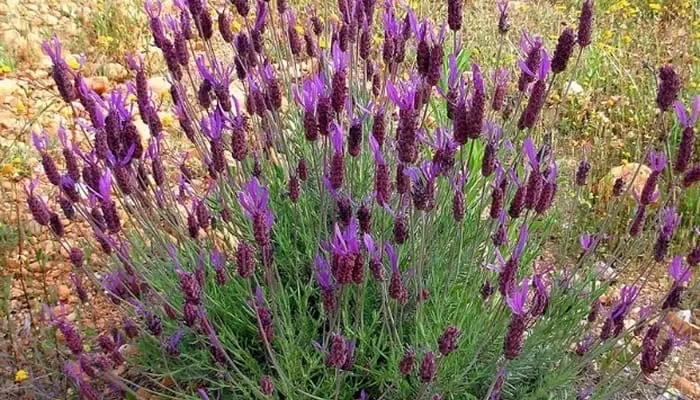
Lavender broadleaf (Lavandula spica: lavandula latifolia cineolifera) is another plant widely used in aromatherapy.
Main biochemical components:
- Terpene oxides: 1,8-cineol.
- Monoterpenides: linalol.
- Monoterpenes.
- Ketone: Camphor.
The properties of lavender essential oil are effective in the treatment of:
- Burns, including severe ones.
- Bites of poisonous animals (snakes).
- Other stings (wasps, jellyfish, scorpions).
First of all, close your eyes and feel the pleasant sound of a light wind among the old stones, immerse yourself in endless lavender fields, where you can hear the bewitching trills of crickets in the early evening. You are in the south of France – in Provence. This is the first good news.
The second good news is that in the symbolic language of flowers, lavender represents good luck.
But our sympathy for broadleaf lavender essential oil, the mere fragrance of which improves mood, is not only due to lyrical considerations – lavender essential oil is included in the book primarily because of its unique ability to help with burns and bites!
Broad-leaved lavender is an evergreen shrub whose height does not exceed one meter. Pale purple flowers at the top of long stems are collected in whorls and form discontinuous inflorescences. Lavender blooms quite late – at the end of August. Of all the types of lavender, narrow-leaved lavender is the last to be harvested: its flowers tend to absorb as much sun as possible.
Broadleaf lavender is native to the south of France, but is even more common in Spain, Portugal, and North Africa. It prefers poor calcareous soils, typical of the arid regions of Southern Europe. Compared to other types of lavender, broadleaf lavender is more thermophilic – this sissy does not like the cold! But she is not afraid of the proximity of the sea: she grows well on coastal rocks and almost never moves away from it higher than 80 meters.
In France, broadleaf lavender is most often grown in its natural environment – it is rarely cultivated due to its less pronounced aroma compared to other types of lavender. Perhaps its smell is not so pleasant (which is why perfumers are so little interested in it), but for aromatherapy specialists it is a real find due to its outstanding qualities as an everyday first-aid kit! From a medical point of view, of all types of lavender, broadleaf lavender has the highest value.
For use in aromatherapy, lavender essential oil is extracted from the flowers by steam distillation. Broadleaf lavender essential oil is an almost colorless, mobile liquid, sometimes with a slightly light yellow tint. It has a fresh camphor aroma with floral notes. This is an extraordinary essential oil.
To get 700 ml of the finished product, you need 100 kg of broad-leaved lavender. Other types of lavender from the same amount of raw materials give a larger volume of essential oil.
Pharmacological properties of lavender broadleaf:
- Essential oil is an excellent antidote for the bites of poisonous insects and snakes.
- Great for healing wounds. An indispensable first aid for burns.
- An effective analgesic, especially when applied to the skin, which will be especially in demand for toothache, migraine, neuritis or even herpes zoster.
- It copes well with fungal infections, fights the diploid fungus Candida albicans. Remember this oil if you encounter one form or another of mycosis – dermatological, gynecological or digestive in nature.
- Helps with cough and runny nose.
- Useful for diseases of the upper respiratory tract: otitis, sinusitis, bronchitis, loss of voice, tracheitis, rhinitis, laryngitis, and especially with severe coughing attacks. Kills viruses.
- It is extremely effective in viral enterocolitis.
- Stimulates the immune system.
- The antibacterial effect is less pronounced, but nevertheless deserves attention: it fights against such dangerous microbes as Staphylococcus aureus or colibacillus!
- Coordinates the work of the heart.
- An indispensable remedy for the treatment of most skin diseases: from acne to psoriasis, it also helps with herpes, cracked skin, ulcers, fungal infections and, of course, burns. Very effective for all types of skin damage – whether bruises, cuts or any bites (spiders, fleas, bees, etc.).
- Lavender essential oil is prescribed for joint and / or muscle pain (arthrosis, cramps, rheumatoid arthritis).
- It has a tonic effect in depression, depression or exhaustion of the nervous system.
- Helps with inertia of thinking and intolerance.
There are no contraindications to the use of lavender broadleaf essential oil in aromatherapy. With prolonged use, this product may cause an allergic reaction in people with sensitive skin.