
Medicinal plant mint: photos, useful properties of herbs, contraindications, recipes for use in traditional medicine, medicinal preparations
Based on the raw materials of these plants, remedies are made according to prescriptions from ancient herbalists, as well as pharmaceuticals sold through the pharmacy network. In addition, you can use mint at home and as an excellent ingredient for cooking and drinks.
Peppermint, field and spearmint
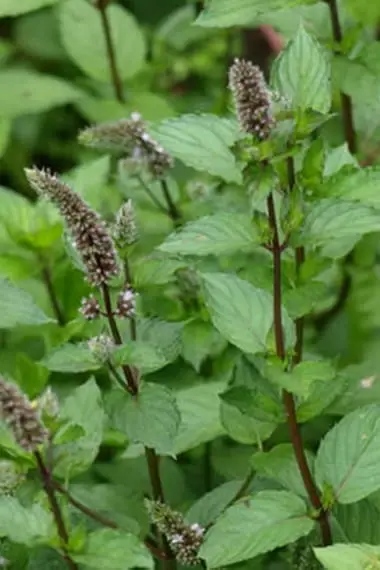
Peppermint (Mentha piperita L.).
Description of peppermint (Mentha piperita L.): belongs to the Lamiaceae family, is a perennial herbaceous plant 80-100 cm high with a branched stem. Branching is opposite and begins almost from the base of the stem. There are two varieties: "white mint" with green stems and "black mint" – with dark red stems.
The leaves are located opposite each other; they are large, usually oblong-lanceolate, with a strong "minty" smell.
The flowers are small, reddish-violet, almost 1 Ladanka is a small bag in which incense is placed. Worn around the neck, along with a cross.
Special signs: two varieties of peppermint are grown, which are called "black" and "white". Black peppermint has a red-purple stem and brownish leaves, while white peppermint has light green stems and leaves. Black mint contains a higher amount of essential oil with a pungent odor than white mint, the essential oil of which has a more subtle, complex aroma and is much more highly valued by culinary specialists and perfumers. However, white mint is much more demanding on growing conditions, easily freezes and dies from drought. Black mint is a more resistant plant that is grown for its essential oil and menthol. In the literature, black mint can be found under the name "Peppermint, red variety" (Mentha piperita L., var. rubra).
Distribution: Peppermint is not found in the wild, it is widely cultivated on plantations as a medicinal and essential oil plant. Field mint is widely distributed in the temperate zone of Europe, Asia and North America. It grows in wet meadows, along the banks of reservoirs. It is also cultivated as an essential oil and medicinal plant.
Plant Parts Used: Leaves, flowering tops, essential oil and menthol.
The high medicinal properties of peppermint are due to the presence of biologically active substances in the plant.
The various parts contain:
- valeric acid – in the essential oil from the plant;
- d-menthone – in essential oil 8%;
- alpha-, beta-pinenes – essential oil from the plant;
- pulegone – oil;
- cineole – oil from the leaves.
Peppermint essential oil is found in the flowers (most of all), in the leaves – less, and very little in the stems. The oil is colorless, with a yellowish tint, refreshing pleasant taste and smell. Soluble in alcohol. The main component of mint essential oil is menthol, which is released from the oil upon strong cooling in the form of crystals with the smell and taste of mint oil. Peppermint oil is a raw material for the extraction of menthol, is used in the alcoholic beverage industry, perfumery.
Pharmacy name: peppermint leaves, peppermint oil.
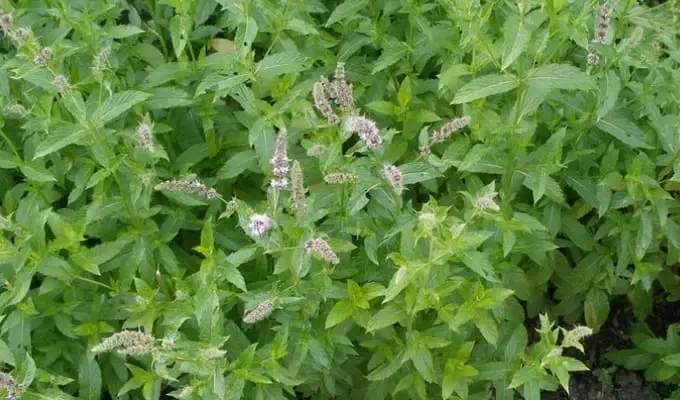
Field mint (Mentha arvensis L.).
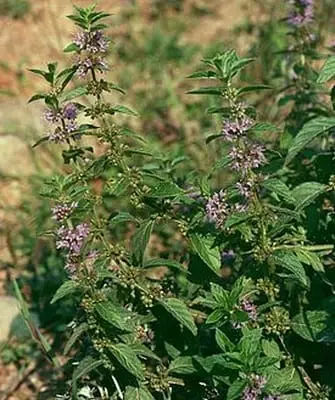
In folk medicine, field mint is used, which contains:
- valeric acid – in the essential oil from the plant;
- geraniol – essential oil;
- carvone – in the essential oil from the plant 81%;
- caffeic acid;
- gamma-linolenic acid – in seed oil 58%;
- linalyl acetate – essential oil;
- linalool – essential oil;
- menthol – in the essential oil from the plant, the essential oil from the leaves 46%;
- d-menthone – in essential oil 6-18%;
- alpha-, beta-pinenes – plant (a);
- piperitone – essential oil;
- pulegone – essential oil 30-90%;
- thujone – essential oil;
- ferulic acid;
- furfural (furfural) – essential oil;
- cineole is an essential oil.
Collection time: July-August.
Harvest: The leaves and tops of the spearmint medicinal herb are harvested in the mass flowering phase in the morning. Before drying, the raw materials are sorted, removing the browned parts, and then dried in the shade in the air or in dryers at a temperature of 40ᵒС. The raw material is very hygroscopic, it is necessary to store in a closed vessel in a dry room. Wet raw materials are unsuitable for use. The healing properties of mint are preserved for two years.
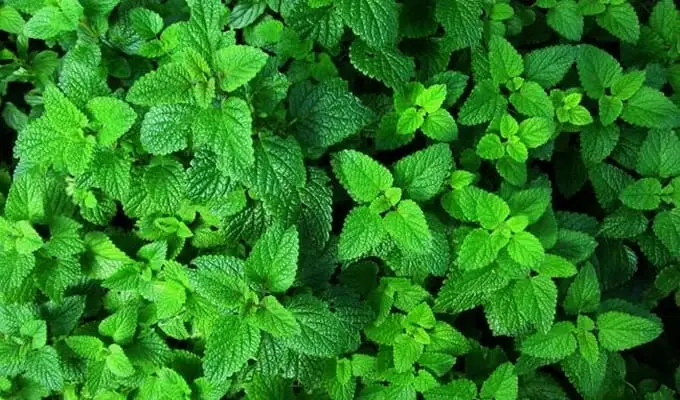
Also used: spearmint; curly mint (peppermint, German mint, curly mint, forest mint, meadow mint, garden mint, curly mint (hybrid Mentha aquatica Lx Mentha spicata L.)).
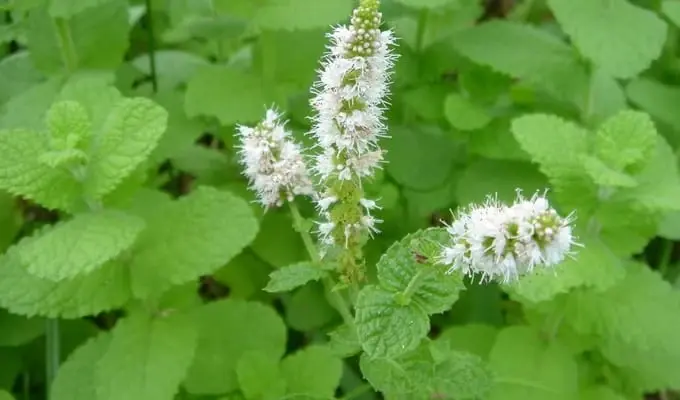
Spearmint (Mentha spicata L.).
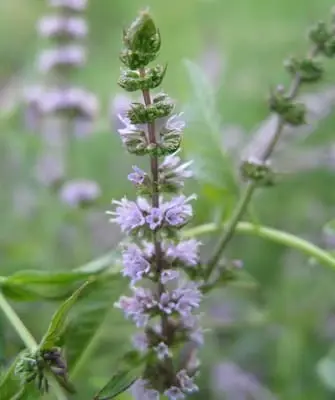
Growing the medicinal plant mint requires a sunny to semi-shady location with fertile, moderately moist to moist soil. It grows with lateral shoots that take root easily. It can be propagated by dividing the bush, as even a small part of the root can give life to a new plant.
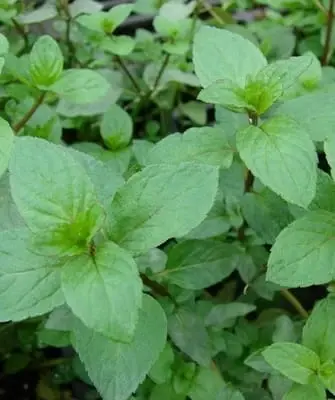
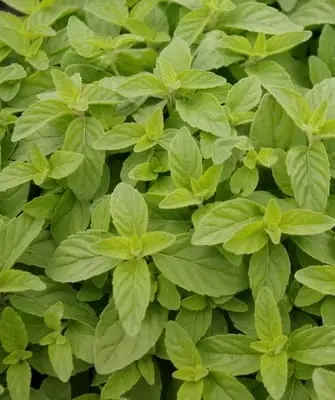
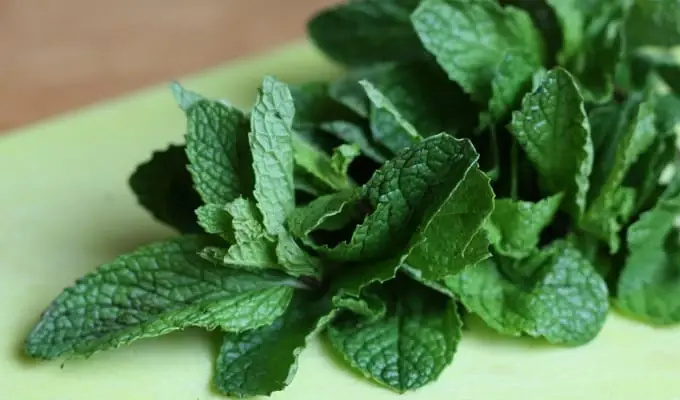
See how different types of mint with beneficial properties look like in these photos:
Healing properties and indications for the use of raw mint
Mint is widely used in medicine. Mixed with milk sugar and petroleum jelly, it is a remedy for the common cold. In a mixture with paraffin, it is used in the form of pencils against migraine. Use menthol for inhalation in asthma, chronic bronchitis.
With rheumatism, diarrhea and vomiting, menthol is taken orally.
Mint herb has antispasmodic properties, has a sedative, anti-inflammatory and choleretic effect, improves digestion. The healing properties of mint are also used for hypertension, insomnia, liver diseases, spasms in the stomach, intestines, flatulence, migraine, to improve appetite and cardiac activity.
Peppermint oil (3-5 drops) with water or sugar, taken orally, reduces heartburn, disinfects the stomach and promotes gas.
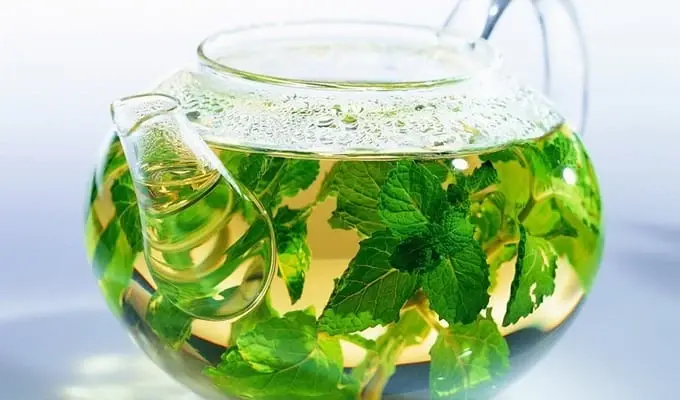
An infusion of mint leaves is recommended to drink in sips throughout the day for heartburn, nausea, spasms in the stomach and intestines, fetid belching, etc.
In mint decoction, young children are bathed with allergic rashes, scrofula, rickets, intestinal colic.
An infusion of mint leaves is used for angina pectoris, excessive and painful menstruation.
Peppermint has long been used in the form of herbal preparations, infusions and tinctures. It is used as a remedy that reflexively improves blood circulation in the vessels of the brain and heart, as an antispasmodic for spastic phenomena in the bile ducts and pancreatic ducts.
Peppermint and menthol are used to make many complex remedies and herbal remedies.
Infusions of peppermint leaves are used as an analgesic for neuralgia, toothache and as an antiseptic for inflammatory diseases of the upper respiratory tract and stomatitis.
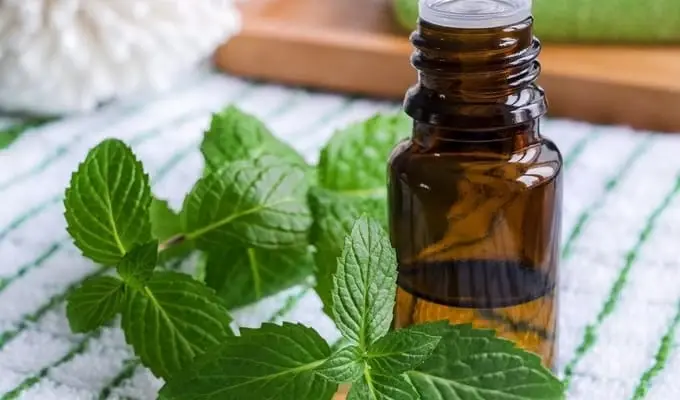
Peppermint oil is a clear, colorless or pale yellow liquid with a peppermint odor and a burning, cooling taste. Used in mixtures of 1-3 drops for flatulence, diseases of the liver and gallbladder. Included in the drug "Corvalol". They are included in composite mixtures used for aromatization of air in closed industrial premises.
Mint tablets contain mint oil 0.0025 g, sugar 0.5 g. Prescribed for nausea, vomiting, intestinal cramps, 1-2 tablets under the tongue.
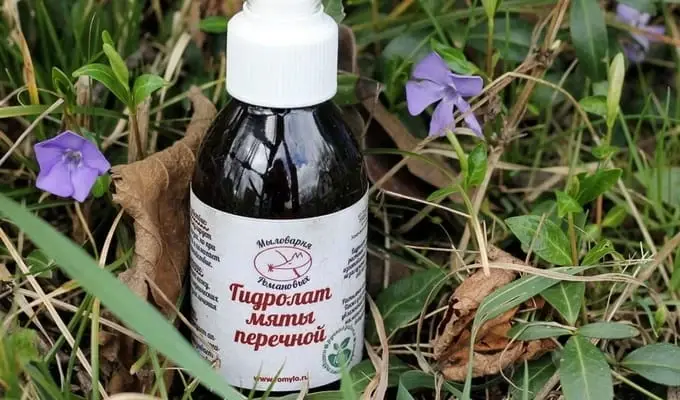
Peppermint water is a clear, colorless liquid with a mint smell; used for rinsing the mouth, added to potions.
Menthol is especially widely used in medicine. It is obtained from peppermint oil and also synthesized. Menthol is part of Zelenin drops, Pectusin, Evkatol, Menovazin preparations, Camphomen and Ingacamf aerosol mixtures, is an integral part of menthol, migraine pencils. It is used in the form of drops for the nose, a solution of menthol in vaseline oil.
How to use an alcohol solution of mint (menthol) 1% and 2%: on a piece of sugar. Used for pain in the heart. Taking nitroglycerin along with menthol in some cases relieves the patient of the side effect of nitroglycerin – headache. It is also prescribed for spastic colitis and enterocolitis.
For itching dermatoses, a 0.5% alcohol solution of menthol or a 1% ointment on a lanolin-vaseline base is applied topically. For arthralgia, neuralgia and myalgia, rubbing in a 2% alcohol solution of menthol or 10% oil suspension is used.
Useful properties of mint have found application in cooking. The leaves of this plant are added to sauces for roast, fried lamb, lamb and chicken, stewed cabbage, carrots, peas.
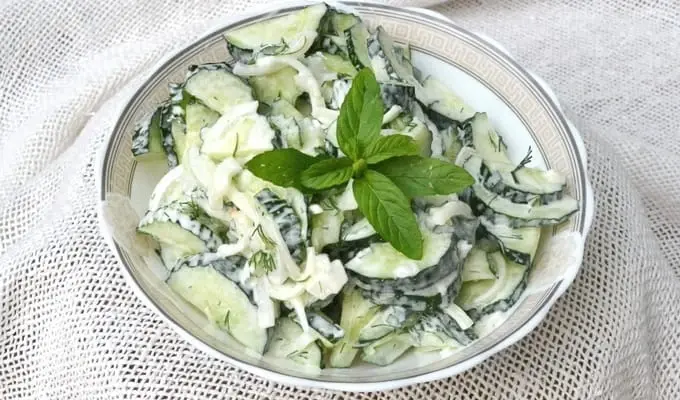
It is added to improve the taste and aroma of drinks and in various fruit and vegetable salads.
In many countries, mint is served on the table as a spice.
Small amounts of fresh shoots can be used to add to vegetable soups, meat marinades, and cheese dishes.
Spearmint, like peppermint, is used to obtain essential oil, which can be used not only in soap making and perfumery, but also as food.
Peppermint is a honey plant, amber-colored honey. Cultivated mainly black mint.
Spearmint is also important for beekeeping.
How to use mint at home: folk ways
The healing properties of mint are widely used for medicinal purposes.
Recipes for the use of mint in traditional medicine:
- infusion for heartburn: 2 tablespoons per 0.5 liter of boiling water, leave for 20-30 minutes. How to use mint infusion: 1/4 cup 3-4 times a day, especially when combined with fresh potato juice.
- infusion for gastrointestinal disorders, gallstone disease and heart disease: 2 teaspoons of dried mint leaves per 1 cup of boiling water, leave for 30 minutes, filter, cool. Mint infusion according to this traditional medicine recipe should be taken in small sips throughout the day.
- tincture against nausea and pain: 1 tablespoon of mint leaves per 100 ml of 90% alcohol, leave for 10 days, filter. Add 100 ml of mint oil and stir. This folk remedy based on mint should be applied 10-15 drops no more than 5 times a day.
- infusion for heart diseases: 1 teaspoon of crushed dried leaves per 1 cup of boiling water, insist, wrapped, 20 minutes. Drink hot infusion in small sips 30-40 minutes before breakfast. The use of mint infusion should be daily, without missing a single day. The course of treatment is 1-2 years.
- infusion under stress: mint with real bedstraw mix equally. 2 tablespoons per 0.5 liter of boiling water, leave for 2 hours. Take 1/2 cup 1 time per day. The course of folk application of mint infusion is 5-7 days.
- infusion for migraine: 2-3 teaspoons of mint per 1 cup of boiling water, leave for 30-40 minutes, filter. Take equal portions throughout the day. It is necessary to additionally take 20-25 drops of marina root tincture 2-3 times a day. Gives consistent positive results.
- collection decoction for pancreatitis: 3 teaspoons of mint and 1 teaspoon of crushed dandelion root per 1 glass of water, boil over low heat for 5-7 minutes, leave for 30 minutes, filter. Take 1/4 cup 3-4 times daily before meals. The course of application of this mint-based decoction according to this folk recipe is at least 5 weeks. Break 10 days and still drink the decoction for 2 weeks.
- infusion for uterine bleeding: (in the absence of other herbs) 1 tablespoon of mint for 2 cups of boiling water, leave for 2 hours, filter. The use of mint herb infusion is recommended 1/2 cup 3-4 times a day before meals.
- powder for lymphadenitis: make lotions from crushed leaves several times a day. In winter, steam the dried leaves and apply to the sore spot.
- tea: 1 tablespoon with the top of the leaves per 250 ml of boiling water, keep covered for 10-15 minutes, let cool. It is better not to drink sweet. You can brew green tea and mint separately, and then mix in a 3:1 ratio and add a slice of lemon.
- tea: 1 teaspoon of crushed ginger root, 2 teaspoons of mint and green tea per 500 ml of boiling water, leave for 15-20 minutes. Take hot, you can with a small piece of lemon. Tea can be brewed three times.
Instructions for use of mint preparations
The medicinal properties of mint herb have also been used in official pharmacology.
Instructions for use of peppermint pharmaceutical preparations:
- Peppermint tincture (Tinctura Menthae piperitae): Available in 25 ml dropper bottles. It consists of an alcoholic (90% alcohol) tincture of peppermint leaves and an equal amount of peppermint oil. Apply: inside 10-15 drops per dose as an antiemetic, carminative and analgesic for neuralgic pains, and also added to potions to improve taste, elixirs for teeth, etc.
- "Olimetin" (Olimetinum): a complex preparation, 1 g of which contains: peppermint oil 0.017 g, purified turpentine oil 0.0341 g, calamus root oil 0.025 g, olive oil 0.920 g, purified sulfur 0.0034 g. capsules of 0.5 g.
The use of this mint preparation in medicine is recommended as an antispasmodic for urolithiasis and cholelithiasis, 1-2 capsules 3-5 times a day during an exacerbation.
- "Enatin" (Enatin): a complex drug. 1 g contains: peppermint oil 0.017 g, purified turpentine oil 0.0342 g, juniper oil 0.051 g, purified sulfur 0.03 g.
- "Validol" (Validolum): a solution of menthol in methyl ester of isovaleric acid. Used for angina pectoris, neurosis, hysteria, motion sickness; often relieves bronchospastic phenomena.
Assign: 4-5 drops on a piece of sugar, kept in the mouth until completely absorbed. It is also available in the form of tablets and capsules.
- "Corvalol" (Corvalolum): a combination drug that has a calming and antispasmodic (relieving spasms) effect. Composition: ethyl ester of alpha-bromisovaleric acid – 20 g, sodium phenobarbital – 18.26 g, mint oil – 164 g, caustic soda (IN solution) – 78.62 ml, alcohol-water mixture (alcohol – 96% 574 ml, water – 442 ml) up to 1 liter. Assign: for neurosis with increased irritability, mild spasms (narrowing of the lumen) of the coronary (cardiac) vessels, tachycardia (palpitations), insomnia, early stages of hypertension (persistent increase in blood pressure) and intestinal spasms. How to take the mint preparation correctly: 15-20 drops 2-3 times a day, with tachycardia and vasospasm, 30-40 drops per dose.
Side effects: dizziness, drowsiness.
- Ointment "Efkamon" (Unguentum "Efcamonum"): composition: menthol 14 g, thymol and chloral hydrate 3 g each, methyl salicylate 8 g, camphor 10 g, capsicum tincture 4 g, clove oil or clove extract 3 g, mustard or cinnamon oil 3 g, eucalyptus oil 7 g, cinnamon alcohol 1 g, paraffin 4.4 g, spermaceti and vaseline up to 100 g.
Use: for arthritis, myositis, neuralgia for rubbing.
- Ointment "Boromenthol" (Boromentholum): contains 0.5 parts of menthol, 5 parts of boric acid and 94.5 parts of petroleum jelly.
Apply: as an antiseptic and analgesic for lubricating the nasal mucosa with a runny nose, as well as for lubricating the skin with itching and neuralgia.
- Peppermint oil (Oleum Menthae piperitae): a clear, colorless or pale yellow liquid with a mint odour. Contains about 50% menthol.
Apply: in dental practice as an admixture to tooth powders, pastes and mouthwashes.
Inside prescribed in mixtures: 1-3 drops to correct the taste and smell of medicines. Sometimes used inside 1-3 drops on a piece of sugar with flatulence.
How to take other mint preparations correctly
Indications and methods of using other mint preparations:
- Balsam "Golden Star" (Balsamum "Stella auraria"): contains oils: clove, eucalyptus, mint, cinnamon.
Apply: for respiratory diseases, runny nose, colds, flu, dissolving a small amount of balm in hot water for inhalation. For headaches and dizziness, the balm is rubbed into the temporal, occipital, and frontal regions. For insect bites, lubricate the bite site. Comes from Vietnam in packs of 4 g.
- Zelenin drops (GuttaeZelenini): contain tinctures of lily of the valley and tinctures of valerian, 100 ml each, belladonna tincture 5 ml, menthol 0.2 g. They are used for cardioneurosis accompanied by bradycardia (rare pulse). How to take a mint-based preparation: 20-25 drops 2-3 times a day.
Side effects: nausea, vomiting, diarrhea (diarrhea), arrhythmias (irregular heartbeat), muscle weakness, headache. Contraindications: severe atherosclerosis of the heart vessels (damage to the walls of the heart vessels), cardiosclerosis (destructive changes in the heart muscle), endocarditis (inflammation of the internal cavities of the heart), myocarditis (inflammation of the heart muscles).
- "Menovazin" (Menovasinum): contains 2.5 g of menthol, 1 g of novocaine, 1 g of anesthesin, ethyl alcohol 70% up to 100 ml. Local anesthetic (local anesthetic).
Assign: externally as a local anesthetic for neuralgia (pain that spreads along the nerve), myalgia (pain in the muscles), arthralgia (joint pain), and as an antipruritic agent for itchy dermatoses (skin diseases). Painful areas of the skin are rubbed with menovazine 2-3 times a day.
Side effects: with prolonged use, dizziness, general weakness, lowering blood pressure are possible. Contraindications: the drug is contraindicated in case of hypersensitivity to novocaine.
- "Inhacamf" (Inhacamf): composition: 0.3 g of camphor, 0.17 g of menthol, 0.08 g of salicylic acid methyl ester, 0.1 g of eucalyptus oil. Apply: for inhalation in acute rhinitis (inflammation of the nasal mucosa).
Contraindications: Do not prescribe to children under 5 years of age.
- Solutions of menthol (Solutio Mentholi.): Alcoholic solutions of 0.5% and 1%. Applied with itchy dermatoses and myalgia, neuralgia.
- Candles "Anestezol" (Suppositoria "Anaesthesolum"): composition: anesthesin 0.1 g, dermatol 0.04 g, zinc oxide 0.02 g, menthol 0.004 g, fat base up to 2.7 g.
Apply: as an analgesic, antipruritic and antispastic agent for hemorrhoids.
Contraindications to the use of mint preparations
Despite the high healing properties, mint preparations also have contraindications for use.
- Peppermint and its preparations should not be used uncontrollably!
- The pungent smell of mint preparations, exceeding their dose during inhalation can provoke bronchospasm, respiratory disorders, up to its stop.
- Perhaps the appearance of pain in the heart with excessive consumption of mint preparations.
- Allergy to herbs should not be used!
- Both varieties of peppermint – white and black, including water mint – they are all undesirable with reduced secretion of gastric juice.
- You should not use mint with a pronounced low pressure.
- Severe liver diseases are also a contraindication to the use of mint preparations.
- Prolonged use of field mint can cause infertility. It is harvested without garden mint and used for the same purposes as peppermint, but peppermint does not cause sterility.
- In addition, pregnancy is a contraindication to the use of mint, because this herb can provoke a miscarriage.
- Peppermint, if taken uncontrolled, can cause heartburn and severe esophageal ulcers.
- In breastfeeding mothers, mint reduces milk production.
- Do not use in pediatrics under 12 years of age.
- Taking mint in large quantities impairs sleep, causing restlessness and bad dreams.
- With the medicinal use of mint, it must be remembered that by reducing vascular tone, this plant can provoke varicose veins.
- More than 3 glasses of mint tea a day, even in perfectly healthy men, can cause a decrease in erection due to a decrease in the intensity of blood circulation in the penis.