
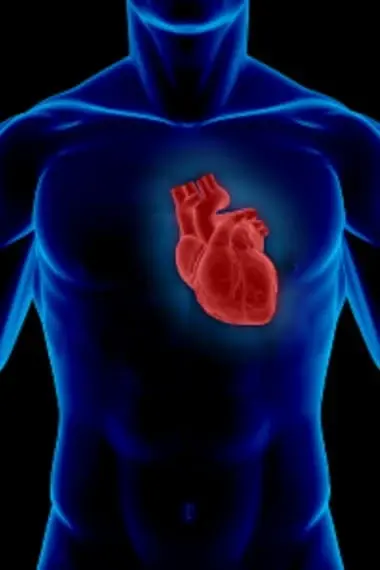
Prevention of coronary heart disease: exercises to strengthen the heart muscle and breathing exercises
For the prevention of coronary heart disease and other diseases of the cardiovascular system, one should not forget about a healthy lifestyle, which implies a balanced diet, regular walks, training, mediation, breathing and physical exercises. Without gentle training with adequate loads, the heart will cease to perform its functions “like a clock", the main “motor” of the body will certainly fail.
A set of physical exercises for the muscles of the heart: rules for performing
Physical exercises for the heart occupy an important place in the prevention and treatment of diseases of this organ. As a result of gymnastics for the heart muscle, its contractility increases, blood circulation, including peripheral, increases. Good blood flow, in turn, contributes to the mechanical massage of the walls of blood vessels, making them much more elastic. The level of cholesterol in the blood decreases, which means that the risk of formation of blood clots inside the vessels – blood clots – decreases. Exercises for the heart and blood vessels inhibit the development of atherosclerotic changes in the body – the main cause of heart disease.
The heart is a muscle like any other muscle and needs to be trained to become stronger and more resilient.
The rules for performing basic exercises for the heart can be formulated as follows:
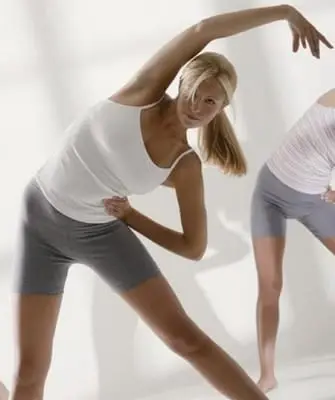
Even with good health, you can not quickly and dramatically increase physical activity. Only commensurate it with the capabilities of the body, you can strengthen the heart. Excessive load when performing exercises for the heart muscle, overwork, will reduce its functionality; and besides, it's not safe. Excessive physical work or sports activities can cause painful changes in the heart muscle, even in perfectly healthy young people.
Classes should begin no earlier than 1.5-2 hours after eating.
You should immediately stop exercising if you experience heart discomfort, dizziness, or shortness of breath during or after cardiac strengthening exercises. If these phenomena do not go away on their own, you need to take validol or nitroglycerin and be sure to consult a doctor!
Elderly people suffering from atherosclerosis, coupled with cervical osteochondrosis, are not recommended exercises for heart diseases with low inclinations to avoid a rush of blood to the head, rotational movements of the head and torso of large amplitude, strength exercises that impede the outflow of blood from the brain, and exercises that lead to body shaking (imitation of wood splitting, boxing).
Before starting a set of exercises for the heart, it is necessary to consult with your doctor, who, having previously removed the electrocardiogram, will determine the degree of preparedness of your heart and body as a whole for physical exertion. This is especially true for those who have recently suffered a myocardial infarction, as well as the elderly.
It is very important to monitor the pulse during exercise for the muscles of the heart. It is believed that physical education has a positive effect on the body when, by the end of classes, the pulse quickens by 20-35 beats, not exceeding 120 beats per minute, and after 3-5 minutes of rest it returns to its original frequency.
The most important thing when doing gymnastics to strengthen the heart muscle is regularity. It is necessary to work out at least once a day so that breathing becomes faster. The goal should be 20-minute sessions 3 times a day.
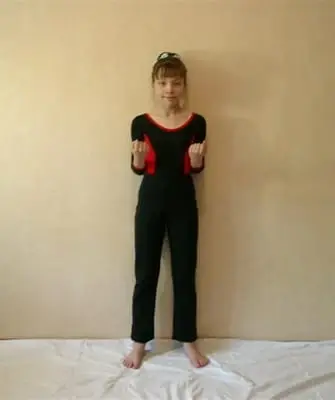
You should gradually increase the pace, bringing it to the middle of the workout to the optimal heart rate, and gradually reduce the load towards the end.
For patients suffering from coronary heart disease, the duration of classes should be from 8 to 15 minutes. You should practice at least 2-3 times a week.
Gymnastics to strengthen the heart muscle and blood vessels: physical exercises with video
These heart muscle strengthening exercises are based on the natural movements of animals and young children who start the morning with stretches, deep breaths and yawns that activate the metabolism and activity of the cardiovascular system.
It is especially useful to do exercises to strengthen the heart and blood vessels immediately after waking up, when you are still in bed:
1 Sipping. Lying on your back, stretch your legs, strongly straightening your knees and feet, touching the edge of the bed with your toes. At the same time, stretch your arms above your head, straightening your fingers and tensing strongly. Then relax completely, lowering your arms along the body. Perform 3-4 times.
2 Place one hand on your stomach and the other on your chest. Stick out your stomach (inhale), pull your stomach in, trying to "feel" the spine (exhale). Feel your breath as you focus on how your chest expands and your abdominal muscles work. Perform 3-4 times at a slow pace.
3 Intertwined fingers put on the back of the head, elbows and shoulder blades, press to the bed. Raise your right leg slightly and bring it over the left. At the same time, slowly turn the lower body and head in different directions: moving the legs and pelvis to the right, head to the left. Perform this physical exercise to strengthen the heart muscle 2 times in each direction.
4 Starting position: arms spread apart, legs bent at the knees and stand at some distance from each other, feet are located as close to the buttocks as possible. As you inhale, slowly bend your knees to the right and turn your head to the left. As you exhale, return to the starting position and relax completely. Then, while inhaling, turn your head to the right, and bend your knees to the left. Perform 2-4 times in each direction.
5 Starting position: lying on your back. While inhaling, lifting your head from the bed, slowly tilt it to your chest, stretch your arms forward, lift and stretch your legs. When doing this exercise to strengthen the heart muscle, stay in this position for 5-7 seconds. As you exhale, take the starting position, relax. Perform 3 times.
6 Roll over onto your stomach. Bend your arms at the elbows, placing the clasped fingers under the forehead, spread the straight legs to the width of the foot. With the tips of the toes of one foot, alternately rest on the heel of the other. Perform 4 times with each leg without holding your breath.
Do everything slowly, at a slow and smooth pace, carefully monitoring your breathing. All exercises are performed in the supine position.
Now watch the video of exercises to strengthen the heart muscle to better understand how they are performed:
Breathing exercises for the cardiovascular system: preparatory exercises
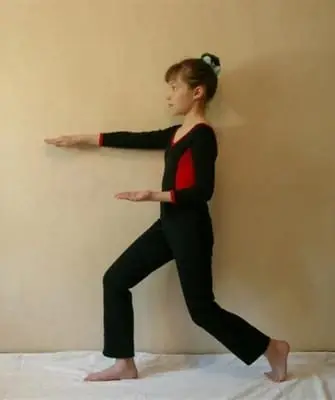
Breathing exercises for the cardiovascular system are specially designed to strengthen the heart and blood vessels. Each breathing exercise for the heart must be performed in three stages: inhalation, movement, exhalation. The breath should be sharp, strong, through the nose. Exhalation – sharp, strong, noisy, cough-like (through an open mouth – "ha!"). The movement that is performed between inhalation and exhalation is done with full muscle tension.
Preparatory exercises:
- Starting position: standing on the carpet, feet shoulder-width apart, arms hanging freely along the body, deep breathing. Inhaling through the nose, touch the nose with the fingers of the left hand. Lowering your hand to its original position, exhale calmly through your mouth (lips folded in a tube). Perform 3 times. Do the same with your right hand. Repeat the cycle several times. (From 5-6 at the beginning, to 20-30 after 2-3 months).
- Starting position: the same. Breath is the same. Touch your nose with the fingers of both hands at the same time. Perform 5 to 30 times.
- Do the same exercise, but alternately with your right and left hand. Raising your hand, inhale, lowering – exhale. Perform 5 to 30 times.
It is advisable to do exercises for the prevention of heart disease without interruption, starting each movement with a small squat. At first, do 3-5 repetitions, and then, gradually, over 2-3 months, bring their number to 30. Do gymnastics at least 3-4 times a week.
Breathing exercises for the heart: basic exercises with video
All basic breathing exercises are performed in a standing position.
- The arms are lowered along the body. Inhale. With tension, raise straight arms through the sides up. Exhale-inhale. Lower your arms down to the sides. Exhale-inhale. Bring your straight arms in front of you, palms facing each other. Exhale-inhale. Spread your arms out to the sides with your palms back. Exhalation.
- Clasp the hands with closed fingers to the lock to your left so that the left palm is pointing up and the right palm is down (the right hand is above the left). Inhale. Make a sharp turn of the body to the right. Exhalation. Change the position of the hands so that the right palm is pointing up and the left palm is pointing down. Inhale. Turn your body to the left. Exhalation.
- Starting position: arms bent at the elbows, palms at the chest. Inhale. Throw your left hand forward with a bent brush, as if pushing the air away. Exhale-inhale. Return your hand to your chest with your palm facing you. Exhale-inhale. Throw your right hand forward. Exhale-inhale. Return your hand to your chest. Exhale-inhale. Throw both hands forward, palms away from you. Exhale-inhale. Return to starting position. Exhalation.
- The arms are bent at the elbows at waist level. The hands are directed forward, palms down. Inhale. Straighten your left arm along the thigh, pushing the air with your palm. Exhale-inhale. Do the same with your right hand. Exhale-inhale. Do the same with both hands at the same time Exhale.
- The next movement imitates grass mowing. Starting position: hands lie calmly on an imaginary braid handle. Inhale. Movement "oblique" to the left with simultaneous exhalation. Inhalation is done slowly, while returning to the starting position. After making a few movements to the left, start doing the same movements, but to the right.
- "Chopping wood". Starting position: hands clasped in a “lock”, raised above the head. Make movements, sharply bending as low as possible. Inhale. Raised hands with clasped hands sharply lower down. Exhale-inhale. Raise your arms to the starting position. Exhale-inhale.
- Imagine that you are shaking out a heavy blanket, holding it by the ends. Inhale. Sharp shaking. Exhalation.
- "Stork". Feet shoulder width apart, arms down. Bend your elbows and bring your palms to your face, while raising and bending your leg at the knee with a pulled toe. Fix the movement while maintaining balance. Inhale. Raise your arms and left leg. Exhale-inhale. Lower your leg and arms. Exhale-inhale. Raise your arms and right leg. Exhalation.
- "Bird". Feet shoulder width apart, arms down. Raising your arms out to the sides, take a slow, very deep breath. Holding your breath, make three full and slow strokes of your wing arms. Sharp exhalation. Perform 3 times.
- Legs shoulder width apart. Inhale. Straining your legs, stand on your tiptoes. Slowly lower your heels to the floor. Sharp exhalation.
A set of physical exercises for coronary heart disease
All physical exercises for coronary heart disease, as well as breathing exercises, are performed in a standing position.
- Starting position: arms along the body, legs shoulder-width apart. On the count of 1-2, raising your hands up (through the sides or interlocked “in the lock” in front of you), rise on your toes and stretch. At the expense of 3-4 – return to the starting position. Perform 5 times.
- One hand up, the other down. Change the position of your hands for each count. Perform this exercise for coronary heart disease 10 times.
- Hands on the belt (you can hold on to the back of the chair with one hand), feet shoulder-width apart. Swing your legs back and forth. Perform 5 times with each leg.
- Starting position: hands on the belt, feet shoulder width apart. On the count of 1-2, lean forward, on the count of 3-4, return to the starting position. Breathe in deeply when bending over, inhale when straightening. Perform 10 times.
- Starting position: arms along the body, legs shoulder-width apart. On a count of 1-2, raise your arms up; on a count of 3, lower your arms in arcs down and back, while slightly bending your legs. On a count of 4-5, continuing to put your hands behind your back, lean forward, straightening your legs. On count 6 – start moving your arms forward, bend your legs a little, straighten your torso (the position is as if you are going to sit down). On the count of 7 – raise your arms in arcs up, straighten your legs. Performing this exercise from the complex for coronary heart disease, stretch up, rising on your toes, and return to the starting position. Perform 6 times.
- The arms are straight, in front of the chest, the legs are shoulder-width apart. For each count, make jerky movements with straight or bent elbows (possible with a simultaneous half-turn of the body). Perform 8-10 times.
- The starting position for this exercise from the complex for heart diseases: hands behind the head, legs together. On account 1 – lean to the right, at the same time lunging with your right foot also to the right (you can simultaneously stretch your arms up), on account 2 – return to the starting position, on account 3 – lean to the left, simultaneously lunging with your left foot to the left, on account 4 – return to starting position. Perform 5 times in each direction.
- Hands along the body, feet shoulder width apart. Start doing squats at your own pace. At the moment of squatting, put one hand behind your head, keep the other on your belt. At the next squat, change the position of the hands. Perform 8 times.
- Hands on the belt, feet shoulder width apart. Rotate the pelvis (left, forward, right, back), first clockwise, then counterclockwise. Perform 5 times in each direction.
- Starting position: hands on the belt, feet shoulder width apart. At the expense of 1-2, spread your arms to the sides and slightly turn the whole body to the right (inhale), at the expense of 3-4 – return to the starting position (exhale). Perform 4 times in each direction.
- Legs together, hands on the belt. Perform jumps in place. Feet together – feet apart. Feet together – one foot forward, the other back. Do it for 30-40 seconds. Then go to the fast step.
- Jogging on the spot or around the room for 5 minutes with the transition to a quiet walk.
Before starting, watch the video "Exercises for the heart" – so you can clearly imagine how the complex is performed: