

The impact of smoking on the human body: harm caused by smoking, methods of treatment and stages of smoking
Our country is no exception: the existing anti-smoking laws in Russia impose restrictions on the sale of tobacco products to minors, limit smoking in public places, and prohibit it in educational and medical institutions. And still, no one is protected from the harmful effects of smoking – even if you do not smoke yourself, you are often a "passive smoker" who is forced to inhale tobacco smoke while being close to smokers.
In Russia, 65% of men and over 30% of women smoke. Of these, 80% of men and 50% of women started smoking during adolescence. Over the past 20 years, the share of smokers has increased by 440 thousand people, and this is happening at the expense of young people and women. At the age of 15-19, 40% of boys and 7% of girls smoke.
According to WHO, the impact of smoking on a person is so high that in the world, on average, one person dies every six seconds from diseases associated with smoking, and five million people die from this cause every year. If the upward trend in smoking prevalence continues unabated, it is predicted that 10 million people will die prematurely each year by 2020. And by 2030, the impact of smoking on human health will become one of the strongest factors leading to premature death.
Who encourages us to smoke? First of all, these are adults who constantly tell children about the dangers of smoking, but nevertheless continue to do so. Teenagers, despite nausea, disgusting taste and smell, start smoking to look “modern and cool", and only after a while they realize that they have fallen into a trap. This happens when there are serious problems caused by the effects of smoking on the body, related to health, lack of money, or the fact that we have once again been made to feel like "lepers", since smoking is now recognized as an antisocial phenomenon.
All smokers are aware of the health effects of smoking and regret that they ever picked up their first cigarette, but most of them continue to smoke, aware of the devastating effects of nicotine on health. In addition, a smoking person is always distinguished by darkened teeth, heavy breathing, and prematurely aged skin.
Why smoking is bad for health
Everyone knows that smoking is harmful to health, but what exactly happens to our body when smoking? Our bronchi are lined with ciliated epithelium, very vulnerable and sensitive to the effects of the external environment. The negative impact of smoking on the human body is, first of all, superficial burns of the bronchi. Over time, this leads to the death of the epithelium, which in turn creates conditions for the penetration of various infections, as well as for the development of oncological pathology, tuberculosis and other diseases.
From the carcinogenic resins and radioactive substances contained in tobacco, the lungs, blood vessels suffer, the muscles and all organs of the smoker are subjected to oxygen starvation. The harm of smoking is also in the fact that this habit causes changes in the body that can manifest themselves in decades and even a generation later.
You can give an endless list of what is harmful to smoking, and name the many diseases that arise as a result of inhaling tobacco smoke, ranging from cardiovascular disease to cancer.
Why smoking is bad for health
Nicotine speeds up the heart rate, narrows the arteries, increases blood pressure, so smoking is one of the top three risk factors for coronary artery disease.
The harm of smoking for the body is also in the fact that smokers have a significantly higher risk of developing strokes.
Atherosclerosis of the arteries of the lower extremities, leading to their blockage with the development of severe pain, and sometimes gangrene, develops in smokers 5 times more often.
In women over 35 years old who take oral contraceptives, the risk of developing cardiovascular disease is low under one condition – if they do not smoke.
Another reason why smoking is harmful is provoking the development of tumors of the lips, tongue, pharynx, trachea, and esophagus.
Out of 100 cases of tuberculosis, up to 75 are smokers.
Maternal smoking during pregnancy leads to the birth of children with low survival rates.
Every "experienced" smoker suffers from a debilitating cough and headaches. Over the years, the list of physical suffering expands and more and more disturbs, but does not always stop. Numerous attempts to give up this addiction lead to another breakdown, and the circle closes.
A person who is addicted to smoking must realize that this is not just a habit, but a disease called nicotine addiction.
Tobacco contains nicotine, a narcotic substance that is highly addictive and addictive in smokers. The effect of nicotine on the brain during each puff is much faster than the dose of heroin administered intravenously. 30 minutes after smoking, the level of nicotine in the blood falls by half, and within an hour – up to one quarter. As soon as the action of nicotine ends, the smoker begins to feel the need for another dose, and from that moment EVERYTHING is subject only to the desire to smoke a cigarette. If a person is deprived of this opportunity, then he begins to get nervous, irritated, cannot concentrate, begins to experience a feeling similar to severe hunger.
All smokers find it hard to quit smoking, but nicotine is the fastest-acting drug and you will never depend on it to the extreme. It takes only three weeks to eliminate 99% of nicotine from the body, so there is practically no physical suffering compared to what addicts experience during withdrawal. Basically, it's an unsettling feeling of emptiness. Breakdowns occur due to the fact that, as it seems to a smoking person, he loses a sense of confidence, the ability to concentrate, loses great pleasure. In reality, everything happens exactly the opposite: smoking a cigarette, the smoker only for a short time acquires a state of stability and drags himself into a quagmire from which there is no way out.
Three stages of smoking
There are three stages of smoking:
- Stage 1: Irregular smoking; Psychological addiction.
- Stage 2: Long-term smoking; Psychophysiological dependence.
- Stage 3: Intensive smoking; Physiological dependence.
Think back to when you come home late and find that you've run out of cigarettes! You will feel like a prisoner until you break the shackles of smoking. If your dependence on nicotine has become physiological and repeated attempts to overcome this habit have not been successful, then in this case you should not give up. Don't hide from yourself. As in the case of any disease, there is a way out – you need to seek help from specialists.
Smoking Treatment Methods
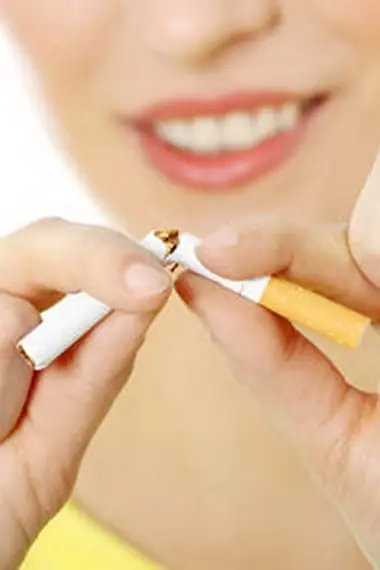 Quitting smoking is difficult because of withdrawal symptoms: insomnia, irritability, nervousness, weight gain. More than 50% of people who try to quit smoking return to the habit again after three months. Most smokers are well aware of the health risks of smoking, but tend to unconsciously downplay it.
The treatment of smoking should be aimed at relieving nicotine withdrawal and symptoms of tobacco intoxication, as well as at developing a new behavioral model for the smoker. The choice of tactics in the treatment of smoking largely depends on the psychological readiness of the patient to quit smoking.
One of the methods of treating tobacco smoking is treatment programs:
1 Educational program – "School-seminar", which includes group and individual counseling.
2 Treatment program for patients with a high degree of willingness to quit smoking (for complete smoking cessation)
Behavioral methods: self-help methods, rational psychotherapy and medical recommendations, group methods of psychological support, hypnotherapy (suggestion under hypnosis, leading to the subconscious destruction of psycho-emotional connections that caused cravings for smoking), aversion therapy (development of aversion to smoking).
Another method of treating smoking is a physiological effect.
Drug methods: nicotine replacement therapy (chewing gum, patches, nasal sprays), psychotropic drugs.
Non-drug methods: reflexology (impact with special needles on certain points connected by nerve pathways with specific areas of the brain). It is believed that smoking is an acquired reflex that can be corrected in this way. Adherents of acupuncture claim that this method is highly effective.
Harm of smoking light cigarettes
Many health-conscious smokers try to reduce the harmful effects of tobacco by switching to so-called "light" cigarettes.
Light cigarettes are called so because they "weigh" less and differ only in the number of holes on the filter through which additional air is sucked in. Their action is based on reducing the concentration of nicotine and tar with the help of additionally sucked air. New technologies have helped reduce the amount of tobacco leaf required per cigarette by almost half. The tobacco industry calls the new cigarettes "light" and "ultra-light". The consumer proceeds from the assumption that if 10 mg of tar is written on one pack of cigarettes, and 1 mg of tar is written on the other, then by smoking "light" cigarettes, he will receive 10 times less tar and will be less harmful to his health. The levels indicated on the pack usually indicate the minimum level of intake of these substances in the body. The smoker still gets "his" dose of nicotine, inhaling deeper or smoking more cigarettes. That is, the harm of light cigarettes is no less than the harm of regular cigarettes.
Why light cigarettes are more harmful
The use of sugar, honey, licorice, cocoa, chocolate and other flavorings makes cigarettes more attractive, especially to children and young people. So why are light cigarettes more harmful if they contain less tar? Cocoa also contains approximately 1% theobromine, which is a "bronchodilator" that widens the airways and facilitates smoke and nicotine absorption. A more well-known additive is menthol, which has an anesthetic and distracting effect, thanks to which such cigarettes can be inhaled deeper. With deep puffs, the lower parts of the lungs are affected and the harm to the health of the smoker increases.
Many doctors believe that light cigarettes are even more harmful than ordinary cigarettes, since people are deluding themselves by smoking them. It is because of "light" cigarettes that many smokers do not quit smoking, mistakenly thinking that they thereby reduce the risk of dangerous diseases.
It is beneficial for tobacco companies to encourage the transition to "light" cigarettes: they are more expensive, and the smoker smokes more of them.
Is it harmful to smoke a pipe and the harm of passive smoking
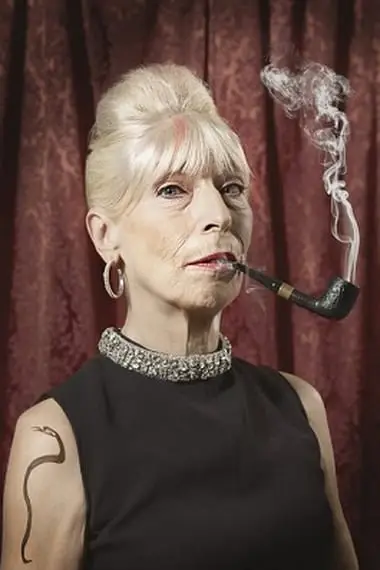 If you have been smoking for many years, it is very difficult to quit this habit. Perhaps one of the options that crossed your mind is to switch to pipe smoking. Is it harmful to smoke a pipe, or is it a panacea for the occurrence of diseases associated with tobacco smoking? People who smoke pipes or cigars have a lower risk of developing heart disease and tumors than those who smoke cigarettes. This is largely due to the fact that when smoking pipes or cigars, the smoker almost does not inhale the smoke. Therefore, smoking a pipe is harmful, since the risk of developing oral cancer is no less than that of other smokers. Remember that when you smoke a pipe, you still inhale tobacco smoke along with all its carcinogenic and toxic substances. This is called "passive smoking" and the harm from passive smoking is no less.
Cigarette smoke is divided into two streams: the main one, which enters the smoker's lungs when puffed, and the side stream, from the flame smoldering at the end of the cigarette.
The concentration of some harmful chemical compounds in the side stream is many times greater. It is especially sad that children often suffer. In families where parents constantly smoke, a child is 4-5 times more likely to get a cold, he may develop mental retardation and irritability.
Anti-smoking in Russia: anti-smoking laws
In Russia, on June 21, 2001, the State Duma adopted the Federal Law on Restricting Tobacco Smoking. This law aims to combat smoking “in order to reduce the harmful effects of tobacco smoke, prohibits tobacco smoking in workplaces, in urban and suburban transport, in air transport with a flight duration of less than 3 hours, in indoor sports facilities, healthcare organizations, educational organizations, organizations culture, premises occupied by public authorities, with the exception of tobacco smoking in specially designated smoking areas.
On May 21, 2003, the World Health Organization adopted the WHO Framework Convention on Tobacco Control. The convention defines the strategy of state regulation of the tobacco industry.
To combat smoking in Russia, after the adoption of the Federal Law "On Advertising" in 1995, serious restrictions were introduced on advertising of tobacco products both in the media and on outdoor advertising.
In 2004, a law was passed prohibiting the sale of tobacco products "on the territory of educational institutions", as well as within a radius of 100 meters from them.
On December 9, 2005, the State Duma of the Russian Federation adopted in the first reading a law on combating smoking, which provides for punishment for smoking outside specially designated areas.
Another law on smoking in Russia, adopted on April 11, 2008 by the State Duma of the Russian Federation, is the law “On the accession of the Russian Federation to the WHO Framework Convention on Tobacco Control”. According to the new law, Russia will impose severe restrictions on all types of tobacco advertising, up to its complete ban within 5 years. The fight against smoking among minors will be strengthened, and the inscription warning about the dangers of smoking on cigarette packs "should occupy at least 30 percent of the area of the larger side of the pack."
Our body has a tremendous ability to recover, and after a while after quitting smoking, you will feel as if you have never smoked.
The task of doctors, teachers, and the general public is not to fight smoking with prohibitions, but to convey to the consciousness and heart of every person the belief that by giving up cigarettes, he can avoid many diseases and prolong life for many years.