
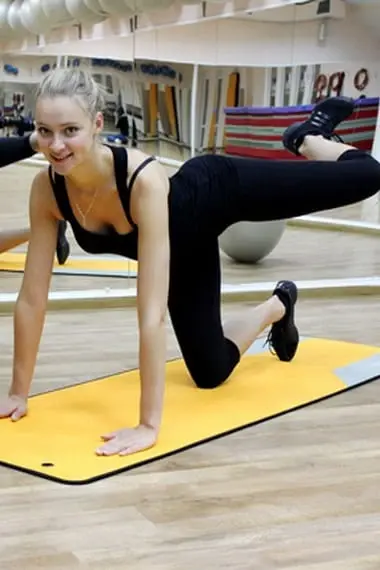
Pectoral muscles in women, pelvic floor muscles, inguinal and abs: exercises to strengthen them
It is supported by the upper and lower muscles. With the help of training, of course, it will not be possible to seriously change the shape and size of the breasts, however, working out the pectoral muscles in women will help maintain their tone and maintain breast elasticity. When training them, do not forget about working out the muscles of the back as well, since it is good posture that visually increases the volume of the chest, but stoop, on the contrary, reduces it.
In the photo of the pectoral muscles in women, it is clearly seen that in the upper part of the chest there is a pectoralis major muscle, and from below and on the side the chest is supported by the serratus anterior muscle and partly by the latissimus dorsi muscle. For this reason, a good result for strengthening the chest during long workouts is the simplest push-up from the floor, during which several muscle groups are involved in women, not only the chest, but also the upper back, lower back, abdomen and buttocks as well. If it is difficult to do classic push-ups with straightened legs, push-ups from the floor with bent knees can be advised. In this case, it is desirable to completely lower the body to the floor, and then raise it, leaning on straightened arms. Movements should be performed slowly and smoothly, and the head, shoulders and buttocks should be in one line. No need to bring the shoulder blades together, on the contrary,
Performing dumbbell presses on an incline or flat bench also helps to work out the chest muscles in women. In a lying position on a bench with your back pressed against it and arms raised, you need to lower the dumbbells to chest level, bending your elbows, and then straightening your arms with dumbbells again. Repeat several times. Another variation of the dumbbell press is to raise and lower the dumbbells from the floor to your knees (slightly above chest level) while lying on your back on a bench. At the same time, the muscles of the chest and arms are actively working. Performing this exercise, you do not need to bring your shoulders together, and your chest should remain straightened. Exhalation is made while lifting the dumbbells.
These simple exercises to strengthen the pectoral muscles in women must be performed regularly to achieve a good effect.
abdominal muscles in women
Many women with the onset of the warm season begin to dream of a perfect flat stomach. The weakness of this muscle group is fraught with protrusion or sagging of the abdomen, even without excessive amounts of fat. Strong abdominal muscles in women (straight and oblique) not only make the stomach itself more beautiful, but also give the "wasp" shape of the waist characteristic of women.
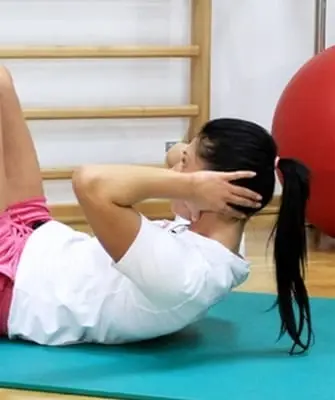
To perform a simple twist, where the rectus abdominis is actively working, you need to take a supine position. At the same time, the knees must be bent, and the feet should be flat on the floor. Hands should be closed under the back of the head, and elbows should be spread apart. During the exercise, the head and shoulders rise towards the knees. In this case, you should not try to touch your knees with your forehead, but your lower back and legs should not be torn off the floor. Then you need to return to the starting position and repeat the movements several times. To form a thin, graceful waist, twisting exercises with a turn are suitable, when the oblique muscles are actively involved in the work. Twisting with rotation is performed from the same starting position as regular twisting, with the difference that the body must not only be lifted, but also rotated alternately to the right and to the left.
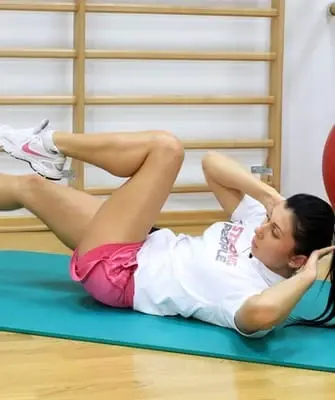
For the waist, the exercise of pulling the knees to the chest from a prone position with straight legs also works well. Hands should be folded behind the head. While inhaling, it is necessary to raise the knees to the chest, after which the legs are straightened and returned to their original position.
In the well-known exercise “Bicycle", several abdominal muscles work at once, including the rectus, transverse, as well as oblique (internal and external). In the supine position, you need to bend your knees so that your shins are parallel to the floor. In this case, the hands should be closed behind the head. Straining the press, you need to make rotational movements with your legs. One option for such an exercise would be to touch the left knee with the right shoulder and vice versa while slowly bending the legs at the knees.
True, one must understand that with the existing serious fat deposits on the abdomen, pumping up the press will not help you lose weight right away. After all, the human body is designed in such a way that excess fat will not disappear only from a certain problem area. To remove fat from the abdomen and from other parts of the body, complex power and aerobic exercises are well suited. But a strong press and a strong back will play a significant role during pregnancy, acting as a natural bandage and helping to bear the child.
However, women need to do abdominal exercises before pregnancy, and in the first six months after childbirth, it is generally not recommended to strengthen the abdominal muscles in women. The thing is that during pregnancy, under the influence of a growing child, they often diverge to the sides. Immediately after childbirth, doctors check the degree of their discrepancy. You can also do this yourself. In the supine position, you need to bend your knees, and slightly raise the body and tighten the press. By pressing with straight fingers folded together in the area above the navel, you can feel the hollow under the fingers. This is the discrepancy. Usually it is not deep and is 1-2 fingers. Then, over time, the muscles will return their tone without additional effort, but exercises to pump up the press during this period can contribute to a deeper divergence. If the discrepancy is large and reaches 10 fingers, then this condition is already considered pre-hernial. In this case, it is strictly forbidden not only to pump the press, but also to lift the
yellow items. With this in mind, the active recovery of the figure after childbirth should be postponed a little, and from the exercises, perform those that are gentle on the body and were specially designed to restore it.
Pelvic floor muscles in women
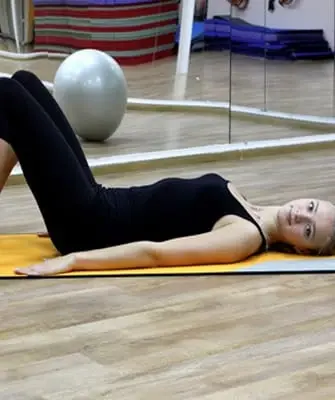
In the inguinal region, there are muscles of the abdominal wall of the abdomen and inguinal ligaments connecting the peritoneum and thighs. Often the cause of pain in the groin during pregnancy, felt as pain in the inguinal muscles in women, is the relaxation under the influence of hormones of the inguinal ligaments or the increasing pressure of the child on the internal muscles of the small pelvis. This nagging groin pain can be relieved by wearing a brace and specially designed pelvic floor exercises.
Inside the pelvis, women have many ligaments and muscles that support the bladder, rectum and uterus in a physiological position. A special place among the internal muscles is occupied by the muscles of the pelvic floor, located around the urethra and rectum, which are responsible for normal urination and defecation in humans. In women, in addition, they are also responsible for intimate sensations and individual stages of labor. Most of all, the muscles of the pelvic floor in women need training in the postpartum period and during menopause. The fact is that during pregnancy they experience strong uterine pressure, which weakens them so much that it can even cause cases of involuntary urination in the later stages of bearing a child.
Internal ruptures during childbirth, excess body weight, and decreased female hormone production during menopause also play a significant role in reducing their tone. The weakening of the pelvic floor muscles contributes to the occurrence of various inflammatory processes in the genitourinary system, not to mention possible problems in the intimate area of a woman. Problems of a sexual nature associated with their weakening can be expressed not only in the very impossibility of achieving orgasm, but also in the pain of sexual intercourse. To strengthen these special muscles for a woman, special exercises were developed, named after Kegel.
Initially, Arnold Kegel (an American gynecologist of the mid-20th century) built a system of special exercises for women who, for various reasons, suffered from involuntary urination, uterine prolapse, or rectal prolapse. The operational path used to eliminate these troubles did not always get rid of them without a trace. Kegel suggested another way to solve the problem besides surgery. Based on the fact that systematic physical activity can strengthen various muscles in women, Kegel proposed to train the internal muscles of the pelvic floor also with the help of certain exercises. The new method was immediately taken into account by many gynecologists of the world, because if this set of exercises was performed regularly, it became possible to do without the use of a scalpel.
Kegel muscles in women
When starting to perform Kegel exercises, you must first feel the internal muscles. In order to voluntarily squeeze them around the pelvic floor, one can imagine the sensations of holding a stream of urine. Then you need to try to compress the inside of the rectum (there should be a feeling of lifting the anus). At first, it will be difficult to distinguish between the sensations arising from the tension of various muscles, but over time it will become easier and easier to do this.
The simplest complex includes the following exercises:
1 Tighten the muscles around the groin and hold in this position for 10 seconds, then relax them. Repeat 10 times.
2 Quickly contract and relax the pelvic floor muscles several times. Over time, it is desirable to bring the number of times to 50.
3 Tighten and relax the muscles around the anus several times, then around the pelvic floor. Repeat in turn about 20 times.
4 Counting to 5, slowly strain the muscles of the pelvic floor, try to relax them not immediately, but also at the expense of "five".
The convenience of this set of exercises also lies in the fact that you can do it almost everywhere: in the kitchen while cooking, on the subway while driving home, while watching TV. These exercises can be done both during pregnancy and immediately after childbirth. In addition, regular Kegel exercises to strengthen the pelvic floor muscles restore their tone, helping to maintain healthy internal organs and restore a successful intimate life. The main thing is the regularity of classes and smooth, measured breathing during the exercise. You should not engage in these exercises to fanaticism, this will achieve the opposite effect, and we must remember that it is better to do fewer of them, but correctly.
In addition to this complex, it is possible to develop the muscles of the pelvic floor in women with the help of the “Bicycle” or “Scissors” exercises, i.e. those that are aimed at strengthening the lower part of the abdominal press. It is believed that in women who are in good physical shape and have strong abs and well-developed leg muscles, the pelvic floor muscles are also elastic and strong, which in turn helps to keep the internal organs in order and avoid numerous problems after childbirth.