
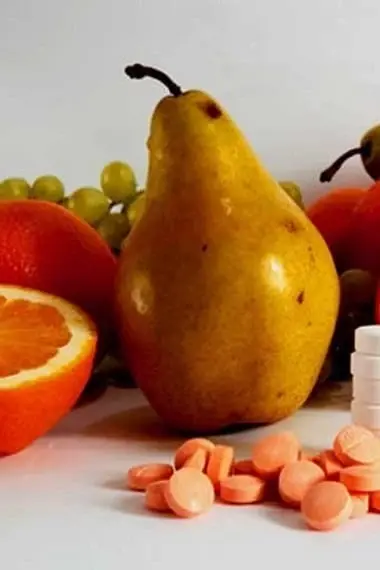
The whole truth and myths about vitamins: correct intake, overdose and excess
The whole truth about vitamins is told in this article, from which you will learn the basic rules for their use. What is the difference between natural and synthetic vitamins, can there be an excess of these drugs. How to avoid overdose and calculate the right dosage.
The body lacks the vitamins found in fruits and vegetables
The following opinion is widely spread: if you eat a lot of vegetables and fruits every day, you can fully satisfy the body's need for vitamins. However, it is not true. Of course, these foods are rich in vitamins… but only three or four out of thirteen!
Vegetables and fruits contain ascorbic and folic acids, carotene and "vitamin P". B vitamins are present in scanty amounts, and there are practically no fat-soluble vitamins.
The need for B vitamins is provided by the inclusion in the diet of cereals, legumes, wholemeal bread, eggs, meat and fish products. Vitamin B12 is found mainly in the liver of animals and fish, meat and fish, eggs and some dairy products.
Sources of vitamin A are animal liver and fat, fish roe, eggs and dairy products.
There is a lot of vitamin E in vegetable oils and, of course, in the initial products for their manufacture: sunflower seeds, corn, soybeans, etc., as well as in nuts, cereals and legumes.
The paradox is that vegetables and fruits are not always able to satisfy a person's need even for vitamin C! Firstly, most of them contain not so much ascorbic acid. Secondly, it is very easily destroyed during storage and culinary processing of products. Yes, in summer and autumn, eating fresh, just from the garden, fruits, you can get the recommended amount of vitamin C. And in winter and spring – hardly.
Store-bought juices usually contain no more than 2-3 milligrams of vitamin C per 100 milliliters. Therefore, it will not be possible to meet the need for it, even if you drink juice in liters.
The minimum required set of vitamins includes vitamins C, P, group B (B1, B2, B6, PP, folic acid and B12), A and E. For children and the elderly, vitamin D is also important. You can provide yourself with this set due to either a varied diet, or the additional intake of multivitamins.
Harm of synthetic vitamins
Attention! Uncontrolled intake of multivitamin preparations can disrupt metabolism and have a toxic effect on the body – up to the development of hypervitaminosis. Vitamins A and D are especially dangerous in this regard. There is real harm to synthetic vitamins only if they are constantly taken in large dosages.
Fruits can be replaced with multivitamins.
Some people, mostly retirees, believe that they don't have to eat fruit, just take a regular multivitamin. Of course, it is cheaper to buy a pack of multivitamins that will last one or two months than to buy fresh fruits and vegetables every day. But we should not forget that, in addition to vitamins, fruits contain many other useful substances: potassium, iron, dietary fiber, etc.
A person, especially an elderly one, cannot do without herbal products. A course intake of vitamins lasting three to four weeks is better to arrange in the cold season.
Proper intake of vitamins
 Proper intake of vitamins begins with an accurate determination of your body's need for these substances. Drug therapy, antibiotics, various restrictions due to various diseases, surgical interventions and stress increase the need for vitamins. In turn, the deepening deficiency of vitamins disrupts metabolism, thereby worsening the course of diseases and preventing their successful treatment. Therefore, people suffering from any ailment must definitely take vitamin preparations.
Mistakes about vitamins
Mistakes about vitamins include the myth that people on a low-calorie diet cannot do without multivitamins.
At the same time, regular intake of multivitamin and mineral complexes or foods enriched with vitamins is useful for everyone, especially young children, schoolchildren, students, the elderly, people exposed to increased physical or neuropsychic stress, exposure to harmful factors of production and the environment, and also pregnant and lactating women.
Excess and overdose of vitamins C
An excess of vitamin C – usually synthetic, taken in the form of drugs – is no less dangerous than a deficiency, although not as common. And it's not just about vitamins A and D, the excessive use of which can cause hypervitaminosis – sometimes even fatal. The rest of the vitamins, too, should not get too carried away, including the "harmless" ascorbic acid.
Ascorbic acid has long been considered the safest and most beneficial of all vitamins. However, more and more reports of the negative effects of an overdose of vitamin C have recently begun to appear. British doctors have found that, contrary to advertising promises, the standard dosage of ascorbic acid does not so much prevent a heart attack as exacerbates the course of a number of diseases. Another group of scientists from the UK found that if you take more than 500 milligrams of vitamin C daily, it does not have an antioxidant, but the opposite effect on the body, that is, it increases the amount of free radicals that destroy biologically active substances and genetic material.
Ascorbic acid is involved in the prevention of atherosclerosis, but only in an amount that does not exceed the norm.
It was also found that large doses of vitamin C accelerate the development of atherosclerosis. American cardiologists examined 570 people, whose average age was 54 years. At the beginning of the study, all had a normal state of the vessels. Then some of the subjects began to take 50 milligrams of ascorbic acid to prevent atherosclerosis. After 1.5 years, a re-examination took place and it turned out that in those who consumed vitamin C in large doses, atherosclerosis of the carotid arteries (they supply the brain with blood) occurred 2.5 times more often.
With prolonged use of excessive doses of vitamin C, excitation of the central nervous system (anxiety, a feeling of heat, insomnia), depression of pancreatic function, the appearance of sugar in the urine, and increased blood clotting can be observed. In addition, the excretion of vitamins B12, B6, B2 and ascorbic acid itself from the body is enhanced.
Even with a not very long abuse of vitamin C, a lot of oxalic acid salts appear in the urine, which is fraught with the formation of kidney stones.
There are recommended intakes of vitamin C that must be observed. The best way to ensure this norm is to include in your menu a variety of fruits and vegetables, in which ascorbic acid and other beneficial substances are in a balanced ratio without the risk of overdose. Let's think about other vitamins:
Vitamin B6 overdose
An overdose of vitamin B6 can increase the acidity of the gastric juice and increase the pain of gastritis or peptic ulcer disease.
An overdose of folic acid can cause skin irritation.
Excess vitamins in the body
An excess of vitamins in the body is just as terrible as their deficiency, so you need to correctly calculate the dosage. Excess vitamin E is fraught with increased blood pressure.
Excessive intake of vitamin A in the early stages of pregnancy can lead to heart and nervous system defects in newborns.
Harm of beta carotene
In general, such fashionable antioxidants in large quantities are more likely to harm the body than bring the expected results.
In particular, the results of some studies cast doubt on the benefits of beta-carotene tablets. American scientists conducted a study in which 22 thousand people participated. One half of the subjects took 50 milligrams of beta-carotene capsules every other day for 12 years, the other half did not. As a result, there were no significant differences in the health status of both groups.
And since beta-carotene does not have a beneficial effect on health, there is no point in buying expensive pills.
Attention! In people who smoke, synthetic beta-carotene harm can manifest itself in the formation of carcinogens in the lung tissue, which increases the risk of lung cancer. This does not apply to natural beta-carotene, which is found in carrots and other vegetables.
Particular care should be taken with new forms of vitamin preparations. The same effervescent tablets are not suitable for everyone: they will only worsen the condition of people suffering from peptic ulcer or gastritis in the acute stage, or they can provoke an exacerbation of these diseases when taken on an empty stomach, even in remission.
It is necessary to take into account and here is a nuance. As soon as excess doses of vitamins enter the body, it will immediately try to get rid of the excess of these substances, increasing their breakdown and excretion. In other words, the more vitamins we take, the more intensively the protective mechanism works, aimed at removing them. And even after a person returns to a normal amount of vitamins, the body is in no hurry to reduce their excretion. As a result, beriberi may develop despite adequate vitamin intake.
The difference between natural and synthetic vitamins
 You all know that there are natural and synthetic vitamins, but few people know what the difference is between them. Because it doesn't exist. All vitamins – both those in tablets and those in fruits – have the same chemical structure. If the formula was changed during the creation of the drug, then it no longer contains a vitamin, but another substance with different properties. Naturally, in vegetables and fruits there are many useful substances, in addition to a specific vitamin, and all other things being equal, it is advisable to choose a natural product. The difference between natural and synthetic vitamins is only in the method of extracting the active substance.
By the way, many vitamin preparations are made from natural sources or natural raw materials: vitamins B2 and B12 are obtained through synthesis by microorganisms, vitamin C – from glucose, vitamin P – from chokeberry, citrus peel or Japanese Sophora, etc. In addition, on production is very strictly monitored so that the tablet contains a certain dose of a particular vitamin. Finally, synthetic vitamins are reliably protected from all kinds of external influences and therefore are well preserved, unlike natural vitamins, which are destroyed by heat, light, etc.
Preparations are indispensable for severe hypovitaminosis, and even more so for beriberi, when it is urgent to increase the level of vitamins in the body. They must be taken by those people whose diet for any reason (fasting days, some diseases, postoperative condition, etc.) is limited quantitatively or qualitatively and, therefore, poor in certain vitamins, as well as athletes, people working in harmful working conditions, pregnant and lactating women and many other categories of the population.
Many people buy rosehip syrup, believing that it contains a natural concentrate of vitamin C. In fact, ascorbic acid is completely destroyed in the manufacture of syrup, and a synthetic vitamin is specially added to it.
Vitamins help you lose weight
It is unlikely that vitamins alone will help to become slimmer for those who like to eat in excess. However, the additional intake of vitamin preparations will help to avoid hypovitaminosis and the diseases they cause: anemia, osteoporosis, visual impairment, etc., which are often found among enthusiasts of various weight loss methods.