

Characteristics of the psychological development of a young child and features of the method of raising children from 1 to 3 years
Due to the insufficient development of attention and thinking, high field dependence and the desire to single-handedly rule over parents in the process of family education, a number of difficulties arise. Often kids are aggressive, capricious, stubborn, and only a patient attitude will help overcome all these psychological obstacles to the formation of a full-fledged personality.
Features of early education of children 1, 2 and 3 years old: erroneous tendencies
Many parents make a number of mistakes when raising children 1-3 years old. Psychologists identify some erroneous tendencies that are often observed when communicating with babies. Here they are:
- conversation on an equal footing;
- questions;
- public educational activities.
Equal conversation.
Humanist parents are often focused on complete equality in their relationship with the child and consider, in fact, parental guidance to be humiliating and limiting for the child. This allegedly suppresses the free will of the child and impedes his development. One can also come to the idea of equality with a child as a result of one's own childhood experience, when a person's will was severely limited. The result of understanding such an experience in parents can be a categorical decision not to put pressure on their own child and try to agree with him on any issue. At the same time, no one relieves parents of the obligation to socialize children (that is, to convey to them the rules accepted in society and insist on their implementation) and to ensure their safety. And that requires a master-slave relationship. Not knowing about the peculiarities of the upbringing of young children, trying to hide from the unpleasant obligation to take the role of a leader in relations with the child, parents try to constantly negotiate with the child, trying to persuade him to voluntarily follow the rules and regulations, trying to understand why parents want this from him and not another. This is especially true of such unpopular "parental events" as, for example, weaning, disciplining a child, introducing rules of conduct. Parents simply do not feel entitled to command, but the relationship with the child in any case implies a hierarchy of power. why parents want from him this, and not another. This is especially true of such unpopular "parental events" as, for example, weaning, disciplining a child, introducing rules of conduct. Parents simply do not feel entitled to command, but the relationship with the child in any case implies a hierarchy of power. why parents want from him this, and not another. This is especially true of such unpopular "parental events" as, for example, weaning, disciplining a child, introducing rules of conduct. Parents simply do not feel entitled to command, but the relationship with the child in any case implies a hierarchy of power.
In the early upbringing of a child, parents often play the role of a boss, a representative of authority. It can be a reasonable and protective power or cruel, soulless or some other, but in any case it is power.
A small child cannot be an equal partner to an adult. Therefore, in the course of raising young children, you should not try to share with them the burden of making any decisions. Of course, the parent can count on equal relations with the child, but for this the child must grow up. And then as two adults, you can build a truly equal relationship.
To love and respect the child, to take into account his interests – all these are wonderful feelings and attitudes that help parents. But at the same time, when raising a child of 1-3 years old, you need to understand that in front of you is still a baby who has the right to all the privileges of his age, including the privilege of being under guardianship.
Questions.
More than half of all messages addressed to children are in the form of questions. At any age, this causes undesirable phenomena in relations with the child. But such a “communication with questions" looks especially paradoxical, when the baby is still poorly able to speak.
Watch people talking to a child and you will see that this is the case. Adults ask children countless questions:
- Who came to us?
- Shall we go wash our hands?
- Now mom will come and we will get ready for a walk, right?
- Well, shall we go home?
Well, of course, when the question is asked on the case and the parents are really interested in whether the child wants, for example, to walk. But, as a rule, the answer to the question is the least of all that interests parents. It's just that adults are used to formulating their thoughts to the child with questions. Often the questions are too difficult for children – a child who has just learned to speak cannot comprehend his experience enough to tell you what he liked in the developmental lesson.
In other cases, questions make it clear to the child that the parents are inattentive to him. If, seeing a child drawing, an adult asks him: “What are you doing here, drawing?”, then it seems that the adult does not see the child.
It is difficult to say for sure how and in what way this cultural practice developed, but the fact remains that adults communicate with children with questions. Under the hail of such interrogations, the kids feel uncomfortable; they are always in a situation where they have to respond to something. This creates unnecessary pressure on the child.
As a result, children, accustomed to the mass of empty questions, become isolated and learn to ignore the questions of adults. In addition, the fact that in most cases the adult is not interested in the answer to the question is important – no matter what the child answers, he will have to do what the adult has decided.
In the process of raising a young child in a family, if you decide that something needs to be done (whether you need to take the baby to wash, remove from guests, or finish the evening ritual of bedding), say yes. The question should be asked only when the answer really interests you.
public educational activities.
Another common mistake parents make when raising children 1-3 years old is public educational manipulations. In response to misbehavior, parents try to resolve the behavior problem on the spot by chastising, shaming, or comforting the child. In some cases, others, relatives or acquaintances are involved in solving the problem. Everyone vied with each other to console the child or somehow discipline him (depending on the circumstances). This only exacerbates the problem. Usually, the more witnesses, the more difficult it is to deal with problem behavior. The child receives a lot of different messages from different people around. He is unable to process this information, which leads to an increase in emotions and an even greater breakdown in behavior. Everyone knows the classic scene when several relatives at once try to calm the whimpering baby. Often they fail, and as a result of such a scene, everyone is upset.
It usually only takes one adult to deal with any problem behavior in a young child; the rest must give him freedom of action and remain in the shadows. Given the age-related characteristics of raising young children, it is best to simply take the baby, who is naughty, scandalous or dissatisfied with something, from society and solve the problem one on one with him, and return only after everyone has calmed down.
Basic pedagogical rules and conditions for raising young children in the family

- Question: how to behave when the child's speech is still imperfect? Is it necessary to speak to him competently, or is it acceptable to repeat his simplified words and sounds to refer to objects?
Parents should not be embarrassed if they sometimes use the child's words when talking to him. This is a normal adjustment for the child, which occurs automatically. At the same time, you should not drastically narrow your speech range and communicate exclusively in children's language, believing that otherwise the child will not understand you. The child usually understands many more words than he can speak. You can calmly speak to him in an adult language (of course, in its simplest and most accessible form).
An important condition for the upbringing of young children is not to correct the baby in front of outsiders, requiring him to use words exclusively correctly. The kind of speech that you observe from one to three years is a natural stage in the development of the child.
- Question: Do young children understand what is being said about them? Is it possible to discuss the problems of children of 1-3 years of age in the process of education, or is it better to do so that the child does not hear?
As a rule, children understand what is said about them, not always with their head, but always intuitively. And if the child does not have hearing problems, then he naturally hears everything that adults say. Children become especially attentive when adults lower their voices to say something secret. Therefore, one of the rules for raising young children is a ban on discussing the baby in his presence. If, in your opinion, it is impossible to say something in front of the child, find a time when he will be in another room. The constant lowering of the voice in front of the child will create an unpleasant feeling in him that he is surrounded by omissions and that something is wrong with him. With age, children in such families also become prone to secrecy and lies. They seem to adopt the manner of creating secrets from adults.
Most of the problems concerning the child, however, can be voiced in front of him. There is nothing wrong with this: the child has the right to know that some part of his behavior excites an adult. An important condition for the upbringing of young children is not an endless discussion in the family or with all acquaintances of existing problems, but their solution. The constant “rubbing” of the child's problems with others (he doesn’t eat well, gets sick, doesn’t obey) will eventually form in the child an appropriate image of himself as a source of problems. Discussing the problems of the baby on every corner, you lay a solid foundation for the problems with the child's self-esteem, and also form his sense of inferiority. If the problems really concern you, look for answers from experts on relevant issues or in the popular literature.
- Question: Is it worth it to engage with a child according to early development methods?
This is one of the most common questions parents ask. Most modern psychologists share the view that early development does not provide significant advantages in the future fate of a person, and the costs of such methods are noticeable in most cases. Quite often impressive cases of early development, when three- and four-year-old children read, counted, knew a lot of foreign words, are accompanied by a lag in the social and emotional areas.
Often these children resist further learning. Their natural motivation to learn is broken.
The early age of the child is not suitable for the study of sign systems: education in this area is compulsory and does not lead to a real increase in intellectual potential. A young child is tuned to the assimilation of sensory experience and the experience of social relations. And the experience gained at this particular age cannot be replaced by anything. This period is responsible for practicing the vital skills of social interaction and dealing with your feelings. Artificially (and there is no doubt that all education at this age is artificial; it is not based on the natural interest of the child), by drawing the child into activities unusual for him, you deprive him of the opportunity to fully master those stages that he needs by age.
Ambitious parents show particular zeal in early development, for whom the success of the child to a large extent reflects their personal success in life.
If you, like most parents, are sure that your child is showing early intellectual abilities, teach him to play lotto, checkers, chess – this is a universal training for the brain.
The main activities for a child under three years of age are modeling, drawing, all types of physical activity, observation, a variety of sensory experiences.
Guided by the pedagogical rules for the upbringing and development of young children, do not rush to teach them numbers and letters, better study what surrounds the baby in life: animals, plants, sounds, smells, etc. The ability to count to one hundred is no more useful for a child than knowing the names of plants that are in your yard. You may be flattered that the baby can add syllables, but it will be more useful for him to be able to smell the products from which you prepare dinner. This will give him a much more important experience that suits his needs.
Until the age of three, a child is not at all interested in what the product of his activity is (a picture, a plasticine figurine), he is only interested in the process and tactile experience (smearing paint, crushing plasticine mass). All attempts to squeeze the product out of it (a hatched Christmas tree, a molded ball) are violent and do not contribute to its development. Naturally, through directed and stubborn influence, you can teach him to brush not where the child wants, but where adults want (for example, inside the contour of the Christmas tree), but this process will in no way help accelerate the development of the child. For him, as before, the goal of activity is the process of smearing paint, feeling like a person influencing the surrounding space, and not a painted Christmas tree and not plasticine rolled into a ball.
Fundamentals of Teaching Generosity in Young Children
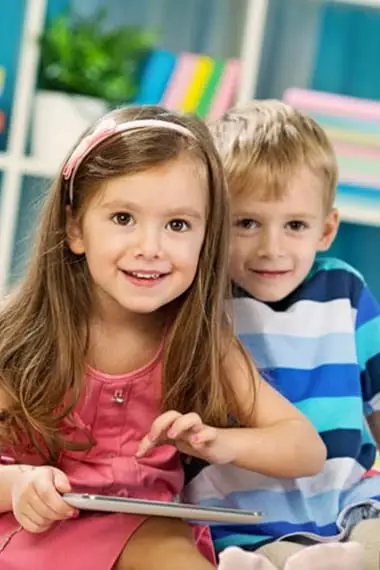 Very often, children do not want to share their things with anyone. How to behave correctly if the child is greedy, does not give his toys, takes away strangers?
This problem is faced by the parents of almost all children. Different babies have different periods of greed. The child may not give his toys, be very worried when they are taken away, and behave aggressively. This causes parents to feel embarrassed in front of others and the desire to force the child to behave more friendly at all costs.
Guided by the basic rules of raising children of early age, it is important to understand that the child really worries when his toys are taken away. He has only recently learned to understand the belonging of things to himself, but he does not understand why he should share; he does not see any benefit from this yet. And he only sees that everyone is against him, his parents force him to give such painfully “his own” and also scold him when he refuses to do this. And I don't want to give up. The child does not fully understand that this is only for a while, because he does not have the experience of such a social exchange (you to me, I to you). Perhaps the child is experiencing something similar to what you would experience if a stranger dragged your favorite chair, for example, or a computer, from your house. You would be outraged and defend your good! Your child does the same.
What not to do during a period when your child is often greedy:
- Forcibly taking away toys to give to other children. Such actions of parents reinforce the negative feelings of the child (anger, resentment) and make him unhappy. In this state, you will definitely not get cooperation from the child and will not persuade him to listen to your words.
- Calling a child "greedy" or assigning such labels to him. Such actions will help to consolidate the child's negative image of himself, and he will subsequently only confirm this image with his actions.
- You should not not give things to a child, trying to show him how insulting it is. Thus, you yourself model the behavior that you want to save the baby from.
- One of the basics of raising young children is not to explain to the child what he is not yet able to understand. Do not get carried away by deep moral categories. Say simply that it is customary to share your toys, and be sure that the baby will soon learn this, as well as everything else.
The main pedagogical rules for instilling generosity in young children are as follows:
- When reading books or watching cartoons together, draw your child's attention to those episodes when the characters share something and play together merrily.
- Always praise the child for any manifestations of generosity and courtesy, no matter to whom they are directed and no matter how rare they are. Pay attention to such episodes.
- An important pedagogical condition for educating young children is generosity for praise. Mark all the times when the child behaved as generous and kind, tell important people about them. for example, the grandmother or the father of the baby.
- If guests come to you, discuss in advance with the child. what toys you can provide to guests, and determine others as inviolable and put away.
- Encourage your little guests to bring their own toys to make it easier for your child to share theirs as part of the exchange. If a child has severe “greed attacks”, it is better to warn the parents of other children about this in advance. Considering the peculiarities of raising children 1, 2, 3 years old, ask others not to focus on some of the problems of their child's character.
Early Childhood Tips: Parents' Private Time
Young children are so attached to their parents that adults often lack even a minimum of personal time. How to leave the house when the child cries a lot and does not let go of mom or dad?
It is still possible and even desirable to leave the house, despite the protests of the child, so as not to create an unnatural situation when the mother of a baby over a year old sits inseparably with the child, not even allowing herself to walk without him for a couple of hours.
The recommendations of psychologists for raising young children who do not want to let their parents go are as follows:
- Tell the child that you will have to leave. The place of departure does not matter. You don't have to come up with a good reason like urgent work to leave. Just mark for the child the place where you will go so that he has some information in this regard.
- Say when you will be back, use words that the child understands: after dinner, for lunch, and so on.
- Set a frame for about five minutes (can be shown on the clock) during which you will sit with the child before leaving. Once the five minutes are up, get up and leave despite protests. Never extend your time with your child in response to his tantrum. In this way, you give him the information that the way to keep his mother to himself is to scream loudly.
- If the child is highly anxious, you can leave him some kind of sign, a small little thing, a designation of yourself (for example, your hairpin). Tell him that while you are away, this little thing that represents you will remain with him.
- The method of raising young children involves maintaining friendliness, you can not show your excitement about the behavior of the child.
- Do not scold the child for being naughty – it is really hard for him.
- Never secretly run away from a child while he is playing. Your behavior should be as clear and predictable as possible. Don't be afraid to face your child's strong emotions – they won't hurt you.