

Everything about beer: myths and reality, benefits for the human body, beer traditions in different countries
All this is about beer – a bitter, foamy drink that has gained unprecedented popularity in almost all countries of the world, and in some places has even become an element of national culture. True, there are still many misconceptions about the harm of this drink. It is misconceptions, since the vast majority of them have no reliable grounds.
Beer is the oldest alcoholic drink, dating back thousands of years. In Babylon, at the dawn of human civilization, more than 8,000 years ago, this wonderful drink was brewed. Later, brewing spread to Ethiopia, Egypt, Greece, Persia, and the Caucasus. In ancient Egypt, during archaeological excavations, amphoras were discovered, empty, but with the remaining remains of some kind of liquid. They were sent for analysis to a special laboratory, and after research it was found that beer was stored in these amphorae. So the drink recipe was restored under the conditional name "Ancient Egyptian beer".
Modern breweries produce a lot of brands of beer, but all of them, with a few exceptions, are not much different from each other. And earlier in the Soviet Union they brewed several types of beer (all-Union – Zhigulevskoye, Velvet, Rizhskoye, Ukrainian, March, Nevskoye, Stolichnoye, Porter – and some other local production), but they all had their original, unique taste.
Interesting facts about beer
In Central Europe, the monks were the first to brew beer. In Bavaria, for example, a nunnery is still preserved, famous for its well-equipped brewery. Beer is widely represented on the pages of world literature. It was the favorite drink of Schweik, the hero of the famous novel by Yaroslav Hasek. The brave soldier often spent his free time in the Prague tavern "At the Chalice", where the owner of the establishment, Pan Palivets, served him beer. An interesting fact about beer is that the author of the novel himself was not indifferent to it. Even Harry Potter and his friends have a favorite drink – butterbeer (of course, non-alcoholic). Who is not familiar with the ballad of the great Scot Robert Burns "John Barleycorn", which describes the process of brewing in an amazingly poetic way! And the English writer Somerset Maugham has a novel with the unusual title "Pies and Beer,
Interestingly, it is customary to serve special snacks with beer. In addition to the generally recognized boiled crayfish, shrimps, lobsters, lobsters, crabs and dried seafood (fish, squid, octopus), each country has its own favorite, national ones. In the Czech Republic, these are sausages, in Germany – radish (there is even a special variety "Munich for beer"), in the Baltics – salted Checkmarks with cumin, in France – cheese, somewhere – soaked peas, and somewhere – salted cottage cheese with greens. Salted nuts for beer and all kinds of crackers and chips are also very popular everywhere.
Is it bad for your health to drink beer?
There are many myths about beer, and this myth-making is created by some zealous figures and propagandists of a sober lifestyle. So what is a myth about beer, and what is reality? Is beer harmful to health or, conversely, beneficial?
The most common, unsubstantiated "fact" is that beer is very unhealthy and does not have any beneficial properties. But it's not. According to most scientists, if you do not abuse this drink (at a daily rate of 0.5-l), then the body of a healthy person does not experience any unpleasant consequences. On the contrary, beer is rich in such essential vitamins as B1, B2, B6 and PP, and the hop bitterness contained in it stimulates the secretion of gastric juice, thereby helping to improve digestion. The use of the drink also has a positive effect on the condition of the skin and hair. In moderate doses, beer is recommended even for athletes.
Often, from those who supposedly “know everything about beer", you can hear that this drink is the source of many diseases. Again, no. Beer not only supplies the body with useful substances, but also protects it from diseases. Thanks to studies by Czech and German doctors, it has been established that drinking in moderation reduces the risk of cardiovascular diseases, kidney stones, improves the condition of the stomach with gastritis and peptic ulcer. According to some researchers, it is even possible to restore its mucous membrane. The Italian scientists of the Institute of Tumors in Genoa also contributed to the common piggy bank, establishing that beer has clear anti-cancer properties, preventing the development of a malignant tumor. Most of the anti-carcinogenic substances are found in hops, so beer is more useful, having a more bitter taste and denser foam. By the way, the use of non-alcoholic beer is also a good prevention against cancer, reducing by 85%, with regular use, the risk of disease.
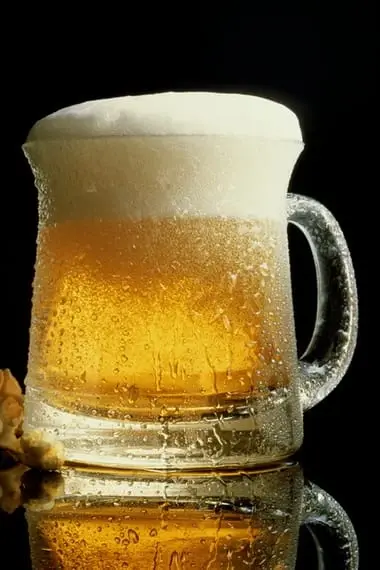 Is it harmful to drink beer for those who do not want to get better? This opinion is also widely known: they get fat from beer. However, numerous studies have shown that excess weight is not formed from beer at all. So, scientists from the Warsaw National Institute of Public Health confirmed that regular consumption of beer is a direct path to a slim figure, since it does not have excessive calories. For comparison, they cited the following figures: 100 g of beer contains 40-50 kcal, whole milk – 55, grape juice – 74, champagne – 80. It should be added that there are practically no salts in beer, as a result of which the level of salt and water in the tissues of our body. In addition, it is low in sodium, relatively low in protein, and free of fat. Based on this, the following conclusion was made: with moderate consumption of beer, a person's weight does not change, and if you use a beer diet, you can even lose weight quickly. And a few more words about the notorious "beer callus", which has become a byword. Myth about her
was debunked at the annual convention of American nutritionists by scientists from the University of Indiana. Simply, as they say, you need to eat less.
And here is another horror story – beer allegedly with regular use can turn men into women. This conclusion was made on the basis that the hop drink contains the female hormones phytoestrogens. In fact, according to scientists, beer cannot disrupt the hormonal background (there is no breast enlargement, the pelvic bones do not expand, the voice does not change, potency does not disappear). Such unwanted side effects are unlikely to occur because the concentration of phytoestrogens (similar to the female hormone estrogen) is extremely low. And in order to accumulate even a minimal amount of them in the body, it is necessary to drink 20 tons of beer at a time (about half of a railway tank), and you should drink very quickly so that phytoestrogens do not break down in the body.
Beer alcoholism is also nothing more than a bike, a pseudo-fact about beer, not confirmed by anything. This simply does not exist in nature! According to the head of the department of the Moscow Research Institute of Psychiatry of the Ministry of Health of the Russian Federation, Doctor of Medical Sciences A.V. Nemtsov, "beer alcoholism" is another myth, since alcoholism and drunkenness are not biologically tied to a specific drink – it is a disease caused by excessive alcohol consumption in any form.
There is a common belief that alcohol is added to "strong" beer. It is not true. For the preparation of strong varieties of the drink, yeast that is especially resistant to alcohol is used. When the alcohol content of beer exceeds 6%, the action of normal brewer's yeast stops and it settles to the bottom. But special yeast, developed using a unique technology, is able to produce more alcohol. And adding alcohol to beer is unprofitable economically.
A lot of idle fiction goes around plastic containers. You can often hear the claim that plastic bottles contain poison. In fact, the beer is bottled in so-called PET bottles made from polyethylene terephthalate. This polymer is chemically neutral and does not pose a threat to health, since it does not contain plasticizers that are added to other types of plastics to better mold products that are dangerous.
It is also a misconception that beer can be prepared at home only if you have a mini-brewery. However, the latter are a product of modern times, and our ancestors for many centuries brewed excellent beer, doing without these units. By the way, in this book we will consider the technologies for making beer at home without expensive special equipment.
So why is beer good for you?
What are the health benefits of beer?
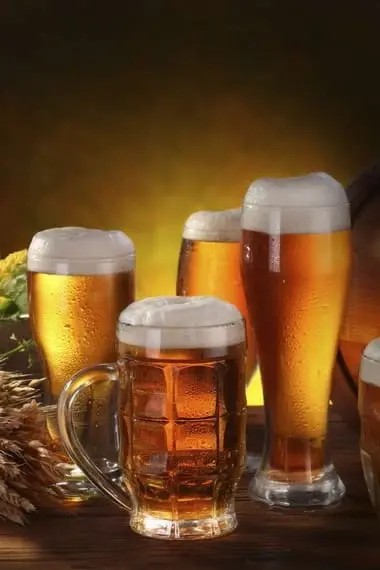 Having dealt with the myths, here are some interesting facts about the benefits of beer for the human body.
German medical scientists have found that vodka and other strong drinks inhibit the activity of the stomach. In their opinion, only those substances that are formed as a result of alcoholic fermentation, which are found in low-strength drinks such as beer and dry wine, have a positive effect on it.
The most valuable substances are contained in beer due to hops. They give the drink a peculiar bitterness and color, contribute to the release of bile and improve the digestion process, and also have an analgesic and even disinfectant effect.
Another interesting fact about beer is that malting barley is the only cereal that contains substances with anti-radiation effects.
Japanese researchers have found that the beneficial properties of beer reduce the effect of carcinogens on the human body. Therefore, its consumption in moderation reduces the risk of cancer. As a result, over the past 20 years, beer has become the national drink of Japan.
What else beer is useful for the body is that it speeds up the metabolism in the body and promotes cell rejuvenation. As experience shows, those who drink beer age much more slowly than those who do not drink it.
It will be interesting to learn about beer and that its potassium, magnesium and phosphorus are a good prophylactic against myocardial infarction and heart failure. In addition, potassium increases the excretion of sodium and chlorine by the kidneys, while increasing the formation and separation of urine, which contributes to the excretion of sand and stones from the kidneys. The composition of beer also includes silicon, which strengthens bone tissue.
According to the results of studies by Czech and German scientists, beer is also good for health because its moderate consumption (one cup a day) has a positive effect on the kidneys, preventing the formation of stones, and increases the body's immunity. Therefore, you should listen to the opinion of many doctors: it is better to drink beer more often and little by little than rarely, but in large portions.
American scientists have come to the conclusion that those who consume 1-2 glasses of beer daily have a 50% reduced risk of a heart attack. The alcohol of the drink contains “good cholesterol” (high-density lipoprotein), which performs the function of cleaning blood vessels from harmful deposits.
Brewer's yeast is prescribed to be taken orally for various infectious diseases, boils, skin diseases.
Beer can inhibit pathogenic microbes. Professor Koch, after whom cholera bacilli are named, proved that cholera bacilli die within a few hours in beer. Apparently, this is precisely why during cholera epidemics, brewers and their customers remained not only alive, but also healthy.
According to experts from the Austrian Medical Center of the University of Innsbruck, the benefit of beer for the body lies in the fact that, like green tea and red wine, it has an anti-inflammatory effect due to the substances contained in its extract that promote the production of protein, which underlies immune responses, occurring in the human body. In addition, scientists have shown that beer reduces damage to the amino acid tryptophan, which activates the brain and promotes the formation of serotonin, the hormone of happiness.
In folk medicine, hops have been used for centuries as a sedative. Scientists claim that beer promotes the absorption of copper, which in microdoses is necessary for the heart. If consumed in moderation, it can strengthen the bones and stomach. Although restless children were not given beer at night, they put a pillow stuffed with hops under their heads, and the dream became peaceful and sweet.
Do you still doubt whether beer is healthy? Then learn about the best beer traditions in those countries where they know a lot about this drink..
Beer around the world
 Beer in different countries of the world is dedicated to special holidays and festivals. They take place in Munich, Prague, Tallinn, Moscow, St. Petersburg, Malta and other places. But the most significant are Oktoberfest in Germany and St. Patrick's Day in Ireland.
The world's largest beer festival – "Oktoberfest" (October holiday) – traditionally takes place in the capital of Bavaria, Munich. Beginning in September, it lasts for 16 days and covers the first third of October. The history of this holiday goes back to the beginning of the 19th century and is associated with the marriage of the Bavarian heir to the throne, Crown Prince Ludwig I and Princess Therese of Saxony. On the day when their wedding took place (October 12, 1810), it was very crowded at the festivities, since not a single resident of the city was left without an invitation. Everyone gathered outside the city limits in a large meadow, which is now known as Teresa's Meadow (named after the newlywed). On that day, the people of Munich were pretty lucky: festivities were organized for them with free beer and horse races. Beer flowed like a river, everyone was happy and had fun from the heart and soul. The event went so well that Ludwig gave the order to celebrate Oktoberfest every year. Since then, the traditions of past years have been preserved unchanged, but every year a new part is added to them.
something new. For example, in 1811, a farmers' holiday was added to the races with a display of the most beautiful horses and bulls, and in 1818 carousels and swings were installed (the first beer stalls were also installed at the same time). And in 1881, the world's first and largest chicken roaster opened. Since 1810, the festival has been interrupted only during World Wars. After the Second World War, it opened in 1950 by order of the then mayor of the city, Thomas Wimmer. Since then, the beer festival has been held annually in Munich.
An equally significant beer festival takes place in Ireland. True, unlike Oktoberfest, it lasts only one day, but it is celebrated on a large scale throughout the country and is a national holiday. And it falls on St. Patrick's Day.
The history of beer in this country of the world has more than five thousand years. Historically, Ireland's fertile soil, mild rain and cool breeze have created the most favorable conditions for growing high quality barley. In addition, it turned out that in this area it was easier and faster to brew beer than other alcoholic beverages. Therefore, most of the Irish pubs appeared at the local breweries, which allowed the beer to be a high quality and unique product for its area. One of the legends claims that the patron saint of Ireland, St. Patrick, could not do without his own brewer, a priest named Meskan.
 Saint Patrick is popular among Catholics in many European countries and in America, but his day (March 17) is recognized as an official public holiday only in Ireland, Northern Ireland and in the provinces of Newfoundland and Labrador in Canada. In other countries, "International Irish Day" is celebrated not centrally, but as anyone pleases. By the way, festive events on this day are also held in Moscow. Nowadays, St. Patrick's Day is a truly international holiday, which is celebrated in all corners of the globe where at least some number of Catholics live, but in each country, despite the general rules, it is celebrated in its own way. In Ireland, this is a national holiday, to which every inhabitant of the Emerald Isle is involved. The motto of the holiday – "fun and enjoyment" – speaks for itself.
And now a few words about the most famous Irish beer Guinness. This legendary drink has become a kind of symbol of Ireland, an integral part of it, without which the country is now simply unthinkable. A true Irishman cannot be imagined without a pint of this beer. Thanks to carefully roasted malt, the intoxicating drink acquired a unique taste and smell of coffee beans. And the creator of the masterpiece of intense hopping (the pride of Irish brewing) is none other than Arthur Guinness, whose name is the famous Guinness Book of Records. Beer received the name of a talented brewer and became a household name. By the way, the title of the book is by no means accidental. The fact is that it was first published in 1955 by order of the Dublin brewery Guinness, and its purpose was to resolve a protracted dispute between the management company and his friends about the fastest bird in the world. Guinness is one of the most popular beers in the world today. Founded in 1759, the masters of the famous beer company still use the old recipe, original Arthur Guinness yeast and water from the Wicklow mountain springs. According to statistics, a bottle of the legendary beer is opened every 8 seconds on some piece of our planet. But here's what's interesting. It turns out that neither the Irish themselves, nor the Americans, nor the inhabitants of the European continent are the largest consumers of Guinness beer. The same statistics indicate that 40% of total global consumption is in Africa, where three of the company's five breweries are located. Guinness is one of the most popular beers in the world today. Founded in 1759, the masters of the famous beer company still use the old recipe, original Arthur Guinness yeast and water from the Wicklow mountain springs. According to statistics, a bottle of the legendary beer is opened every 8 seconds on some piece of our planet. But here's what's interesting. It turns out that neither the Irish themselves, nor the Americans, nor the inhabitants of the European continent are the largest consumers of Guinness beer. The same statistics indicate that 40% of total global consumption is in Africa, where three of the company's five breweries are located. Guinness is one of the most popular beers in the world today. Founded in 1759, the masters of the famous beer company still use the old recipe, original Arthur Guinness yeast and water from the Wicklow mountain springs. According to statistics, a bottle of the legendary beer is opened every 8 seconds on some piece of our planet. But here's what's interesting. It turns out that neither the Irish themselves, nor the Americans, nor the inhabitants of the European continent are the largest consumers of Guinness beer. The same statistics indicate that 40% of total global consumption is in Africa, where three of the company's five breweries are located. original Arthur Guinness yeast and Wicklow mountain spring water. According to statistics, a bottle of the legendary beer is opened every 8 seconds on some piece of our planet. But here's what's interesting. It turns out that neither the Irish themselves, nor the Americans, nor the inhabitants of the European continent are the largest consumers of Guinness beer. The same statistics indicate that 40% of total global consumption is in Africa, where three of the company's five breweries are located. original Arthur Guinness yeast and Wicklow mountain spring water. According to statistics, a bottle of the legendary beer is opened every 8 seconds on some piece of our planet. But here's what's interesting. It turns out that neither the Irish themselves, nor the Americans, nor the inhabitants of the European continent are the largest consumers of Guinness beer. The same statistics indicate that 40% of total global consumption is in Africa, where three of the company's five breweries are located.
And in conclusion, beer can be made at home, read about it here – //www.alcorecept.ru/pivo/domashnee-pivo.html