

How pumpkin is useful for the human body, the chemical composition of pumpkin, its indications and contraindications
Pumpkin pulp and seeds have been successfully used in the treatment of diabetes. Traditional healers claim that due to its chemical composition, pumpkin supports sexual activity and improves immunity.
What is useful pumpkin for the human body
Pumpkin is a plant that is widely distributed throughout the world. Its fruits are used both for cooking and for medicinal purposes. There are 30 species, and more than 200 varieties have been bred.
The homeland of the pumpkin is America, from here it came to Europe. Although there are opinions that Greece, Italy or the East Indies may be her homeland. Such assumptions are based on the fact that since ancient times in these countries there are references to the pumpkin.
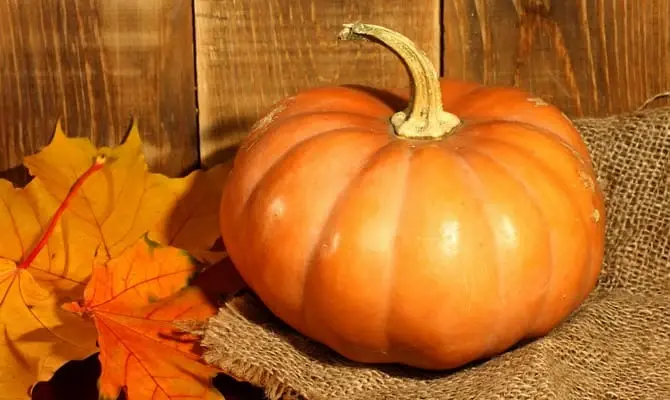
Pumpkin fruits come in a variety of shapes and colors. Its flesh is firm, sweet, creamy to orange-red in color.
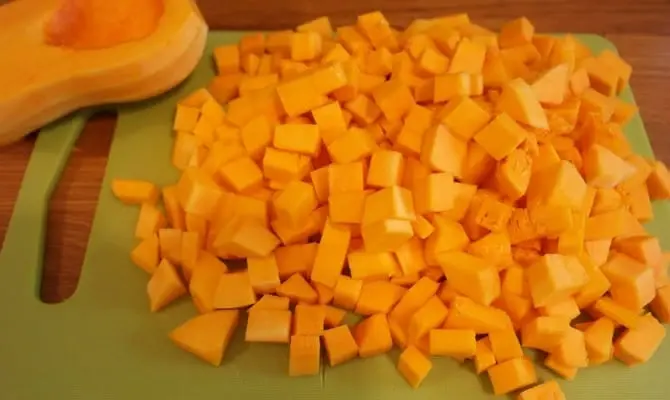
How is pumpkin useful for the body and how can it be used for medicinal purposes? Infusions, decoctions, pumpkin extracts have a laxative and diuretic effect, are used externally to relieve inflammation in burns, ulcers, eczema, dermatitis.
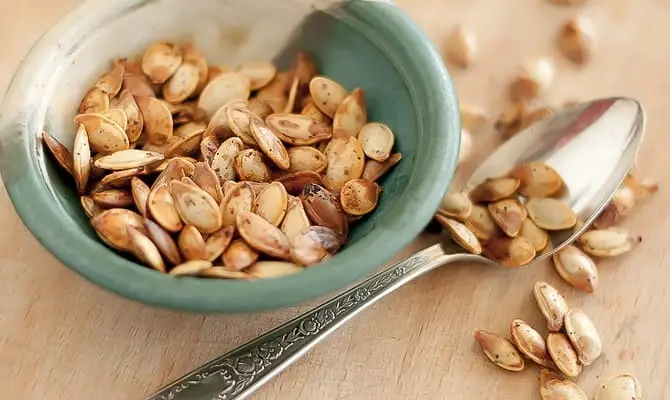
And what are the benefits of pumpkin seeds, and in what quantity is it recommended to use them? Pumpkin seeds have long been used as an effective anthelmintic, as well as a diuretic to relieve swelling.
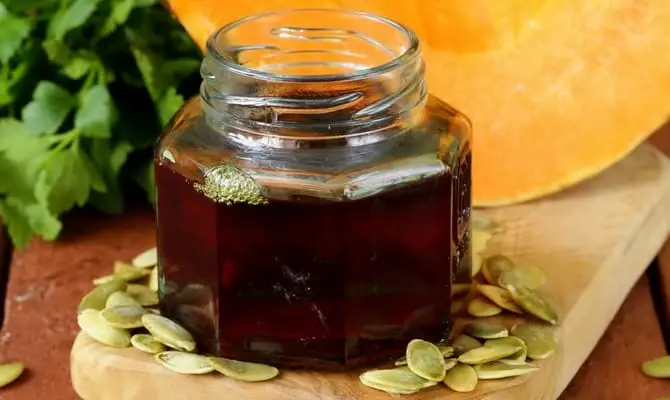
Speaking about how pumpkin is useful for a person, one should not forget about the healing properties of pumpkin oil. Vegetable oil of pumpkin seeds has an anti-sclerotic effect. The systematic use of seeds helps to reduce cholesterol in the blood, increase the elasticity of the vascular wall. With frequent heart pains, traditional medicine recommends including pumpkin seeds in the daily diet (no more than 50 g per day).
Pumpkin as a whole should be stored in a dry, dark place at a temperature of 20-25 ° C. Pumpkin seed oil is stored in a tightly closed bottle in a cool, dark place. Means made from pumpkin are best kept in the refrigerator for no more than 1-2 days.
In the pumpkin pulp, its seeds and oil, there are various vitamins, micro and macro elements and acids. More detailed information on the chemical composition of pumpkin seed oil, seeds and pulp is given in the tables below.
Table "Chemical composition of pumpkin pulp"
| Element name | Quantity in 100 g of product |
| The nutritional value | |
| Water | 90.3 g |
| Squirrels | 1 g |
| Fats | 0.1 g |
| Carbohydrates | 5.9 g |
| Ash | 10.6 g |
| Cellulose | 1.2 g |
| Starch | I 0.2 г |
| Mono- and disaccharides | 14 g |
| organic acids | 0.1 g |
| Pectin | 0.3 g |
| calories | 25 kcal |
| Micro and macro elements | |
| Iron | 400 mcg |
| Iodine | 1 mcg |
| Potassium | 204 g |
| Calcium | 25 mg |
| Cobalt | 1 mcg |
| Magnesium | 14 mg |
| Manganese | 40 mcg |
| Copper | 180 mcg |
| Sodium | 4 mg |
| Phosphorus | 25 mg |
| Fluorine | 86 mcg |
| Zinc | 240 mcg |
| vitamins | |
| β-carotene | 1.5 mg |
| Vitamin C (ascorbic acid) | 8 mg |
| Vitamin V1 (thiamine) | 0.05 mg |
| Vitamin B2 (riboflavin) | 0.06 mg |
| Vitamin B9 (folic acid) | 14 mg |
| Vitamin PP (niacin) | 0.5 mg |
The chemical composition of pumpkin pulp also includes:
- Sahara;
- fiber;
- vitamins B5, B6, E, C and K.
Further you can get acquainted with the tables "Chemical composition of pumpkin seeds" and "Chemical composition of pumpkin oil".
Table "Chemical composition of pumpkin seeds"
| Element name | Quantity in 100 g of product |
| The nutritional value | |
| Water | 5.23 g |
| Squirrels | 30.3 g |
| Fats | 49 g |
| Carbohydrates | 4.71 |
| Dietary fiber (fiber) | 6 g |
| Ash | 4.8 g |
| calories | 538 kcal |
| Micro and macro elements | |
| Iron | 8.8 mg |
| Potassium | 809 mg |
| Calcium | 46 mg |
| Magnesium | 593 mg |
| Manganese | 4.55 mg |
| Copper | 1.35 mg |
| Sodium | 7 mg |
| Selenium | 9.4 mcg |
| Zinc | 7.8 mg |
| vitamins | |
| α-carotene | 1 mcg |
| β-carotene | 9 mcg |
| Vitamin C | 1.9 mg |
| Vitamin K | 7.3 mg |
| Vitamin E | 2.2 mg |
| Vitamin V1 | 0.3 mg |
| Vitamin B2 | 0.15 mg |
| Vitamin B4 | 63 mg |
| Vitamin B5 | 0.75 mg |
| Vitamin B6 | 0.14 mg |
| Vitamin B9 | 58 mg |
| Lutein | 74 mcg |
| Cyanine | 5 mg |
| Saturated fatty acids | |
| Arachinoic | 0.21 g |
| Begenovaya | 0.06 g |
| Myristic | 0.06 g |
| palmitic | 5.36 g |
| Stearic | 2.87 g |
| unsaturated fatty acids | |
| Arachidonic | 0.13 g |
| Linoleic | 20.7 g |
| Linolenic | 0.12 g |
| Oleinovaya | 16.2 g |
| Omega 3 | 0.12 g |
| Omega 6 | 20.6 g |
| Essential amino acids | |
| Arginine | 5.4 g |
| Valin | 1.6 g |
| Histidine | 0.8 g |
| Isoleucine | 1.3 g |
| Leucine | 2.4 g |
| Lysine | 1.2 g |
| Cysteine, methionine | 0.9 g |
| Threonine | 1 g |
| Tryptophan | 0.6 g |
| Tyrosine, phenylalanine | 2.8 g |
The chemical composition of pumpkin seeds contains 20-50% fatty oil, consisting of the following acids:
- stearic;
- palmitic;
- linoleic;
- nicotine;
- salicylic.
Table "Chemical composition of pumpkin seed oil"
| Element name | Quantity in 100 g of product |
| The nutritional value | |
| Squirrels | – |
| Fats | 99.5 g |
| Carbohydrates | – |
| calories | 895 kcal |
| Micro and macro elements | |
| Iron | 0.41 mg |
| Iodine | 1.3 mcg |
| Potassium | 205.1 mg |
| Calcium | 27.65 mg |
| Cobalt | 1.3 mcg |
| Magnesium | 13.89 mg |
| Manganese | 0.02 mg |
| Copper | 176 mcg |
| Sodium | 3.87 mg |
| Sulfur | 19.01 mg |
| Phosphorus | 25.04 mg |
| Fluorine | 85.6 mcg |
| Chlorine | 15.76 mg |
| Zinc | 0.14 mg |
| vitamins | |
| β-carotene | 1.49 mg |
| Vitamin A | 250.7 mcg |
| Vitamin C | 8.07 mg |
| Vitamin E | 0.376 mg |
| Vitamin V1, | 0.061 mg |
| Vitamin B2 | 0.056 mg |
| Vitamin B5 | 0.39 mg |
| Vitamin B6 | 0.12 mg |
| Vitamin B9 | 14.4 mcg |
| Vitamin PP | 0.65 mg |
| unsaturated fatty acids | |
| Gadoleic | 0.060-0.170 g |
| Linoleic | 41-51 g |
| Linolenic | 0.340-0.810 g |
| Oleinovaya | 22-39 g |
| Palmitoleic | 0.120-0.520 g |
| Erucovaya | 0.800 g |
| Saturated fatty acids | |
| Arachidonic | 0.310-0.620 g |
| Begenovaya | 0.120-0.450 g |
| Myristic | 0.130-0.220 g |
| margarine | 0.207 g |
| palmitic | 9.900-18.800 g |
| Stearic | 4.800-9.200 g |
Leaves and flowers contain ascorbic acid, carotenoids and flavonoids.
Indications and contraindications of pumpkin in the treatment of diseases
The indications and contraindications of pumpkin in the treatment of various diseases are described below.
Indications. Due to its composition and useful properties, pumpkin pulp is used as a diuretic (diuretic) and mild laxative, as well as a means that improves metabolism. For diseases of the bladder, kidneys, liver and cardiovascular diseases, it is recommended to use pumpkin pulp boiled with honey. The pulp of this culture in raw, baked and boiled form is used as a dietary product, since it does not irritate the kidney tissue. Pumpkin and millet porridge with honey improves bowel function and enhances the excretion of water and chlorides from the body. Also, this dish is useful for colitis with insufficient bowel movement.
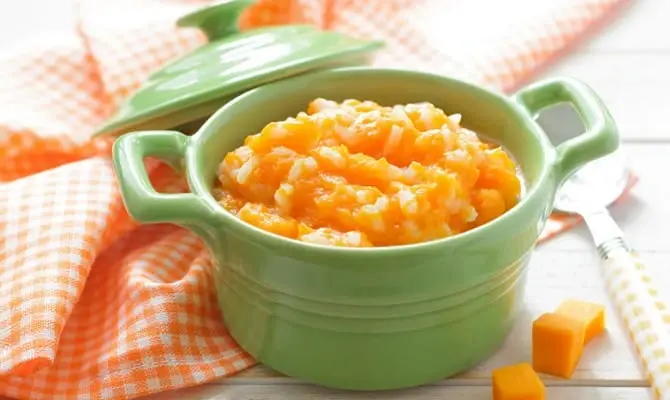
Pumpkin in the form of porridge is indicated for pyelonephritis, acute and chronic cystitis, as well as some forms of urethritis.
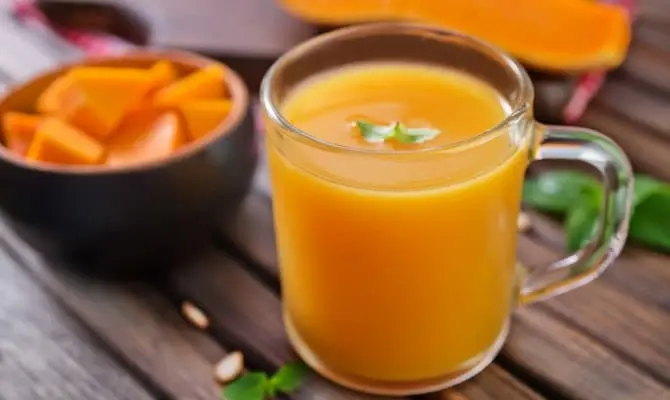
For insomnia, it is recommended to take pumpkin juice or a decoction with honey as a sedative. For wound healing, a decoction made from pumpkin flowers is used. A decoction of pumpkin cuttings is shown as a diuretic. For gastritis with high acidity of gastric juice, as well as peptic ulcer of the stomach and duodenum outside the period of exacerbation, it is recommended to take boiled pumpkin, in the form of porridge.
Contraindications. With exacerbation of peptic ulcer of the stomach and duodenum, acute intestinal disorders, it is not recommended to use raw pumpkin.
With caution, pumpkin juice should be taken with diabetes. With unlimited use of pumpkin, the pancreas can suffer.
Thus, even the most useful product should be used after consulting a doctor.